JEE Main 2024 — Algebra
Mathematics Algebra questions from JEE Main 2024.
Other Years
200 Algebra Questions from 2024
There are 4 men and 5 women in Group A, and 5 men and 4 women in Group B. If 4 persons are selected from each group, then the number of ways of selecting 4 men and 4 women is _____
If the system of equations $x+4 y-z=\lambda, 7 x+9 y+\mu z=-3,5 x+y+2 z=-1$ has infinitely many solutions, then $(2 \mu+3 \lambda)$ is equal to :
Let $A$ be a $2\times 2$ real matrix and $I$ be the identity matrix of order $2.$ If the roots of the equation $|A-\mathrm{xI}|=0$ be $-1$ and $3,$ then the sum of the diagonal elements of the matrix ${A}^{2}$ is _____.
Let for any three distinct consecutive terms $a,b,c$ of an A.P, the lines $ax+by+c=0$ be concurrent at the point $P$ and $Q(\alpha ,\beta )$ be a point such that the system of equations $x+y+z=6$, $2x+5y+\alpha z=\beta$ and $x+2y+3z=4$, has infinitely many solutions. Then $(PQ{)}^{2}$ is equal to _______.
In an A.P., the sixth term ${a}_{6}=2$. If the ${a}_{1}{a}_{4}{a}_{5}$ is the greatest, then the common difference of the A.P., is equal to
If the system of equations $\begin{aligned} & x+(\sqrt{2} \sin \alpha) y+(\sqrt{2} \cos \alpha) z=0 \\ & x+(\cos \alpha) y+(\sin \alpha) z=0 \\ & x+(\sin \alpha) y-(\cos \alpha) z=0 \end{aligned}$ has a non-trivial solution, then $\alpha \in\left(0, \frac{\pi}{2}\right)$ is equal to :
All the letters of the word $GTWENTY$ are written in all possible ways with or without meaning and these words are written as in a dictionary. The serial number of the word $GTWENTY$ IS
If the system of equations $\begin{aligned} & 2 x+7 y+\lambda z=3 \\ & 3 x+2 y+5 z=4 \\ & x+\mu y+32 z=-1 \end{aligned}$ has infinitely many solutions, then $(\lambda-\mu)$ is equal to________
The values of $m, n$, for which the system of equations $\begin{aligned} & x+y+z=4, \\ & 2 x+5 y+5 z=17, \\ & x+2 y+\mathrm{m} z=\mathrm{n} \end{aligned}$ has infinitely many solutions, satisfy the equation:
Consider the function $f: \mathbb{R} \rightarrow \mathbb{R}$ defined by $f(x)=\frac{2 x}{\sqrt{1+9 x^2}}$. If the composition of $f, \underbrace{(f \circ f \circ f \circ \cdots \circ f)}_{10 \text { times }}(x)=\frac{2^{10} x}{\sqrt{1+9 \alpha x^2}}$, then the value of $\sqrt{3 \alpha+1}$ is equal to ______
Let $\alpha \beta \gamma=45 ; \alpha, \beta, \gamma \in \mathbb{R}$. If $x(\alpha, 1,2)+y(1, \beta, 2)+z(2,3, \gamma)=(0,0,0)$ for some $x, y, z \in \mathbb{R}, x y z \neq 0$, then $6 \alpha+4 \beta+\gamma$ is equal to _______
Let $f(x)=\frac{1}{7-\sin 5 x}$ be a function defined on $\mathbf{R}$. Then the range of the function $f(x)$ is equal to ;
Let a relation $\mathrm{R}$ on $\mathrm{N} \times N$ be defined as: $\left(x_1, y_1\right) \mathrm{R}\left(x_2, y_2\right)$ if and only if $x_1 \leq x_2$ or $y_1 \leq y_2$. Consider the two statements: (I) $\mathrm{R}$ is reflexive but not symmetric. (II) $R$ is transitive Then which one of the following is true?
If the term independent of $x$ in the expansion of $\left(\sqrt{\mathrm{a}} x^2+\frac{1}{2 x^3}\right)^{10}$ is 105 , then $\mathrm{a}^2$ is equal to :
If the coefficients of $x^4, x^5$ and $x^6$ in the expansion of $(1+x)^n$ are in the arithmetic progression, then the maximum value of $n$ is:
If $f(x)=|\begin{matrix}2{\mathrm{cos}}^{4}x & 2{\mathrm{sin}}^{4}x & 3+{\mathrm{sin}}^{2}2x \\ 3+2{\mathrm{cos}}^{4}x & 2{\mathrm{sin}}^{4}x & {\mathrm{sin}}^{2}2x \\ 2{\mathrm{cos}}^{4}x & 3+2{\mathrm{sin}}^{4}x & {\mathrm{sin}}^{2}2x\end{matrix}|$ then $\frac{1}{5}{f}^{'}(0)$ is equal to ________.
The values of $\alpha$, for which $|\begin{matrix}1 & \frac{3}{2} & \alpha +\frac{3}{2} \\ 1 & \frac{1}{3} & \alpha +\frac{1}{3} \\ 2\alpha +3 & 3\alpha +1 & 0\end{matrix}|=0$, lie in the interval
For $\alpha, \beta \in \mathbb{R}$ and a natural number $n$, let $A_r=\left|\begin{array}{ccc}r & 1 & \frac{n^2}{2}+\alpha \\ 2 r & 2 & n^2-\beta \\ 3 r-2 & 3 & \frac{n(3 n-1)}{2}\end{array}\right|$. Then
Let $B=\left[\begin{array}{ll}1 & 3 \\ 1 & 5\end{array}\right]$ and $A$ be a $2 \times 2$ matrix such that $A B^{-1}=A^{-1}$. If $B C B^{-1}=A$ and $C^4+\alpha C^2+\beta I=O$, then $2 \beta-\alpha$ is equal to
Consider the matrix $f(x)=[\begin{matrix}\mathrm{cos}x & -\mathrm{sin}x & 0 \\ \mathrm{sin}x & \mathrm{cos}x & 0 \\ 0 & 0 & 1\end{matrix}]$. Given below are two statements : Statement I:$f(-x)$ is the inverse of the matrix $f(x)$. Statement II: $f(x)f(y)=f(x+y)$. In the light of the above statements, choose the correct answer from the options given below
Consider the matrices : $A=\left[\begin{array}{ll}2 & -5 \\ 3 & m\end{array}\right], B=\left[\begin{array}{l}20 \\ m\end{array}\right]$ and $X=\left[\begin{array}{l}x \\ y\end{array}\right]$. Let the set of all $m$, for which the system of equations $A X=B$ has a negative solution (i.e., $x < 0$ and $y < 0$ ), be the interval $(a, b)$. Then $8 \int_a^b|A| d m$ is equal to_________
If $f(x)={\begin{matrix}2+2x,-1\leq x<0 \\ 1-\frac{x}{3},0\leq x\leq 3\end{matrix};g(x)={\begin{matrix}-x,-3\leq x\leq 0 \\ x,0<x\leq 1\end{matrix}$, then range of $(f\circ g(x))$ is
Let $\alpha, \beta$ be the roots of the equation $x^2+2 \sqrt{2} x-1=0$. The quadratic equation, whose roots are $\alpha^4+\beta^4$ and $\frac{1}{10}\left(\alpha^6+\beta^6\right)$, is :
If $\alpha ,\beta$ are the roots of the equation, ${x}^{2}-x-1=0$ and ${S}_{n}=2023{\alpha }^{n}+2024{\beta }^{n}$, then
Let $A={1,2,3,....100}$. Let $R$ be a relation on $A$ defined by $(x,y)\in R$ if and only if $2x=3y$. Let ${R}_{1}$ be a symmetric relation on $A$ such that $R\subset {R}_{1}$ and the number of elements in ${R}_{1}$ is $n$. Then the minimum value of $n$ is _______.
Let the complex numbers $\alpha$ and $\frac{1}{\bar{\alpha }}$ lie on the circles ${|z-{z}_{0}|}^{2}=4$ and ${|z-{z}_{0}|}^{2}=16$ respectively, where ${z}_{0}=1+i$. Then, the value of $100|\alpha {|}^{2}$ is__________.
The coefficient of $x^{70}$ in $x^2(1+x)^{98}+x^3(1+x)^{97}+x^4(1+x)^{96}+\ldots+x^{54}(1+x)^{46}$ is ${ }^{99} \mathrm{C}_{\mathrm{p}}-{ }^{46} \mathrm{C}_{\mathrm{q}}$. Then a possible value of $p+q$ is :
If the system of equations $\begin{array}{r} 11 x+y+\lambda z=-5 \\ 2 x+3 y+5 z=3 \\ 8 x-19 y-39 z=\mu \end{array}$ has infinitely many solutions, then $\lambda^4-\mu$ is equal to :
Let $\alpha \beta \neq 0$ and $A=\left[\begin{array}{rrr}\beta & \alpha & 3 \\ \alpha & \alpha & \beta \\ -\beta & \alpha & 2 \alpha\end{array}\right]$. If $B=\left[\begin{array}{rrr}3 \alpha & -9 & 3 \alpha \\ -\alpha & 7 & -2 \alpha \\ -2 \alpha & 5 & -2 \beta\end{array}\right]$ is the matrix of cofactors of the elements of $A$, then $\operatorname{det}(A B)$ is equal to :
If the domain of the function $f(x)={\mathrm{log}}_{e}(\frac{2x+3}{4{x}^{2}+x-3})+{\mathrm{cos}}^{-1}(\frac{2x-1}{x+2})$ is $(\alpha ,\beta ]$, then the value of $5\beta -4\alpha$ is equal to
Let $A=\left[\begin{array}{ll}1 & 2 \\ 0 & 1\end{array}\right]$ and $B=I+\operatorname{adj}(A)+(\operatorname{adj} A)^2+\ldots+(\operatorname{adj} A)^{10}$. Then, the sum of all the elements of the matrix $B$ is:
Let $S={1,2,3,\ldots ,10}$. Suppose $M$ is the set of all the subsets of $S$, then the relation $R={(A,B):A\cap B\neq \phi ;A,B\in M}$ is :
If a function $f$ satisfies $f(\mathrm{~m}+\mathrm{n})=f(\mathrm{~m})+f(\mathrm{n})$ for all $\mathrm{m}, \mathrm{n} \in \mathbf{N}$ and $f(1)=1$, then the largest natural number $\lambda$ such that $\sum_{k=1}^{2022} f(\lambda+k) \leq(2022)^2$ is equal to _________
If the constant term in the expansion of $\left(1+2 x-3 x^3\right)\left(\frac{3}{2} x^2-\frac{1}{3 x}\right)^9$ is $\mathrm{p}$, then $108 \mathrm{p}$ is equal to
Let $S_1=\{z \in C:|z| \leq 5\}, S_2=\left\{z \in C: \operatorname{Im}\left(\frac{z+1-\sqrt{3} i}{1-\sqrt{3} i}\right) \geq 0\right\}$ and $S_3=\{z \in C: \operatorname{Re}(z) \geq 0\}$. Then the area of the region $S_1 \cap S_2 \cap S_3$ is :
If $A=[\begin{matrix}\sqrt{2} & 1 \\ -1 & \sqrt{2}\end{matrix}],B[\begin{matrix}1 & 0 \\ 1 & 1\end{matrix}],C=AB{A}^{T}$ and $X={A}^{T}{C}^{2}A$, then det $X$ is equal to:
Consider the system of linear equations $x+y+z=5,x+2y+{\lambda }^{2}z=9$ and $x+3y+\lambda z=\mu$, where $\lambda ,\mu \in R$. Then, which of the following statement is NOT correct ?
Let $A$ and $B$ be two square matrices of order 3 such that $|A|=3$ and $|B|=2$. Then $\left|\mathrm{A}^{\mathrm{T}} \mathrm{A}(\operatorname{adj}(2 \mathrm{~A}))^{-1}(\operatorname{adj}(4 \mathrm{~B}))(\operatorname{adj}(\mathrm{AB}))^{-1} \mathrm{AA}^{\mathrm{T}}\right|$ is equal to :
The remainder when $428^{2024}$ is divided by 21 is__________
The number of real solutions of the equation \(x\left(x^2+3|x|+5|x-1|+6|x-2|\right)=0\) is ______.
If the domain of the function $f(x)={\mathrm{cos}}^{-1}(\frac{2-|x|}{4})+{({\mathrm{log}}_{e}(3-x))}^{-1}$ is $[-\alpha ,\beta )-{\gamma }$, then $\alpha +\beta +\gamma$ is equal to :
If the domain of the function $\sin ^{-1}\left(\frac{3 x-22}{2 x-19}\right)+\log _{\mathrm{e}}\left(\frac{3 x^2-8 x+5}{x^2-3 x-10}\right)$ is $(\alpha, \beta]$, then $3 \alpha+10 \beta$ is equal to:
Let $A=\{1,3,7,9,11\}$ and $B=\{2,4,5,7,8,10,12\}$. Then the total number of one-one maps $f: \mathrm{A} \rightarrow \mathrm{B}$, such that $f(1)+f(3)=14$, is :
Let $A=[\begin{matrix}1 & 0 & 0 \\ 0 & \alpha & \beta \\ 0 & \beta & \alpha \end{matrix}]$ and $|2A{|}^{3}={2}^{21}$ where $\alpha ,\beta \in Z$, Then a value of $\alpha$ is
The coefficient of ${x}^{2012}$ in the expansion of ${(1-x)}^{2008}{(1+x+{x}^{2})}^{2007}$ is equal to _____.
If $f(x)=\frac{4x+3}{6x-4},x\neq \frac{2}{3}$ and $(fof)(x)=g(x)$, where $g:R-{\frac{2}{3}}\rightarrow R-{\frac{2}{3}}$, then $(gogog)(4)$ is equal to
The number of triangles whose vertices are at the vertices of a regular octagon but none of whose sides is a side of the octagon is
Let $a$ and $b$ be two distinct positive real numbers. Let ${11}^{\text{th }}$ term of a GP, whose first term is $a$ and third term is $b$, is equal to ${p}^{\text{th }}$ term of another GP, whose first term is $a$ and fifth term is $b$. Then $p$ is equal to
Let ${z}_{1}$ and ${z}_{2}$ be two complex number such that ${z}_{1}+{z}_{2}=5$ and ${z}_{1}^{3}+{z}_{2}^{3}=20+15i$. Then $|{z}_{1}^{4}+{z}_{2}^{4}|$ equals-
Let $A$ be a $3\times 3$ matrix and $\mathrm{det}(A)=2$. If $n=\mathrm{det}(\underset{2024-\mathrm{times}}{\underset{⏟}{adj(adj(....(adjA))))}})$, then the remainder when $n$ is divided by $9$ is equal to __________.
In a survey of 220 students of a higher secondary school, it was found that at least 125 and at most 130 students studied Mathematics; at least 85 and at most 95 studied Physics; at least 75 and at most 90 studied Chemistry; 30 studied both Physics and Chemistry; 50 studied both Chemistry and Mathematics; 40 studied both Mathematics and Physics and 10 studied none of these subjects. Let $\mathrm{m}$ and $\mathrm{n}$ respectively be the least and the most number of students who studied all the three subjects. Then $\mathrm{m}+\mathrm{n}$ is equal to ______
Let the range of the function $f(x)=\frac{1}{2+\sin 3 x+\cos 3 x}, x \in \mathbb{R}$ be $[a, b]$. If $\alpha$ and $\beta$ are respectively the A.M. and the G.M. of $a$ and $b$, then $\frac{\alpha}{\beta}$ is equal to
The number of solutions, of the equation ${e}^{\mathrm{sin}x}-2{e}^{-\mathrm{sin}x}=2$ is
Number of integral terms in the expansion of ${{{7}^{(\frac{1}{2})}+{11}^{(\frac{1}{6})}}}^{824}$ is equal to ______.
Let \(\alpha, \beta \in\) be roots of equation \(x^2-70 x+\lambda=0\), where \(\frac{\lambda}{2}, \frac{\lambda}{3} \notin\). If \(\lambda\) assumes the minimum possible value, then \(\frac{(\sqrt{\alpha-1}+\sqrt{\beta-1})(\lambda+35)}{\boldsymbol{|\alpha-\beta|}}\) is equal to :
The number of 3-digit numbers, formed using the digits $2,3,4,5$ and 7 , when the repetition of digits is not allowed, and which are not divisible by 3 , is equal to__________
The number of distinct real roots of the equation $|x||x+2|-5|x+1|-1=0$ is_______
If $R$ is the smallest equivalence relation on the set ${1,2,3,4}$ such that ${(1,2),(1,3)}\subset R$, then the number of elements in $R$ is ______.
Let the system of equations $x+2y+3z=5,2x+3y+z=9,4x+3y+\lambda z=\mu$ have infinite number of solutions. Then $\lambda +2\mu$ is equal to:
The sum of all possible values of $\theta \in[-\pi, 2 \pi]$, for which $\frac{1+i \cos \theta}{1-2 i \cos \theta}$ is purely imaginary, is equal
The number of symmetric relations defined on the set ${1,2,3,4}$ which are not reflexive is _______.
An arithmetic progression is written in the following way 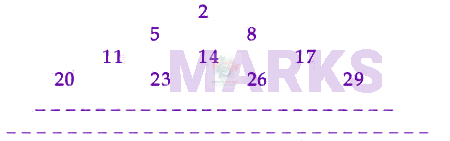 The sum of all the terms of the $10^{\text {th }}$ row is_______
Let $z$ be a complex number such that $|z+2|=1$ and $\operatorname{Im}\left(\frac{z+1}{z+2}\right)=\frac{1}{5}$. Then the value of $|\operatorname{Re}(\overline{z+2})|$ is
If $z$ is a complex number, then the number of common roots of the equation ${z}^{1985}+{z}^{100}+1=0$ and ${z}^{3}+2{z}^{2}+2z+1=0$, is equal to :
A software company sets up $m$ number of computer systems to finish an assignment in 17 days. If 4 computer systems crashed on the start of the second day, 4 more computer systems crashed on the start of the third day and so on, then it took 8 more days to finish the assignment. The value of $\mathrm{m}$ is equal to:
If $A$ is a square matrix of order 3 such that $\operatorname{det}(A)=3$ and $\operatorname{det}\left(\operatorname{adj}\left(-4 \operatorname{adj}\left(-3 \operatorname{adj}\left(3 \operatorname{adj}\left((2 \mathrm{~A})^{-1}\right)\right)\right)\right)\right)=2^{\mathrm{m}} 3^{\mathrm{n}}$, then $\mathrm{m}+2 \mathrm{n}$ is equal to :
Let $0 \leq \mathrm{r} \leq \mathrm{n}$. If ${ }^{\mathrm{n}+1} \mathrm{C}_{\mathrm{r}+1}:{ }^n \mathrm{C}_{\mathrm{r}}:{ }^{\mathrm{n}-1} \mathrm{C}_{\mathrm{r}-1}=55: 35: 21$, then $2 \mathrm{n}+5 \mathrm{r}$ is equal to:
In the expansion of $(1+x)(1-{x}^{2}){(1+\frac{3}{x}+\frac{3}{{x}^{2}}+\frac{1}{{x}^{3}})}^{5},x\neq 0$, the sum of the coefficient of ${x}^{3}$ and ${x}^{-13}$ is equal to ______
Let $\alpha ,\beta$ be the roots of the equation ${x}^{2}-x+2=0$ with $Im(\alpha )>Im(\beta )$. Then ${\alpha }^{6}+{\alpha }^{4}+{\beta }^{4}-5{\alpha }^{2}$ is equal to
Let $\alpha \in(0, \infty)$ and $A=\left[\begin{array}{lll}1 & 2 & \alpha \\ 1 & 0 & 1 \\ 0 & 1 & 2\end{array}\right]$. If $\operatorname{det}\left(\operatorname{adj}\left(2 A-A^T\right) \cdot \operatorname{adj}\left(A-2 A^T\right)\right)=2^8$, then $(\operatorname{det}(A))^2$ is equal to:
Let $\lambda, \mu \in \mathbf{R}$. If the system of equations $\begin{aligned} & 3 x+5 y+\lambda z=3 \\ & 7 x+11 y-9 z=2 \\ & 97 x+155 y-189 z=\mu \end{aligned}$ has infinitely many solutions, then $\mu+2 \lambda$ is equal to :
Suppose $28-p,p,70-\alpha ,\alpha$ are the coefficient of four consecutive terms in the expansion of $(1+x{)}^{n}$. Then the value of $2\alpha -3p$ equals
Let $\alpha$ and $\beta$ be the roots of the equation $p{x}^{2}+qx-r=0$, where $p\neq 0$. If $p,q$ and $r$ be the consecutive terms of a non-constant G.P and $\frac{1}{\alpha }+\frac{1}{\beta }=\frac{3}{4}$, then the value of ${(\alpha -\beta )}^{2}$ is:
If $z=\frac{1}{2}-2i$, is such that $|z+1|=\alpha z+\beta (1+i),i=\sqrt{-1}$ and $\alpha ,\beta \in R,$ then $\alpha +\beta$ is equal to
Let $A=\{1,2,3,4,5\}$. Let $\mathrm{R}$ be a relation on $\mathrm{A}$ defined by $x \mathrm{R} y$ if and only if $4 x \leq 5 \mathrm{y}$. Let $\mathrm{m}$ be the number of elements in $\mathrm{R}$ and $\mathrm{n}$ be the minimum number of elements from $\mathrm{A} \times \mathrm{A}$ that are required to be added to $\mathrm{R}$ to make it a symmetric relation. Then $\mathrm{m}+\mathrm{n}$ is equal to :
If the second, third and fourth terms in the expansion of $(x+y)^n$ are 135,30 and $\frac{10}{3}$, respectively, then $6\left(n^3+x^2+y\right)$ is equal to _______
If all the words with or without meaning made using all the letters of the word "NAGPUR" are arranged as in a dictionary, then the word at $315^{\text {th }}$ position in this arrangement is :
If the constant term in the expansion of $\left(\frac{\sqrt[5]{3}}{x}+\frac{2 x}{\sqrt[3]{5}}\right)^{12}, x \neq 0$, is $\alpha \times 2^8 \times \sqrt[5]{3}$, then $25 \alpha$ is equal to :
Let $A=\{(x, y): 2 x+3 y=23, x, y \in \mathbb{N}\}$ and $B=\{x:(x, y) \in A\}$. Then the number of one-one functions from $A$ to $B$ is equal to _______
Let $A=\{2,3,6,7\}$ and $B=\{4,5,6,8\}$. Let $R$ be a relation defined on $A \times B$ by $\left(a_1, b_1\right) R\left(a_2, b_2\right)$ if and only if $a_1+a_2=b_1+b_2$. Then the number of elements in $R$ is _________
The function $\text { f: R->R, }$ $f(x)=\frac{x^2+2 x-15}{x^2-4 x+9}, x \in \mathbb{R}$ is
Let $z$ be a complex number such that the real part of $\frac{z-2 i}{z+2 i}$ is zero. Then, the maximum value of $|z-(6+8 i)|$ is equal to
The number of distinct real roots of the equation $|x+1||x+3|-4|x+2|+5=0$, is
Let $R=(\begin{matrix}x & 0 & 0 \\ 0 & y & 0 \\ 0 & 0 & z\end{matrix})$ be a non-zero $3\times 3$ matrix, where $x\mathrm{sin}\theta =y\mathrm{sin}(\theta +\frac{2\pi }{3})=z\mathrm{sin}(\theta +\frac{4\pi }{3})$ $\neq 0,\theta \in (0,2\pi )$. For a square matrix $M$, let Trace$(M)$ denote the sum of all the diagonal entries of $M.$ Then, among the statements: $(I)$ Trace$(R)=0$ $(\mathrm{II})$ If Trace$(adj(adj(R))=0$, then $R$ has exactly one non-zero entry.
Let $A$ be a square matrix such that ${\mathrm{AA}}^{T}=I$. Then $\frac{1}{2}A[{(A+{A}^{T})}^{2}+{(A-{A}^{T})}^{2}]$ is equal to
If $n$ is the number of ways five different employees can sit into four indistinguishable offices where any office may have any number of persons including zero, then $n$ is equal to:
If three successive terms of a G.P. with common ratio $r(r>1)$ are the length of the sides of a triangle and $[r]$ denotes the greatest integer less than or equal to r, then $3[r]+[-r]$ is equal to:
The number of common terms in the progressions $4,9,14,19,\ldots \ldots$, up to ${25}^{\text{th }}$ term and $3,6,9,12$,.... up to ${37}^{\text{th }}$ term is :
Let $S$ be the set of positive integral values of $a$ for which $\frac{a{x}^{2}+2(a+1)x+9a+4}{{x}^{2}-8x+32}<0,\forall x\in \mathbb{R}$. Then, the number of elements in $S$ is:
Let $\alpha, \beta$ be roots of $x^2+\sqrt{2} x-8=0$. If $\mathrm{U}_{\mathrm{n}}=\alpha^{\mathrm{n}}+\beta^n$, then $\frac{\mathrm{U}_{10}+\sqrt{2} \mathrm{U}_9}{2 \mathrm{U}_8}$ is equal to______
Let $x_1, x_2, x_3, x_4$ be the solution of the equation $4 x^4+8 x^3-17 x^2-12 x+9=0$ and $\left(4+x_1^2\right)\left(4+x_2^2\right)\left(4+x_3^2\right)\left(4+x_4^2\right)=\frac{125}{16} m$. Then the value of $m$ is
For $0<c<b<a$, let $(a+b–2c){x}^{2}+(b+c–2a)x+(c+a–2b)=0$ and $\alpha \neq 1$ be one of its root. Then, among the two statements (I) If $\alpha \in (-1,0)$, then $b$ cannot be the geometric mean of $a$ and $c$. (II) If $\alpha \in (0,1)$, then $b$ may be the geometric mean of $a$ and $c$.
If $z_1, z_2$ are two distinct complex number such that $\left|\frac{z_1-2 z_2}{\frac{1}{2}-z_1 \bar{z}_2}\right|=2$, then
If $z$ is a complex number such that $|z|\leq 1$, then the minimum value of $|z+\frac{1}{2}(3+4i)|$ is:
Let $\alpha$ and $\beta$ be the sum and the product of all the non-zero solutions of the equation $(\bar{z})^2+|z|=0$, $z \in$ C. Then $4\left(\alpha^2+\beta^2\right)$ is equal to :
If $z=x+iy,xy\neq 0$, satisfies the equation ${z}^{2}+i\bar{z}=0$, then $|{z}^{2}|$ is equal to :
If $S=z\in C:|z-i|=|z+i|=|z-1|$, then, $n(S)$ is:
The number of ways five alphabets can be chosen from the alphabets of the word MATHEMATICS, where the chosen alphabets are not necessarily distinct, is equal to :
The number of integers, between 100 and 1000 having the sum of their digits equals to 14 , is _________
60 words can be made using all the letters of the word BHBJO, with or without meaning. If these words are written as in a dictionary, then the $50^{\text {th }}$ word is :
The number of ways of getting a sum 16 on throwing a dice four times is______
There are 5 points $P_1, P_2, P_3, P_4, P_5$ on the side $A B$, excluding $A$ and $B$, of a triangle $A B C$. Similarly there are 6 points $\mathrm{P}_6, \mathrm{P}_7, \ldots, \mathrm{P}_{11}$ on the side $\mathrm{BC}$ and 7 points $\mathrm{P}_{12}, \mathrm{P}_{13}, \ldots, \mathrm{P}_{18}$ on the side $C A$ of the triangle. The number of triangles, that can be formed using the points $\mathrm{P}_1, \mathrm{P}_2, \ldots, \mathrm{P}_{18}$ as vertices, is :
Number of ways of arranging $8$ identical books into $4$ identical shelves where any number of shelves may remain empty is equal to
Let $A=\{2,3,6,8,9,11\}$ and $B=\{1,4,5,10,15\}$. Let $R$ be a relation on $A \times B$ defined by $(a, b) R(c, d)$ if and only if $3 a d-7 b c$ is an even integer. Then the relation $R$ is
Let $r$ and $\theta$ respectively be the modulus and amplitude of the complex number $z=2-i(2\mathrm{tan}\frac{5\pi }{8})$, then $(r,\theta )$ is equal to
Let $a, a r, a r^2$, $\qquad$ be an infinite G.P. If $\sum_{n=0}^{\infty} a r^n=57$ and $\sum_{n=0}^{\infty} a^3 r^{3 n}=9747$, then $a+18 r$ is equal to
If the sum of the series $\frac{1}{1 \cdot(1+\mathrm{d})}+\frac{1}{(1+\mathrm{d})(1+2 \mathrm{~d})}+\ldots+\frac{1}{(1+9 \mathrm{~d})(1+10 \mathrm{~d})}$ is equal to 5 , then $50 \mathrm{~d}$ is equal to :
In an increasing geometric progression of positive terms, the sum of the second and sixth terms is $\frac{70}{3}$ and the product of the third and fifth terms is 49 . Then the sum of the $4^{\text {th }}, 6^{\text {th }}$ and $8^{\text {th }}$ terms is equal to :
If the set $R=\{(a, b): a+5 b=42, a, b \in \mathbb{N}\}$ has $m$ elements and $\sum_{n=1}^m\left(1-i^{n !}\right)=x+i y$, where $i=\sqrt{-1}$, then the value of $m+x+y$ is
Let the first term of a series be $T_1=6$ and its $r^{\text {th }}$ term $T_r=3 T_{r-1}+6^r, r=2,3$, $\qquad$ $n$. If the sum of the first $n$ terms of this series is $\frac{1}{5}\left(n^2-12 n+39\right)\left(4 \cdot 6^n-5 \cdot 3^n+1\right)$, then $n$ is equal to______
Let the first three terms $2, p$ and $q$, with $q \neq 2$, of a G.P. be respectively the $7^{\text {th }}, 8^{\text {th }}$ and $13^{\text {th }}$ terms of an A.P. If the $5^{\text {th }}$ term of the G.P. is the $n^{\text {th }}$ term of the A.P., then $n$ is equal to:
Let ${S}_{a}$ denote the sum of first $n$ terms an arithmetic progression. If ${S}_{20}=790$ and ${S}_{10}=145$, then ${S}_{15}-$ ${S}_{5}$ is :
Let $S={z\in C:|z-1|=1\mathrm{and}(\sqrt{2}-1)(z+\bar{z})-i(z-\bar{z})=2\sqrt{2}}$. Let ${z}_{1},{z}_{2}\in S$ be such that $|{z}_{1}|=\underset{z\in s}{\mathrm{max}}|z|$ and $|{z}_{2}|=\underset{z\in s}{\mathrm{min}}|z|$. Then ${|\sqrt{2}{z}_{1}-{z}_{2}|}^{2}$ equals:
The sum of the series $\frac{1}{1-3\cdot {1}^{2}+{1}^{4}}+\frac{2}{1-3\cdot {2}^{2}+{2}^{4}}+\frac{3}{1-3\cdot {3}^{2}+{3}^{4}}+....$ up to $10$ terms is
The number of real solutions of the equation $x|x+5|+2|x+7|-2=0$ is_________
The sum of all rational terms in the expansion of $\left(2^{\frac{1}{5}}+5^{\frac{1}{3}}\right)^{15}$ is equal to :
Let $A={1,2,3,4}$ and $R={(1,2),(2,3),(1,4)}$ be a relation on $A$. Let $S$ be the equivalence relation on $A$ such that $R\subset S$ and the number of elements in $S$ is $n$. Then, the minimum value of $n$ is _______
If $f(x)=|\begin{matrix}{x}^{3} & 2{x}^{2}+1 & 1+3x \\ 3{x}^{2}+2 & 2x & {x}^{3}+6 \\ {x}^{3}-x & 4 & {x}^{2}-2\end{matrix}|$ for all $x\in \mathbb{R}$, then $2f(0)+{f}^{'}(0)$ is equal to
Let $m\text{and}n$ be the coefficients of seventh and thirteenth terms respectively in the expansion of ${(\frac{1}{3}{x}^{\frac{1}{3}}+\frac{1}{2{x}^{\frac{2}{3}}})}^{18}$. Then ${(\frac{n}{m})}^{\frac{1}{3}}$ is:
If ${\mathrm{log}}_{e}a,{\mathrm{log}}_{e}b,{\mathrm{log}}_{e}c$ are in an $A.P.$ and ${\mathrm{log}}_{e}a-{\mathrm{log}}_{e}2b,{\mathrm{log}}_{e}2b-{\mathrm{log}}_{e}3c,{\mathrm{log}}_{e}3c-{\mathrm{log}}_{e}a$ are also in an $A.P.$, then $a:b:c$ is equal to
Let A be a $3\times 3$ real matrix such that $A(\begin{matrix}1 \\ 0 \\ 1\end{matrix})=2(\begin{matrix}1 \\ 0 \\ 1\end{matrix}),A(\begin{matrix}-1 \\ 0 \\ 1\end{matrix})=4(\begin{matrix}-1 \\ 0 \\ 1\end{matrix}),A(\begin{matrix}0 \\ 1 \\ 0\end{matrix})=2(\begin{matrix}0 \\ 1 \\ 0\end{matrix})$. Then, the system $(A-3I)(\begin{matrix}x \\ y \\ z\end{matrix})=(\begin{matrix}1 \\ 2 \\ 3\end{matrix})$ has
If the function $f:(-\infty ,-1]\rightarrow (a,b)]$ defined by $f(x)={e}^{{x}^{3}-3x+1}$ is one-one and onto, then the distance of the point $P(2b+4,a+2)$ from the line $x+{e}^{-3}y=4$ is:
Let ${S}_{n}$ be the sum to n-terms of an arithmetic progression $3,7,11,\ldots \ldots$, if $40<(\frac{6}{n(n+1)}\sum _{k=1}^{n}{S}_{k})<42$, then $n$ equals ____________.
Let $R$ be a relation on $Z\times Z$ defined by $(a,b)R(c,d)$ if and only if $ad-bc$ is divisible by $5$ . Then $R$ is
If the domain of the function $f(x)=\frac{\sqrt{{x}^{2}-25}}{(4-{x}^{2})}+{\mathrm{log}}_{10}({x}^{2}+2x-15)$ is $(-\infty ,\alpha )\cup [\beta ,\infty ),$ then ${\alpha }^{2}+{\beta }^{3}$ is equal to:
The ${20}^{\text{th }}$ term from the end of the progression $20,19\frac{1}{4},18\frac{1}{2},17\frac{3}{4},\ldots ,-129\frac{1}{4}$ is :-
Let $A=\left[\begin{array}{cc}2 & -1 \\ 1 & 1\end{array}\right]$. If the sum of the diagonal elements of $A^{13}$ is $3^n$, then $n$ is equal to_________
If each term of a geometric progression ${a}_{1},{a}_{2},{a}_{3},\ldots$ with ${a}_{1}=\frac{1}{8}$ and ${a}_{2}\neq {a}_{1}$, is the arithmetic mean of the next two terms and ${S}_{n}={a}_{1}+{a}_{2}+\ldots +{a}_{n}$, then ${S}_{20}-{S}_{18}$ is equal to
Let $A={I}_{2}-2M{M}^{T},$ where $M$ is real matrix of order $2\times 1$ such that the relation ${M}^{T}M={I}_{1}$ holds. If $\lambda$ is a real number such that the relation $AX=\lambda X$ holds for some non-zero real matrix $X$ of order $2\times 1,$ then the sum of squares of all possible values of $\lambda$ is equal to:
Let ${2}^{\mathrm{nd}},{8}^{\mathrm{th}}$ and ${44}^{\mathrm{th}}$, terms of a non-constant $A.P.$ be respectively the ${1}^{\mathrm{st}},{2}^{\mathrm{nd}}$ and ${3}^{\mathrm{rd}}$ terms of $G.P.$ If the first term of A.P. is $1$ then the sum of first $20$ terms is equal to-
The value of $\frac{1 \times 2^2+2 \times 3^2+\ldots+100 \times(101)^2}{1^2 \times 2+2^2 \times 3+\ldots .+100^2 \times 101}$ is
If in a G.P. of $64$ terms, the sum of all the terms is $7$ times the sum of the odd terms of the G.P, then the common ratio of the G.P. is equal to
The number of ways in which $21$ identical apples can be distributed among three children such that each child gets at least $2$ apples, is
The total number of words (with or without meaning) that can be formed out of the letters of the word "DISTRIBUTION" taken four at a time, is equal to ______.
If the domain of the function $f(x)=\sin ^{-1}\left(\frac{x-1}{2 x+3}\right)$ is $\mathbf{R}-(\alpha, \beta)$, then $12 \alpha \beta$ is equal to :
Let $A$ be a $3 \times 3$ matrix of non-negative real elements such that $A\left[\begin{array}{l}1 \\ 1 \\ 1\end{array}\right]=3\left[\begin{array}{l}1 \\ 1 \\ 1\end{array}\right]$. Then the maximum value of $\operatorname{det}(\mathrm{A})$ is ______
Let $f:R-{\frac{-1}{2}}\rightarrow R$ and $g:R-{\frac{-5}{2}}\rightarrow R$ be defined as $f(x)=\frac{2x+3}{2x+1}$ and $g(x)=\frac{|x|+1}{2x+5}$. Then the domain of the function $\mathrm{fog}$ is :
A group of $40$ students appeared in an examination of $3$ subjects - Mathematics, Physics & Chemistry. It was found that all students passed in at least one of the subjects, $20$ students passed in Mathematics, $25$ students passed in Physics, $16$ students passed in Chemistry, at most $11$ students passed in both Mathematics and Physics, at most $15$ students passed in both Physics and Chemistry, at most $15$ students passed in both Mathematics and Chemistry. The maximum number of students passed in all the three subjects is _____.
Consider the following two statements : Statement I : For any two non-zero complex numbers $z_1, z_2$, $\left(\left|z_1\right|+\left|z_2\right|\right)\left|\frac{z_1}{\left|z_1\right|}+\frac{z_2}{\left|z_2\right|}\right| \leq 2\left(\left|z_1\right|+\left|z_2\right|\right) \text {, and }$ Statement II : If $x, y, z$ are three distinct complex numbers and $\mathrm{a}, \mathrm{b}, \mathrm{c}$ are three positive real numbers such that $\frac{\mathrm{a}}{|y-z|}=\frac{\mathrm{b}}{|z-x|}=\frac{\mathrm{c}}{|x-y|}$, then $\frac{\mathrm{a}^2}{y-z}+\frac{\mathrm{b}^2}{z-x}+\frac{\mathrm{c}^2}{x-y}=1 .$ Between the above two statements,
Let the set $C={(x,y)\mid {x}^{2}-{2}^{y}=2023,x,y\in \mathbb{N}}$. Then $\underset{(x,y)\in C}{\sum }(x+y)$ is equal to _______.
Let ${S}_{n}$ denote the sum of the first n terms of an arithmetic progression. If ${S}_{10}=390$ and the ratio of the tenth and the fifth terms is $15:7$, then ${S}_{15}-{S}_{5}$ is equal to:
Let $A=[\begin{matrix}2 & 0 & 1 \\ 1 & 1 & 0 \\ 1 & 0 & 1\end{matrix}],B=[\begin{matrix}{B}_{1} & {B}_{2} & {B}_{3}\end{matrix}]$, where ${B}_{1}$, ${B}_{2},{B}_{3}$ are column matrices, and ${\mathrm{AB}}_{1}=[\begin{matrix}1 \\ 0 \\ 0\end{matrix}]$, ${\mathrm{AB}}_{2}=[\begin{matrix}2 \\ 3 \\ 0\end{matrix}],{\mathrm{AB}}_{3}=[\begin{matrix}3 \\ 2 \\ 1\end{matrix}]$ If $\alpha =|B|$ and $\beta$ is the sum of all the diagonal elements of $B$, then ${\alpha }^{3}+{\beta }^{3}$ is equal to
The lines ${L}_{1},{L}_{2},...,{L}_{20}$ are distinct. For $n=1,2,3,...,10$ all the lines ${L}_{2n-1}$ are parallel to each other and all the lines ${L}_{2n}$ pass through a given point $P$. The maximum number of points of intersection of pairs of lines from the set ${{L}_{1},{L}_{2},...,{L}_{20}}$ is equal to:
Let $a_1, a_2, a_3, \ldots$ be in an arithmetic progression of positive terms. Let $\mathrm{A}_{\mathrm{k}}=\mathrm{a}_1^2-\mathrm{a}_2^2+\mathrm{a}_3^2-\mathrm{a}_4^2+\ldots+\mathrm{a}_{2 \mathrm{k}-1}^2-\mathrm{a}_{2 \mathrm{k}}^2$. If $\mathrm{A}_3=-153, \mathrm{~A}_5=-435$ and $\mathrm{a}_1^2+\mathrm{a}_2^2+\mathrm{a}_3^2=66$, then $\mathrm{a}_{17}-\mathrm{A}_7$ is equal to______
Consider the relations ${R}_{1}$ and ${R}_{2}$ defined as $a{R}_{1}b\Leftrightarrow {a}^{2}+{b}^{2}=1$ for all $a,b,\in R$ and $(a,b){R}_{2}(c,d)\Leftrightarrow a+d=b+c$ for all $(a,b),(c,d)\in N\times N$. Then
If the range of $f(\theta)=\frac{\sin ^4 \theta+3 \cos ^2 \theta}{\sin ^4 \theta+\cos ^2 \theta}, \theta \in \mathbb{R}$ is $[\alpha, \beta]$, then the sum of the infinite G.P., whose first term is 64 and the common ratio is $\frac{\alpha}{\beta}$, is equal to________
Let $A=\{n \in[100,700] \cap \mathbb{N}: n$ is neither a multiple of 3 nor a multiple of 4$\}$. Then the number of elements in $A$ is
Let $f:R\rightarrow R$ be a function defined $f(x)=\frac{x}{{(1+{x}^{4})}^{1/4}}$ and $g(x)=f(f(f(f(x))))$ then $18{\int }_{0}^{\sqrt{2\sqrt{5}}}{x}^{2}g(x)dx$
If $1+\frac{\sqrt{3}-\sqrt{2}}{2 \sqrt{3}}+\frac{5-2 \sqrt{6}}{18}+\frac{9 \sqrt{3}-11 \sqrt{2}}{36 \sqrt{3}}+\frac{49-20 \sqrt{6}}{180}+\ldots$ upto $\infty=2+\left(\sqrt{\frac{b}{a}}+1\right) \log _e\left(\frac{a}{b}\right)$, where $\mathrm{a}$ and $\mathrm{b}$ are integers with $\operatorname{gcd}(\mathrm{a}, \mathrm{b})=1$, then $11 \mathrm{a}+18 \mathrm{~b}$ is equal to ______
Let $f(x)=\left\{\begin{array}{ccc}-\mathrm{a} & \text { if } & -\mathrm{a} \leq x \leq 0 \\ x+\mathrm{a} & \text { if } & 0 < x \leq \mathrm{a}\end{array}\right.$ where $\mathrm{a}>0$ and $\mathrm{g}(x)=(f(x \mid)-|f(x)|) / 2$. Then the function $g:[-a, a] \rightarrow[-a, a]$ is
The area (in sq. units) of the region $S=\{z \in \mathbb{C}:|z-1| \leq 2 ;(z+\bar{z})+i(z-\bar{z}) \leq 2, \operatorname{Im}(z) \geq 0\}$ is
Let $A=[\begin{matrix}2 & 1 & 2 \\ 6 & 2 & 11 \\ 3 & 3 & 2\end{matrix}]$ and $P=[\begin{matrix}1 & 2 & 0 \\ 5 & 0 & 2 \\ 7 & 1 & 5\end{matrix}]$. The sum of the prime factors of $|{P}^{-1}\mathrm{AP}-2I|$ is equal to
Let $A=\left[\begin{array}{lll}2 & a & 0 \\ 1 & 3 & 1 \\ 0 & 5 & b\end{array}\right]$. If $A^3=4 A^2-A-21 I$, where $I$ is the identity matrix of order $3 \times 3$, then $2 a+3 b$ is equal to
Let $a,b,c$ be the length of three sides of a triangle satisfying the condition $({a}^{2}+{b}^{2}){x}^{2}-2b(a+c)$ $x+({b}^{2}+{c}^{2})=0$. If the set of all possible values of $x$ is in the interval $(\alpha ,\beta ),$ then $12({\alpha }^{2}+{\beta }^{2})$ is equal to _______.
Let $3,7,11,15,..,403$ and $2,5,8,11,...,404$ be two arithmetic progressions. Then the sum, of the common terms in them, is equal to_________
If the system of equations $2x+3y-z=5$ $x+\alpha y+3z=-4$ $3x-y+\beta z=7$ has infinitely many solutions, then $13\alpha \beta$ is equal to
Let $f, g: \mathbf{R} \rightarrow \mathbf{R}$ be defined as : $f(x)=|x-1| \text { and } g(x)= \begin{cases}\mathrm{e}^x, \text { MARA } & x \geq 0 \\ x+1, & x \leq 0\end{cases}$ Then the function $f(g(x))$ is
Let $P={z\in \mathbb{C}:|z+2-3i|\leq 1}$ and $Q={z\in \mathbb{C}:z(1+i)+\bar{z}(1-i)\leq -8}$. Let in $P\cap Q,|z-3+2i|$ be maximum and minimum at ${z}_{1}$ and ${z}_{2}$ respectively. If ${|{z}_{1}|}^{2}+2{|z|}^{2}=\alpha +\beta \sqrt{2},$ where $\alpha ,\beta$ are integers, then $\alpha +\beta$ equals __________
Let $[t]$ be the greatest integer less than or equal to $t$. Let $A$ be the set of all prime factors of 2310 and $f: A \rightarrow \mathbb{Z}$ be the function $f(x)=\left[\log _2\left(x^2+\left[\frac{x^3}{5}\right]\right)\right]$. The number of one-to-one functions from $A$ to the range of $f$ is
Let $f:R\rightarrow R$ and $g:R\rightarrow R$ be defined as $f(x)={\begin{matrix}{\mathrm{log}}_{e}x, & x>0 \\ {e}^{-x}, & x\leq 0\end{matrix}$ and $g(x)={\begin{matrix}x, & x\geq 0 \\ {e}^{x}, & x<0\end{matrix}$. Then, $gof:R\rightarrow R$ is:
Let $A B C$ be an equilateral triangle. A new triangle is formed by joining the middle points of all sides of the triangle $A B C$ and the same process is repeated infinitely many times. If $\mathrm{P}$ is the sum of perimeters and $Q$ is be the sum of areas of all the triangles formed in this process, then :
If $\alpha$ satisfies the equation ${x}^{2}+x+1=0$ and $(1+\alpha {)}^{7}=A+B\alpha +C{\alpha }^{2},A,B,C\geq 0$, then $5(3A-2B-C)$ is equal to
If $\alpha \neq \mathrm{a}, \beta \neq \mathrm{b}, \gamma \neq \mathrm{c}$ and $\left|\begin{array}{lll}\alpha & \mathrm{b} & \mathrm{c} \\ \mathrm{a} & \beta & \mathrm{c} \\ \mathrm{a} & \mathrm{b} & \gamma\end{array}\right|=0$, then $\frac{\mathrm{a}}{\alpha-\mathrm{a}}+\frac{\mathrm{b}}{\beta-\mathrm{b}}+\frac{\gamma}{\gamma-\mathrm{c}}$ is equal to:
Let the positive integers be written in the form : 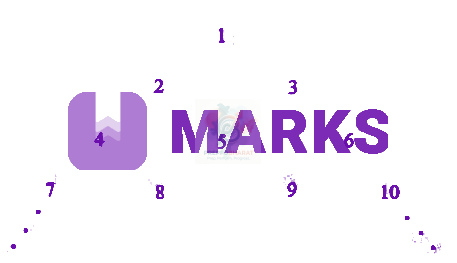 If the $k^{\text {th }}$ row contains exactly $k$ numbers for every natural number $k$, then the row in which the number 5310 will be, is _______
Let $A$ be a non-singular matrix of order 3 . If $\operatorname{det}(3 \operatorname{adj}(2 \operatorname{adj}((\operatorname{det} A) A)))=3^{-13} \cdot 2^{-10}$ and $\operatorname{det}(3 \operatorname{adj}(2 \mathrm{~A}))=2^{\mathrm{m}} \cdot 3^{\mathrm{n}}$, then $|3 \mathrm{~m}+2 \mathrm{n}|$ is equal to $\qquad$
The number of elements in the set $S={(x,y,z):x,y,z\in Z,x+2y+3z=42,x,y,z\geq 0}$ equals ________
Consider the system of linear equation $x+y+z=$ $4\mu ,x+2y+2\lambda z=10\mu ,x+3y+4{\lambda }^{2}z={\mu }^{2}+15$, where $\lambda ,\mu \in R$. Which one of the following statements is NOT correct?
Let $f(x)={2}^{x}-{x}^{2},x\in R$. If $m$ and $n$ are respectively the number of points at which the curves $y=f(x)$ and $y={f}^{'}(x)$ intersects the $x-$axis, then the value of $m+n$ is
The function $f:N-{1}\rightarrow N$; defined by $f(n)=$ the highest prime factor of $n$, is :
If $\left(\frac{1}{\alpha+1}+\frac{1}{\alpha+2}+\ldots \ldots+\frac{1}{\alpha+1012}\right)-\left(\frac{1}{2 \cdot 1}+\frac{1}{4 \cdot 3}+\frac{1}{6 \cdot 5}+\ldots . .+\frac{1}{2024 \cdot 2023}\right)=\frac{1}{2024}$, then $\alpha$ is equal to________
Let $3,a,b,c$ be in $A.P.$ and $3,a-1,b+1,c+9$ be in $G.P.$ Then, the arithmetic mean of $a,b$ and $c$ is:
For $x \geqslant 0$, the least value of $\mathrm{K}$, for which $4^{1+x}+4^{1-x}, \frac{\mathrm{K}}{2}, 16^x+16^{-x}$ are three consecutive terms of an A.P., is equal to :
If $\mathrm{S}(x)=(1+x)+2(1+x)^2+3(1+x)^3+\cdots+60(1+x)^{60}, x \neq 0$, and $(60)^2 \mathrm{~S}(60)=\mathrm{a}(\mathrm{b})^{\mathrm{b}}+\mathrm{b}$, where $a, b \in N$, then $(a+b)$ equal to ______
If $S=\{a \in \mathbf{R}:|2 a-1|=3[a]+2\{a\}\}$, where $[t]$ denotes the greatest integer less than or equal to $t$ and $\{t\}$ represents the fractional part of $t$, then $72 \sum_{a \in S} a$ is equal to ______
Let the relations $R_1$ and $R_2$ on the set $X=\{1,2,3, \ldots, 20\}$ be given by $R_1=\{(x, y): 2 x-3 y=2\}$ and $R_2=\{(x, y):-5 x+4 y=0\}$. If $M$ and $N$ be the minimum number of elements required to be added in $R_1$ and $R_2$, respectively, in order to make the relations symmetric, then $M+N$ equals
Let the sum of the maximum and the minimum values of the function $f(x)=\frac{2 x^2-3 x+8}{2 x^2+3 x+8}$ be $\frac{\mathrm{m}}{\mathrm{n}}$, where $\operatorname{gcd}(\mathrm{m}, \mathrm{n})=1$. Then $\mathrm{m}+\mathrm{n}$ is equal to :
Let $\alpha, \beta$ be the distinct roots of the equation $x^2-\left(t^2-5 t+6\right) x+1=0, t \in \mathbb{R}$ and $a_n=\alpha^n+\beta^n$. Then the minimum value of $\frac{a_{2023}+a_{2025}}{a_{2024}}$ is
The sum of the coefficient of $x^{2 / 3}$ and $x^{-2 / 5}$ in the binomial expansion of $\left(x^{2 / 3}+\frac{1}{2} x^{-2 / 5}\right)^9$ is
In an examination of Mathematics paper, there are $20$ questions of equal marks and the question paper is divided into three sections : $A,B$ and $C$. A student is required to attempt total $15$ questions taking at least $4$ questions from each section. If section $A$ has $8$ questions, section $B$ has $6$ questions and section $C$ has $6$ questions, then the total number of ways a student can select $15$ questions is _________.
If the coefficient of ${x}^{30}$ in the expansion of ${(1+\frac{1}{x})}^{6}{(1+{x}^{2})}^{7}{(1-{x}^{3})}^{8};x\neq 0$ is $\alpha$, then $|\alpha |$ equals _________.
Let three real numbers $a, b, c$ be in arithmetic progression and $a+1, b, c+3$ be in geometric progression. If $a>10$ and the arithmetic mean of $a, b$ and $c$ is 8, then the cube of the geometric mean of $a, b$ and $c$ is
If the system of linear equations $x-2y+z=-4$ $2x+\alpha y+3z=5$ $3x-y+\beta z=3$ has infinitely many solutions, then $12\alpha +13\beta$ is equal to
Let $A={1,2,3,...20}$. Let ${R}_{1}$ and ${R}_{2}$ two relation on $A$ such that ${R}_{1}={(a,b):b$ is divisible by $a$} ${R}_{2}={(a,b):a$ is an integral multiple of $b$} Then, number of elements in ${R}_{1}-{R}_{2}$ is equal to __________.
Let $\alpha =\frac{(4!)!}{(4!{)}^{3!}}$ and $\beta =\frac{(5!)!}{(5!{)}^{4!}}$. Then :
For a differentiable function $f: \mathbb{R} \rightarrow \mathbb{R}$, suppose $f^{\prime}(x)=3 f(x)+\alpha$, where $\alpha \in \mathbb{R}$, $f(0)=1$ and $\lim _{x \rightarrow-\infty} f(x)=7$. Then $9 f\left(-\log _{\mathrm{e}} 3\right)$ is equal to_________
Let $\alpha, \beta ; \alpha>\beta$, be the roots of the equation $x^2-\sqrt{2} x-\sqrt{3}=0$. Let $\mathrm{P}_n=\alpha^n-\beta^n, n \in \mathrm{N}$. Then $(11 \sqrt{3}-10 \sqrt{2}) \mathrm{P}_{10}+(11 \sqrt{2}+10) \mathrm{P}_{11}-11 \mathrm{P}_{12}$ is equal to
Let $\alpha ={1}^{2}+{4}^{2}+{8}^{2}+{13}^{2}+{19}^{2}+{26}^{2}+\ldots \ldots .$ upto $10$ terms and $\beta =\sum _{n=1}^{10}{n}^{4}$. If $4\alpha -\beta =55k+40$, then $k$ is equal to _______.
The sum of the square of the modulus of the elements in the set $\{z=\mathrm{a}+\mathrm{ib}: \mathrm{a}, \mathrm{b} \in \mathbf{Z}, z \in \mathbf{C},|z-1| \leq 1,|z-5| \leq|z-5 \mathrm{i}|\}$ is ________
If $\frac{1}{\sqrt{1}+\sqrt{2}}+\frac{1}{\sqrt{2}+\sqrt{3}}+\ldots+\frac{1}{\sqrt{99}+\sqrt{100}}=m$ and $\frac{1}{1 \cdot 2}+\frac{1}{2 \cdot 3}+\ldots+\frac{1}{99 \cdot 100}=n$, then the point $(\mathrm{m}, \mathrm{n})$ lies on the line
Let $S={x\in R:{(\sqrt{3}+\sqrt{2})}^{x}+{(\sqrt{3}-\sqrt{2})}^{x}=10}$. Then the number of elements in $S$ is:
If 2 and 6 are the roots of the equation $a x^2+b x+1=0$, then the quadratic equation, whose roots are $\frac{1}{2 a+b}$ and $\frac{1}{6 a+b}$, is :
If $\alpha$ denotes the number of solutions of ${|1-i|}^{x}={2}^{x}$ and $\beta =(\frac{|z|}{\mathrm{arg}(z)})$, where $z=\frac{\pi }{4}{(1+i)}^{4}(\frac{1-\sqrt{\pi }\cdot i}{\sqrt{\pi }+i}+\frac{\sqrt{\pi }-i}{1+\sqrt{\pi }\cdot i})$, $i=\sqrt{-1}$, then the distance of the point $(\alpha ,\beta )$ from the line $4x-3y=7$ is ______
The sum of all the solutions of the equation $(8)^{2 x}-16 \cdot(8)^x+48=0$ is :
Let $A$ be a $2 \times 2$ symmetric matrix such that $A\left[\begin{array}{l}1 \\ 1\end{array}\right]=\left[\begin{array}{l}3 \\ 7\end{array}\right]$ and the determinant of $A$ be 1 . If $A^{-1}=\alpha A+\beta I$, where $I$ is an identity matrix of order $2 \times 2$, then $\alpha+\beta$ equals _______
Consider the function $f:[\frac{1}{2},1]\rightarrow R$ defined by $f(x)=4\sqrt{2}{x}^{3}-3\sqrt{2}x-1$. Consider the statements (I) The curve $y=f(x)$ intersects the $x$-axis exactly at one point (II) The curve $y=f(x)$ intersects the $x$-axis at $x=\mathrm{cos}\frac{\pi }{12}$ Then
Remainder when ${64}^{{32}^{32}}$ is divided by $9$ is equal to _____.
Let $A={1,2,3,\ldots .7}$ and let $P(A)$denote the power set of $A$. If the number of functions $f:A\rightarrow P(A)$ such that $a\in f(a),\forall a\in A$ is ${m}^{n},m$ and $n\in N$ and $m$ is least, then $m+n$ is equal to ______.
Let $f(x)=x^5+2 x^3+3 x+1, x \in \mathbf{R}$, and $g(x)$ be a function such that $g(f(x))=x$ for all $x \in \mathbf{R}$. Then $\frac{g(7)}{g^{\prime}(7)}$ is equal to :
Let $\alpha ,\beta$ be the roots of the equation ${x}^{2}-\sqrt{6}x+3=0$ such that $Im(\alpha )>Im(\beta )$. Let $a,b$ be integers not divisible by $3$and $n$ be a natural number such that $\frac{{\alpha }^{99}}{\beta }+{\alpha }^{98}={3}^{n}(a+ib),i=\sqrt{-1}$. Then $n+a+b$ is equal to ___________.
Let the set $S=\{2,4,8,16, \ldots, 512\}$ be partitioned into 3 sets $A, B, C$ with equal number of elements such that $\mathrm{A} \cup \mathrm{B} \cup \mathrm{C}=\mathrm{S}$ and $\mathrm{A} \cap \mathrm{B}=\mathrm{B} \cap \mathrm{C}=\mathrm{A} \cap \mathrm{C}=\phi$. The maximum number of such possible partitions of $S$ is equal to: