Given,
n(M)=20,n(P)=25,n(C)=16
And n(M∩P)≤11,n(M∩C)≤15,n(P∩C)≤15
Now, plotting the diagram and taking all three subjects passed as x we get,
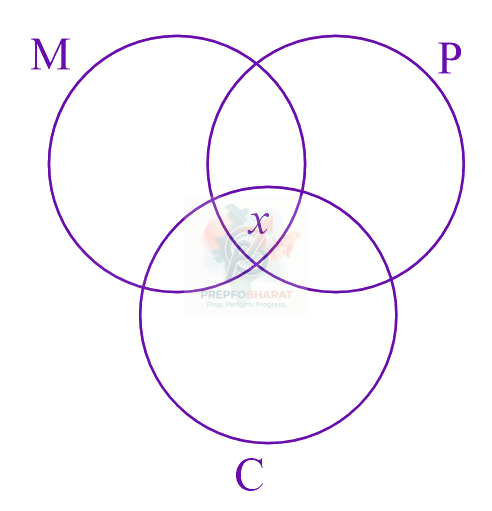
Now, for maximum let x=11.
So, the venn diagram will be,
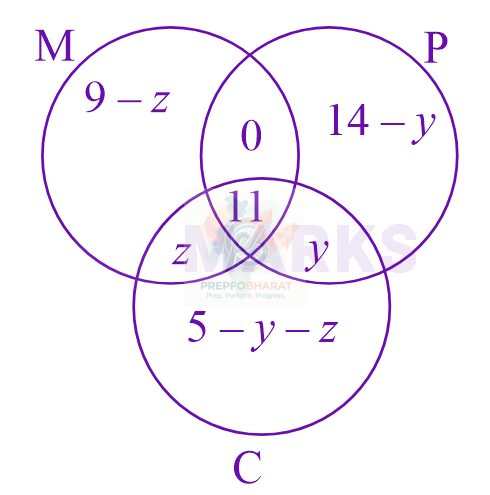
Now, using the given conditions we get,
11+z≤15⇒z≤4
11+y≤15⇒y≤4
Now finding the sum of all we get,
9−z+0+14−y+z+11+y+5−y−z=40
⇒y+z=−1 which is not possible hence the value of x=11 is not possible,
Now taking the maximum value as x=10,
We get, 10+z≤15⇒z≤5
10+y≤15⇒y≤5
Plotting the venn diagram we get,
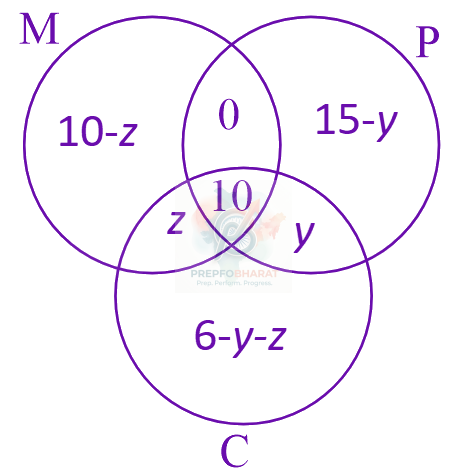
Now, finding the sum we get,
10−z+0+15−y+z+10+y+6−y−z=40
⇒y+z=1 which is possible,
Hence, possible venn diagram will be,
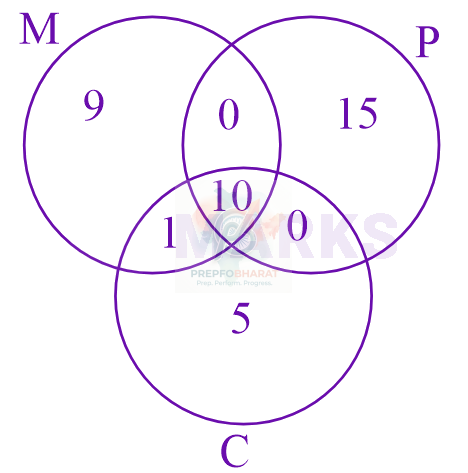
Hence, the maximum number of students passed in all the three subjects is 10.