JEE Main 2023 — Organic Chemistry
Chemistry Organic Chemistry questions from JEE Main 2023.
Other Years
182 Organic Chemistry Questions from 2023
Which of the following is the IUPAC name of CH₃-CH=CH-CHO?
The decreasing order of hydride affinity for following carbocations is: (a) 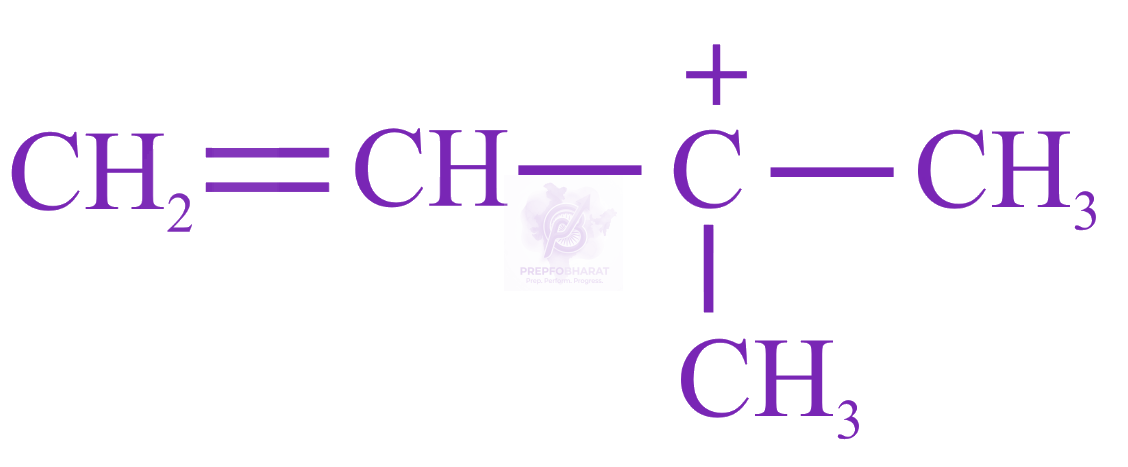 (2) 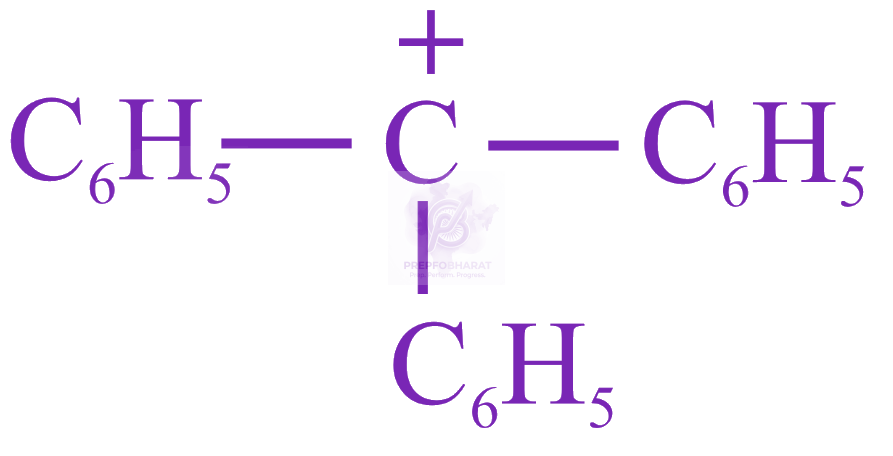 (3) 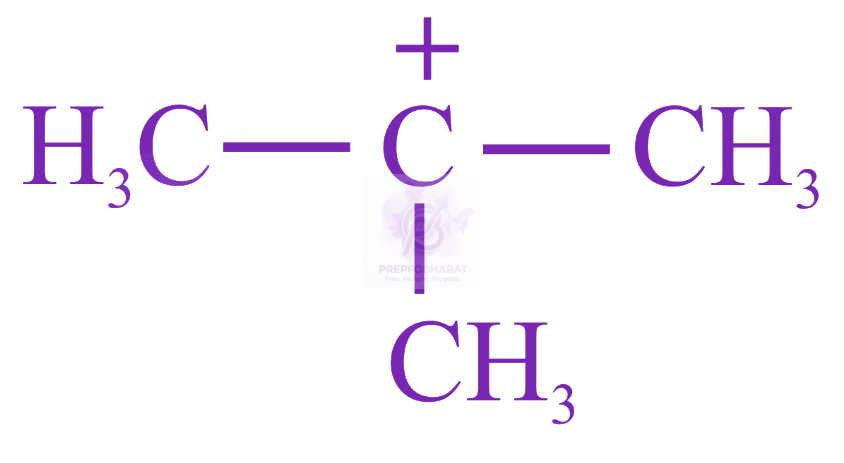 (4) 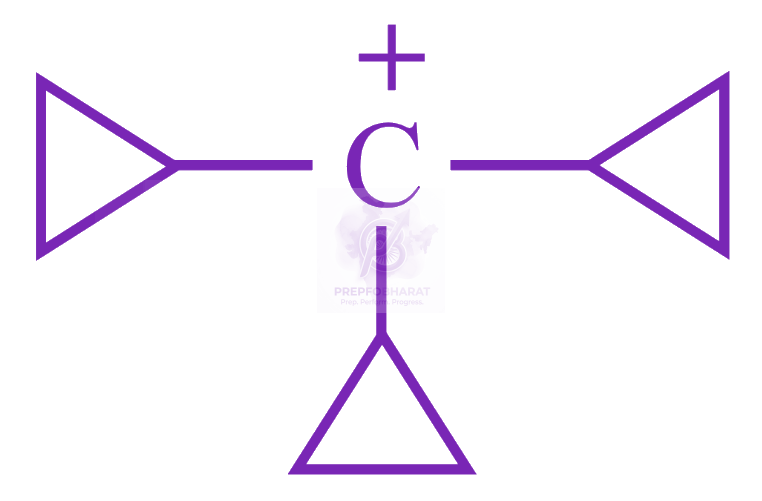 Choose the correct answer from the options given below:
Testosterone, which is a steroidal hormone, has the following structure. 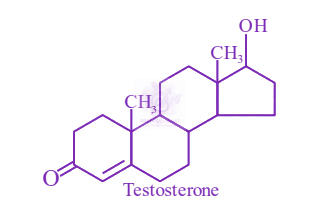 The total number of asymmetric carbon atom/s in testosterone is ____________.
Benzyl isocyanide can be obtained by: (A) 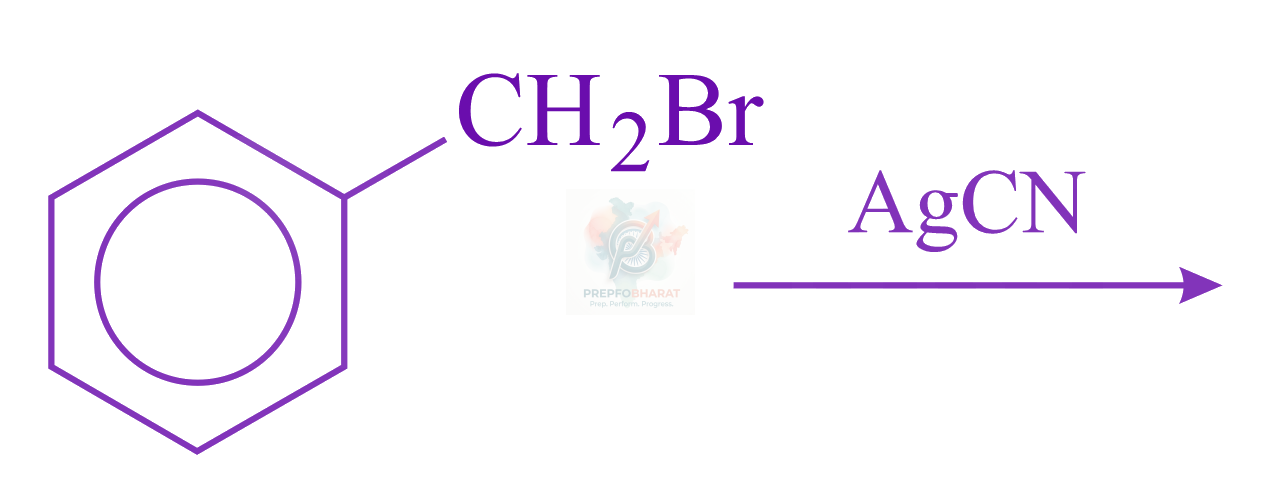 (B) 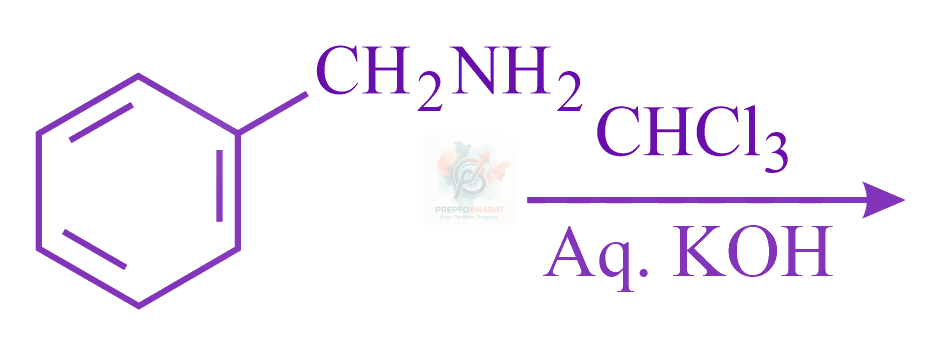 (C) 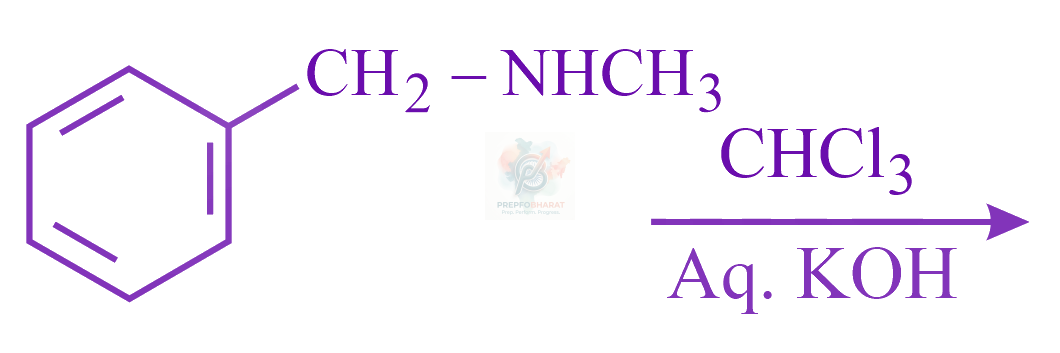 (D) 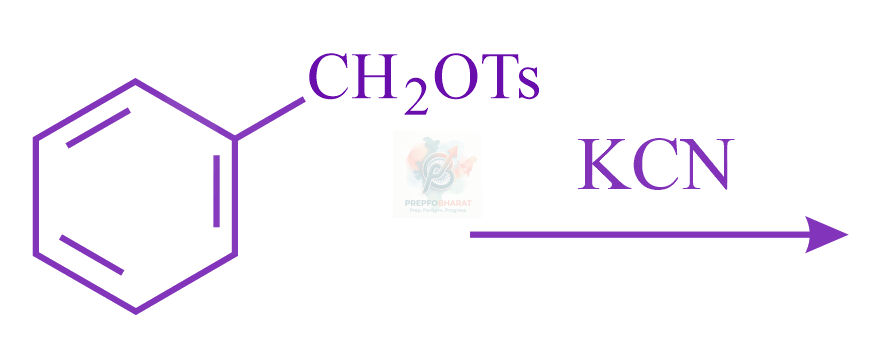 Choose the correct answer from the options given below:
Compound $(X)$ undergoes following sequence of reactions to give the Lactone $(Y)$. 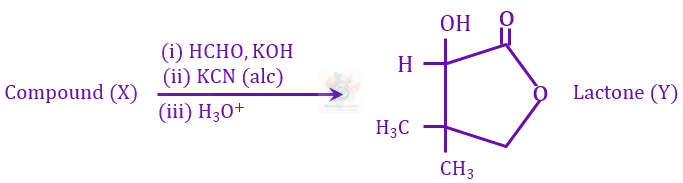
$17\mathrm{mg}$ of a hydrocarbon (M.F. ${C}_{10}{H}_{16}$) takes up $8.40\mathrm{mL}$ of the ${H}_{2}$ gas measured at $0^{\circ}C$ and $760\mathrm{mm}$ of $\mathrm{Hg}$. Ozonolysis of the same hydrocarbon yields ${\mathrm{CH}}_{3}-\underset{\underset{O}{||}}{C}-{\mathrm{CH}}_{3},H-\underset{\underset{O}{||}}{C}-H,H-\underset{\underset{O}{||}}{C}-{\mathrm{CH}}_{2}-{\mathrm{CH}}_{2}-\underset{\underset{O}{||}}{C}-\underset{\underset{O}{||}}{C}-H$ The number of double bond/s present in the hydrocarbon is
Increasing order of stability of the resonance structure is: 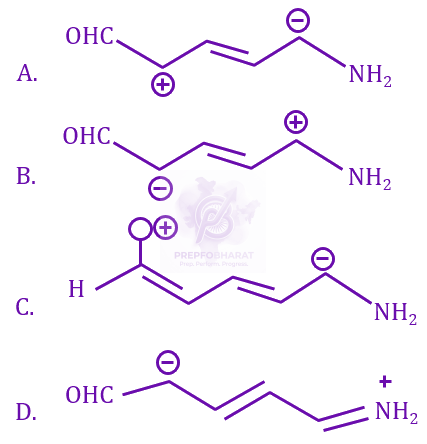
Match List I with List II : 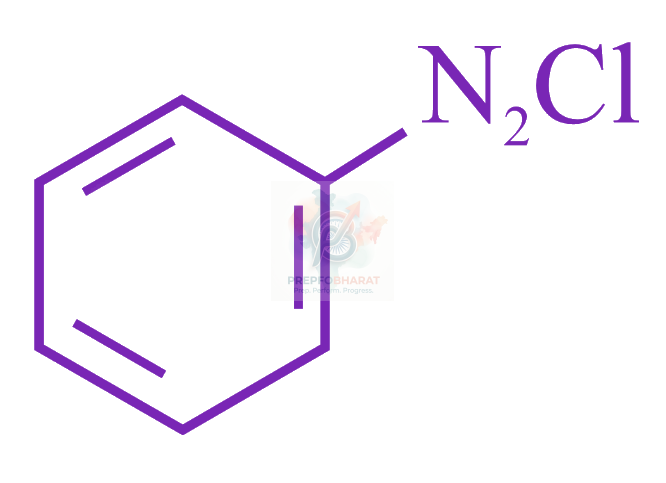 s reacted with reagents in List I to form products in List II products in List II. <table class="pyq-table"><tbody><tr><td colspan="4">List I (Reagent) List II (Product)</td></tr><tr><td>A.</td><td><img src="https://prepforbharat.s3.ap-south-1.amazonaws.com/exam/615f0e999476412f48314daf/Chemistry/images/Amines/648b5a70417cc3fb48d683fa/question_2__q_648b5a70417cc3fb48d683fa__cdn-question-pool.getmarks.app__e9b7ca1e-a08c-463c-befd-bad3cae01260__3bf765b91b_final_ppt_sync.png" alt="JEE Main 2023 Chemistry, Amines — question figure 2"></td><td>I.</td><td><img src="https://prepforbharat.s3.ap-south-1.amazonaws.com/exam/615f0e999476412f48314daf/Chemistry/images/Amines/648b5a70417cc3fb48d683fa/question_3__q_648b5a70417cc3fb48d683fa__cdn-question-pool.getmarks.app__ab91210b-b62c-4fa2-8d6c-44f929671b1d__9cdf92b4f8_final_ppt_sync.png" alt="JEE Main 2023 Chemistry, Amines — question figure 3"></td></tr><tr><td>B.</td><td>${\mathrm{HBF}}_{4,\Delta }$</td><td>II.</td><td><img src="https://prepforbharat.s3.ap-south-1.amazonaws.com/exam/615f0e999476412f48314daf/Chemistry/images/Amines/648b5a70417cc3fb48d683fa/question_4__q_648b5a70417cc3fb48d683fa__cdn-question-pool.getmarks.app__52eff05c-a27b-44e0-ac32-0c0af363c271__24e09a08c1_final_ppt_sync.png" alt="JEE Main 2023 Chemistry, Amines — question figure 4"></td></tr><tr><td>C.</td><td>Cu, HCl</td><td>III.</td><td><img src="https://prepforbharat.s3.ap-south-1.amazonaws.com/exam/615f0e999476412f48314daf/Chemistry/images/Amines/648b5a70417cc3fb48d683fa/question_5__q_648b5a70417cc3fb48d683fa__cdn-question-pool.getmarks.app__ebd6b0d7-3841-4ec9-a265-fb22ce59a5e8__5db116195d_final_ppt_sync.png" alt="JEE Main 2023 Chemistry, Amines — question figure 5"></td></tr><tr><td>D.</td><td>CuCN/KCN</td><td>IV.</td><td><img src="https://prepforbharat.s3.ap-south-1.amazonaws.com/exam/615f0e999476412f48314daf/Chemistry/images/Amines/648b5a70417cc3fb48d683fa/question_6__q_648b5a70417cc3fb48d683fa__cdn-question-pool.getmarks.app__ff994660-4747-4109-9052-2ad0fdc4d27c__3d0c8ce825_final_ppt_sync.png" alt="JEE Main 2023 Chemistry, Amines — question figure 6"></td></tr></tbody></table>Choose the correct answer from the options given below:
The major product formed in the following reaction is 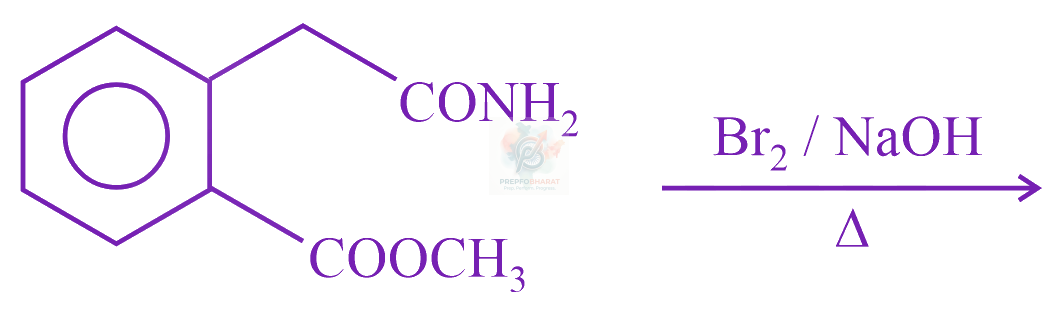
In the following reaction 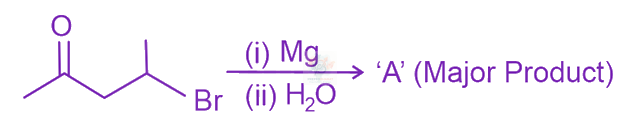
Identify the product formed ($A$ and $E$) 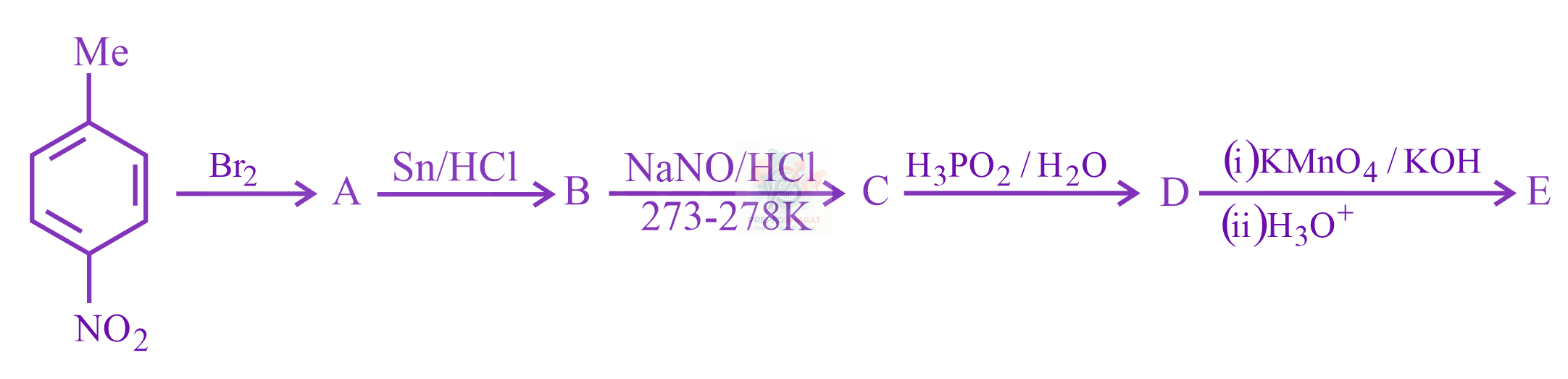
Identify the correct order of reactivity for the following pairs towards the respective mechanism (A) 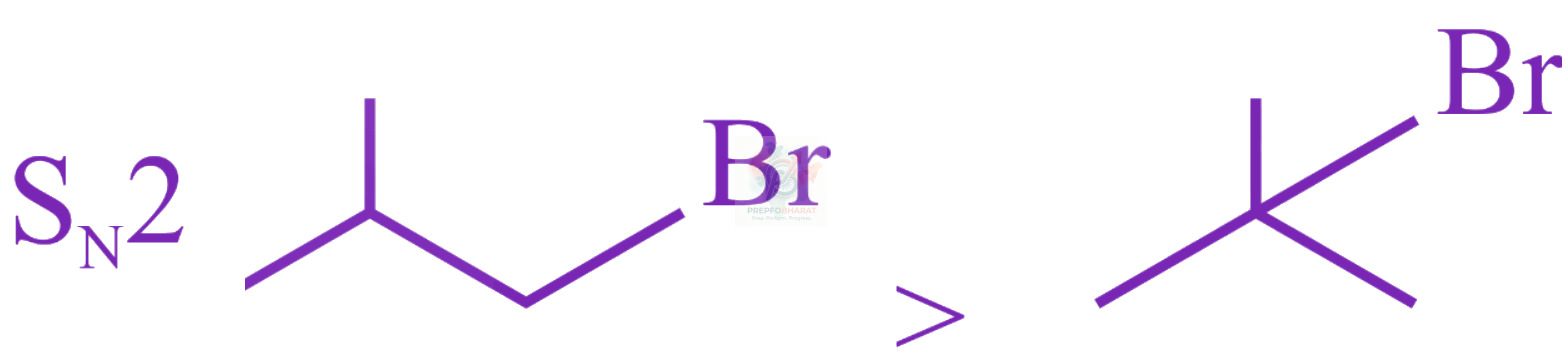 (B) 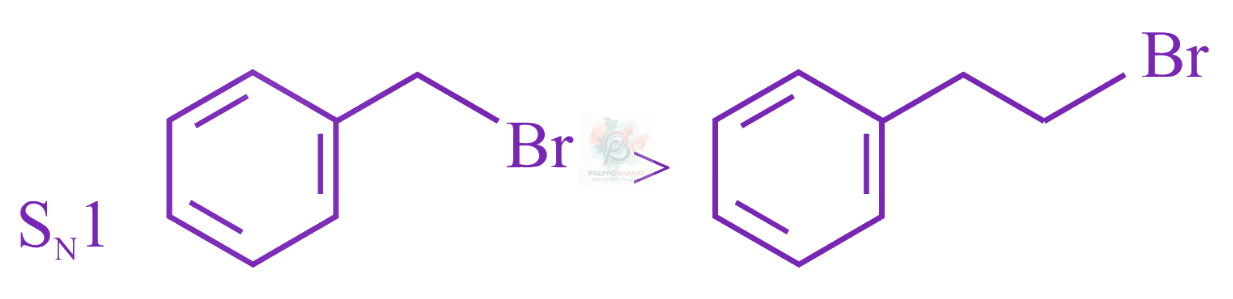 (C) Electrophilic substitution 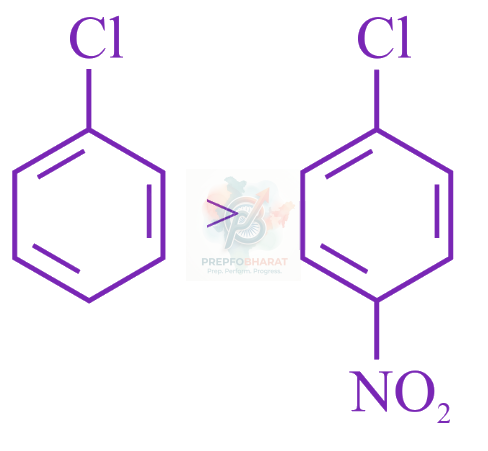 (D) Nucleophilic substitution 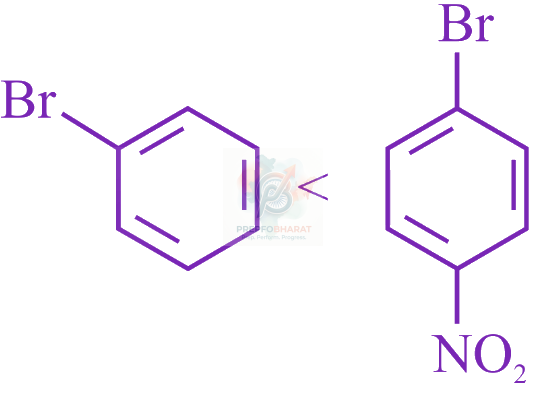 Choose the correction answer from the options given below:
The major products A and B from the following reactions are : 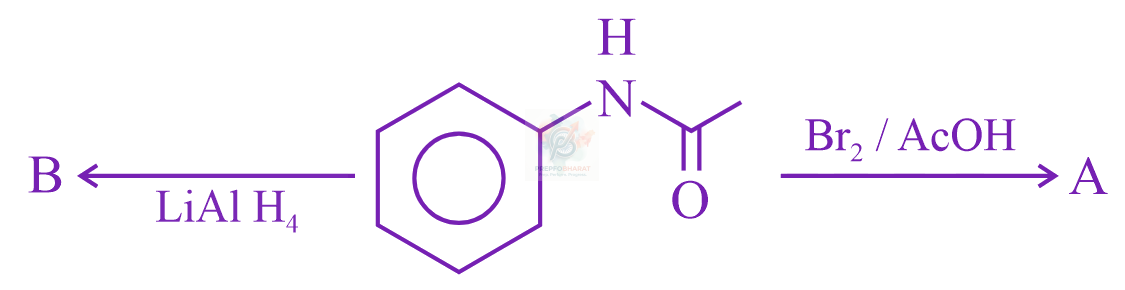
Find out the major products from the following reaction sequence. 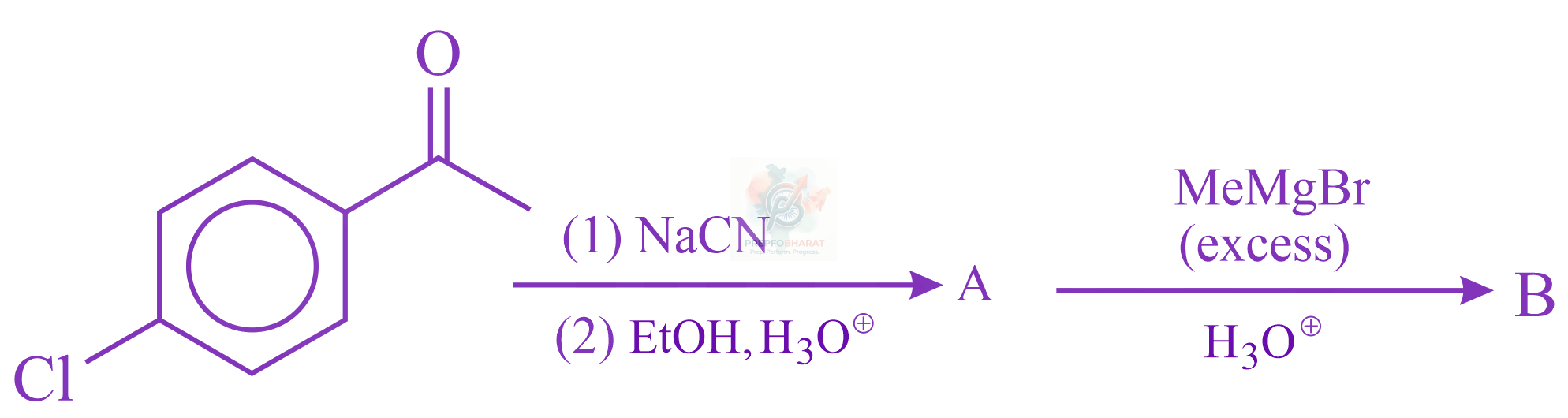
Suitable reaction condition for preparation of Methyl phenyl ether is
Given below are two statements: One is labelled as Assertion A and the other is labelled as Reason R. Assertion A: 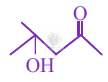 can be easily reduced using $\mathrm{Zn}-\mathrm{Hg}/\mathrm{HCl}$ to 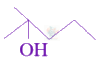 Reason R: $\mathrm{Zn}-\mathrm{Hg}/\mathrm{HCl}$ is used to reduce carbonyl group to –${\mathrm{CH}}_{2}$ – group. In the light of the above statements, choose the correct answer from the options given below:
Which of the following statement is correct for paper chromatography?
Number of compounds from the following which will not produce orange red precipitate with Benedict solution is........ Glucose, maltose, sucrose, ribose,$2$-deoxyribose, amylose, lactose
In the following reaction $‘X’$ is ${\mathrm{CH}}_{3}{({\mathrm{CH}}_{2})}_{4}{\mathrm{CH}}_{3}\rightarrow _{\underset{\triangle }{\mathrm{HCl}}}^{\mathrm{Anhy}.{\mathrm{AlCl}}_{3}}\underset{\mathrm{major}\mathrm{product}}{X}$
L-isomer of tetrose $X({C}_{4}{H}_{8}{O}_{4})$ gives positive Schiff’s test and has two chiral carbons. On acetylation ‘X’ yields triacetate. ‘X’ also undergoes following reactions. 
$A$' and '$B$' formed in the following set of reactions are: 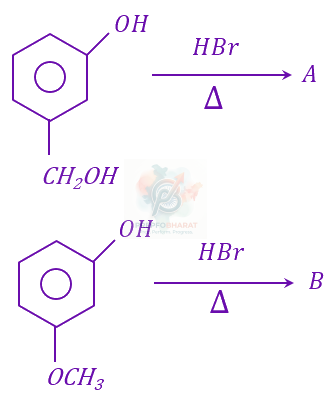
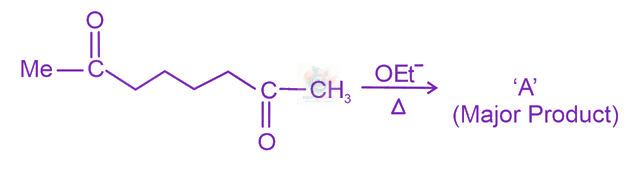 $A$ in the above reaction is :
Number of isomeric compounds with molecular formula ${C}_{9}{H}_{10}O$ which (i) do not dissolve in $\mathrm{NaOH}$ (ii) do not dissolve in $\mathrm{HCl}$. (iii) do not give orange precipitate with $2,4$ - DNP (iv) on hydrogenation give identical compound with molecular formula ${C}_{9}{H}_{12}O$ is
Given below are two statements: Statement I: Sulphanilic acid gives esterification test for carboxyl group. Statement II: Sulphanilic acid gives red colour in Lassigne’s test for extra element detection. In the light of the above statements, choose the most appropriate answer from the options given below:
In Dumas method for the estimation of ${N}_{2}$, the sample is heated with copper oxide and the gas evolved is passed over:
The descending order of acidity for the following carboxylic acid is- (A) ${\mathrm{CH}}_{3}\mathrm{COOH}$ (B) ${F}_{3}C-\mathrm{COOH}$ (C) ${\mathrm{ClCH}}_{2}-\mathrm{COOH}$ (D) ${\mathrm{FCH}}_{2}-\mathrm{COOH}$ (E) ${\mathrm{BrCH}}_{2}-\mathrm{COOH}$ Choose the correct answer from the options given below:
Correct statements for the given reaction are: 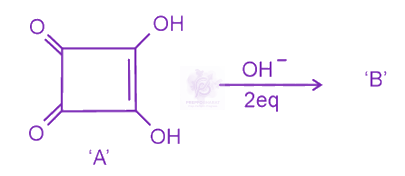 A. Compound ‘$B$’ is aromatic B. The completion of above reaction is very slow C. ‘$A$’ shows tautomerism D. The bond lengths of $C-C$ in compound $B$ are found to be same Choose the correct answer from the options given below.
The strongest acid from the following is
 The correct sequence of reagents for the preparation of $Q$ and $R$ is:
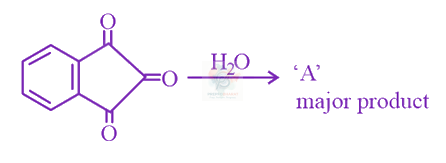 ‘$A$’ formed in the above reaction is
Find out the major product from the following reaction. 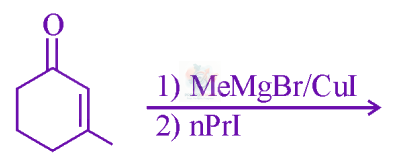
A compound $'X'$ when treated with phthalic anhydride in presence of concentrated ${H}_{2}{\mathrm{SO}}_{4}$ yields $'Y'$. $'Y'$ is used as an acid/base indicator. $'X'$ and $'Y'$ are respectively
The isomeric deuterated bromide with molecular formula ${C}_{4}{H}_{8}\mathrm{DBr}$ having two chiral carbon atoms is
Given below are two statements, one is labelled as Assertion A and the other is labelled as Reason R. Assertion A : Order of acidic nature of the following compounds is $A>B>C$. 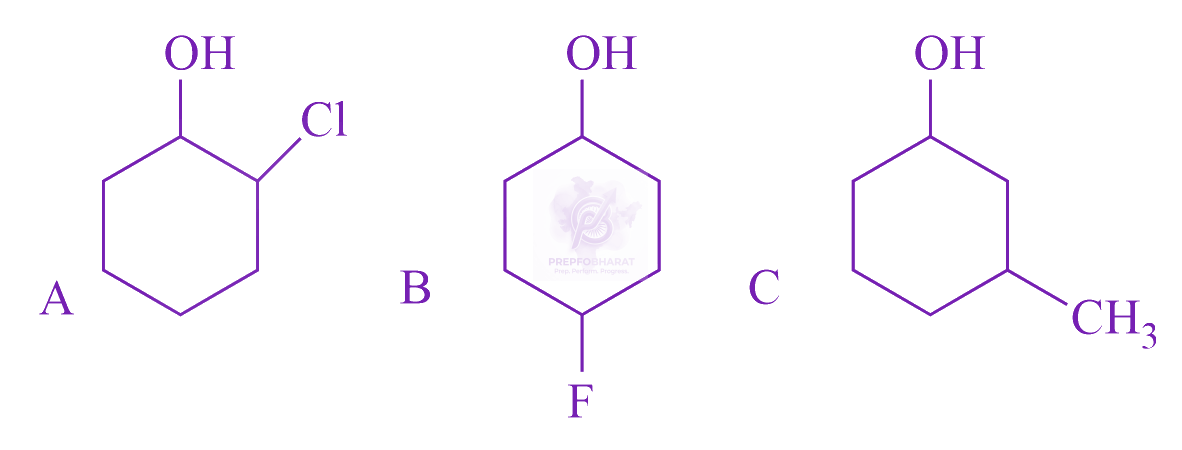 Reason R: Fluoro is a stronger electron withdrawing group than Chloro group. In the light of the above statements, choose the correct answer from the options given below :
Given below are two statements, one is labelled as Assertion A and the other is labelled as Reason R. Assertion A : Benzene is more stable than hypothetical cyclohexatriene. Reason R : The delocalized $\pi$ electron cloud is attracted more strongly by nuclei of carbon atoms. In the light of the above statements, choose the correct answer from the options given below:
Resonance in carbonate ion $({\mathrm{CO}}_{3}^{2-})$ is 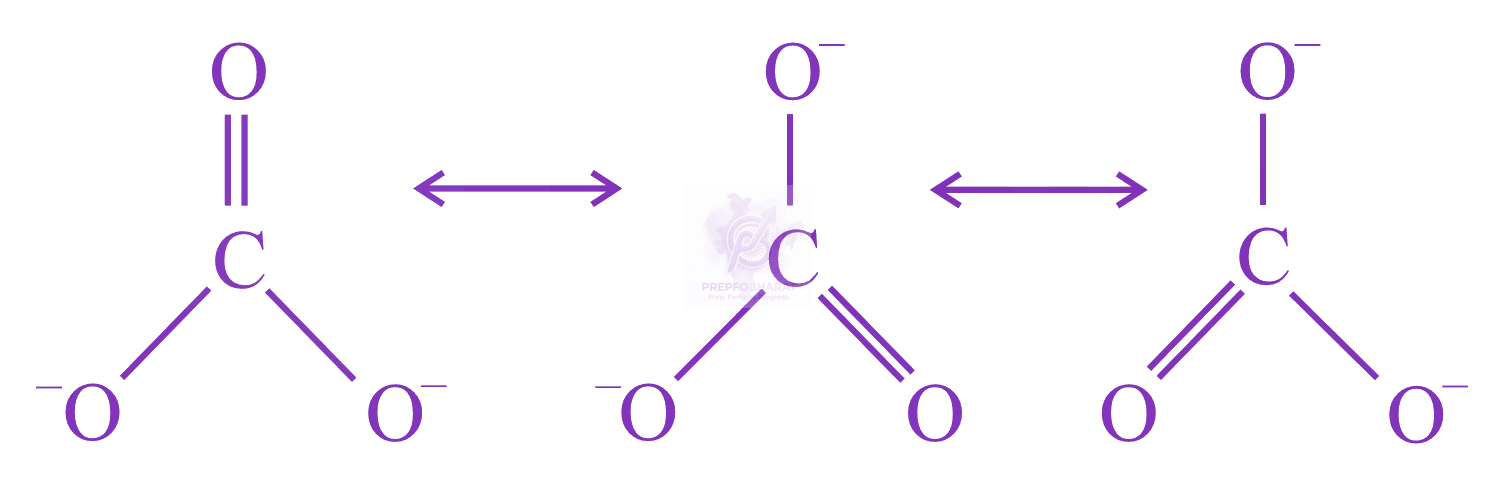 Which of the following is true?
Match List-I with List-II. <table class="pyq-table"><tbody><tr><td colspan="2" rowspan="1">List-I Element detected</td><td colspan="2" rowspan="1">List-II Reagent used/Product formed</td></tr><tr><td>$A$</td><td>Nitrogen</td><td>$I$</td><td>${\mathrm{Na}}_{2}[\mathrm{Fe}{(\mathrm{CN})}_{5}\mathrm{NO}]$</td></tr><tr><td>$B$</td><td>Sulphur</td><td>$\mathrm{II}$</td><td>${\mathrm{AgNO}}_{3}$</td></tr><tr><td>$C$</td><td>Phosphorus</td><td>$\mathrm{III}$</td><td>${\mathrm{Fe}}_{4}{[\mathrm{Fe}{(\mathrm{CN})}_{6}]}_{3}$</td></tr><tr><td>$D$</td><td>Halogen</td><td>$\mathrm{IV}$</td><td>${({\mathrm{NH}}_{4})}_{2}{\mathrm{MoO}}_{4}$</td></tr></tbody></table>Choose the correct answer from the options given below:
Match List I with List II. Choose the correct answer from the options given below :- <table class="pyq-table"><tbody><tr><td></td><td>List I Isomeric pairs</td><td></td><td>List II Type of isomers</td></tr><tr><td>A</td><td>Propanamine and N- Methylethanamine</td><td>I</td><td>Metamers</td></tr><tr><td>B</td><td>Hexan-2-one Hexan-3-one</td><td>II</td><td>Positional isomers</td></tr><tr><td>C</td><td>Ethanamide and Hydroxyethanimine</td><td>III</td><td>Functional isomers</td></tr><tr><td>D</td><td>o-nitrophenol and pnitrophenol</td><td>IV</td><td>Tautomers</td></tr></tbody></table>
The correct order of reactivity of following haloarenes towards nucleophilic substitution with aqueous $\mathrm{NaOH}$ is: 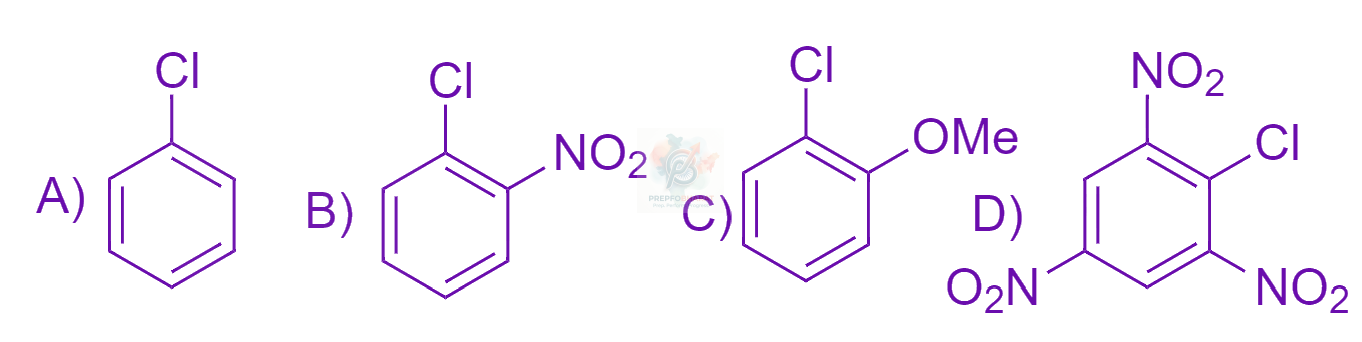 Choose the correct answer from the options given below:
Using column chromatography, mixture of two compounds ‘$A$’ and ‘$B$’ was separated. ‘$A$’ eluted first, this indicates ‘$B$’ has
The correct order for acidity of the following hydroxyl compound is (A) ${\mathrm{CH}}_{3}\mathrm{OH}$ (B) ${({\mathrm{CH}}_{3})}_{3}\mathrm{COH}$ (C) 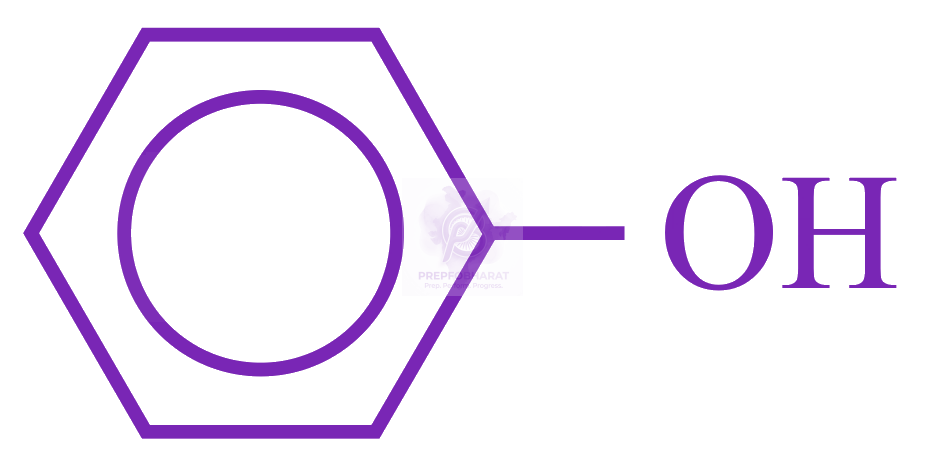 (D) 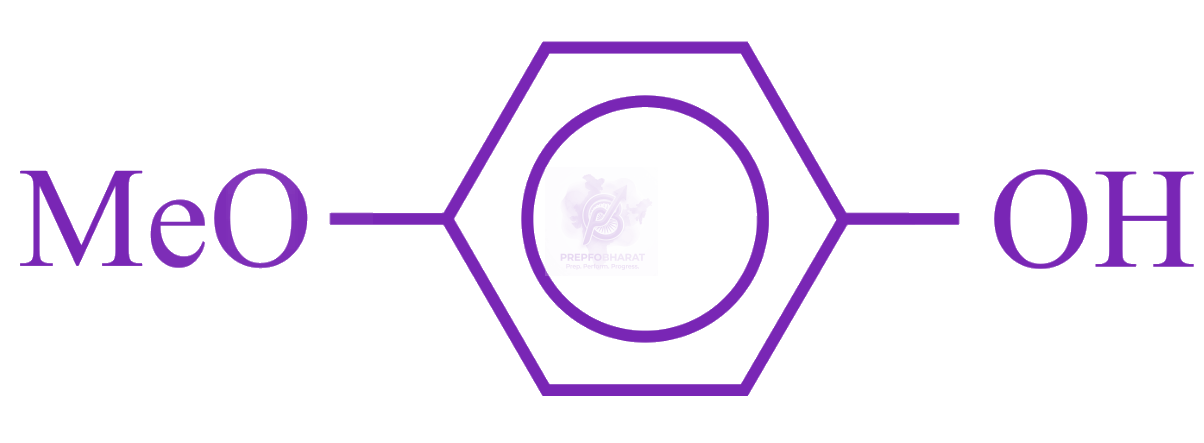 (E) 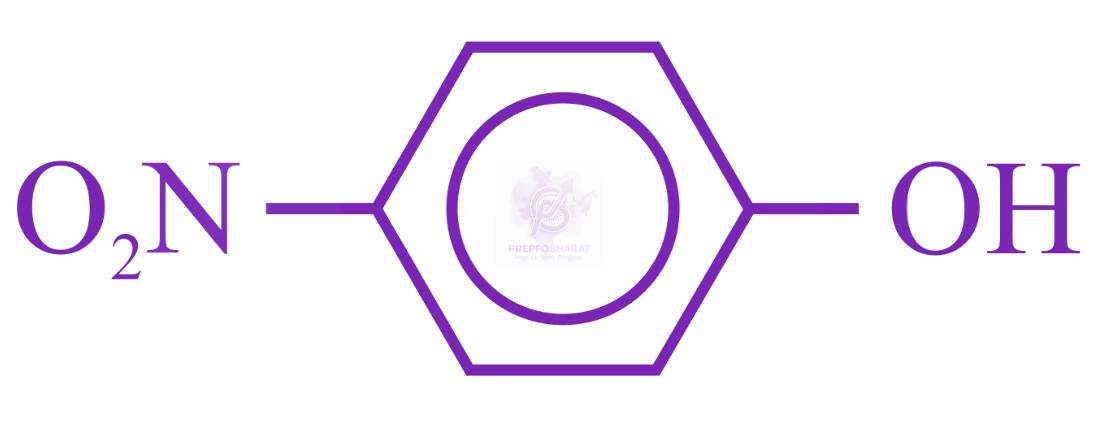 Choose the correct answer from the options given below:
Match items of column I and II <table class="pyq-table"><tbody><tr><td>Column I (Mixture of compounds)</td><td>Column II (Separation Technique)</td></tr><tr><td>A. ${H}_{2}O/{\mathrm{CH}}_{2}{\mathrm{Cl}}_{2}$</td><td>i. Crystallization</td></tr><tr><td>B. <img src="https://prepforbharat.s3.ap-south-1.amazonaws.com/exam/615f0e999476412f48314daf/Chemistry/images/General_Organic_Chemistry/648b5a70417cc3fb48d682a2/question_1__q_648b5a70417cc3fb48d682a2__cdn-question-pool.getmarks.app__5e082b5c-afbf-4440-b682-999f3a210bc5-9896029__4fbc32c1e9_final_ppt_sync.png" alt="JEE Main 2023 Chemistry, General Organic Chemistry — question figure"></td><td>ii. Differential solvent extraction</td></tr><tr><td>C. Kerosene/Naphthalene</td><td>iii. Column chromatography</td></tr><tr><td>D. ${C}_{6}{H}_{12}{O}_{6}/\mathrm{NaCl}$</td><td>iv. Fractional Distillation</td></tr></tbody></table>
Which will undergo deprotonation most readily in basic medium? 
Given below are two statements: one is labelled as Assertion (A) and the other is labelled as Reason (R). Assertion (A): Ketoses give Seliwanoff’s test faster than Aldoses. Reason (R): Ketoses undergo $\beta$-elimination followed by formation of furfural. In the light of the above statements, choose the correct answer from the options given below:
Among the following the number of compounds which will give positive iodoform reaction is _____. (a) $1$-Phenylbutan-$2$-one (b) $2$-Methylbutan-$2$-ol (c) $3$-Methylbutan-$2$-ol (d) $1$-Phenylethanol (e) $3,3$-dimethylbutan-$2$-one (f) $1$-Phenylpropan-$2$-ol
In the following reaction, ‘$A$’ is 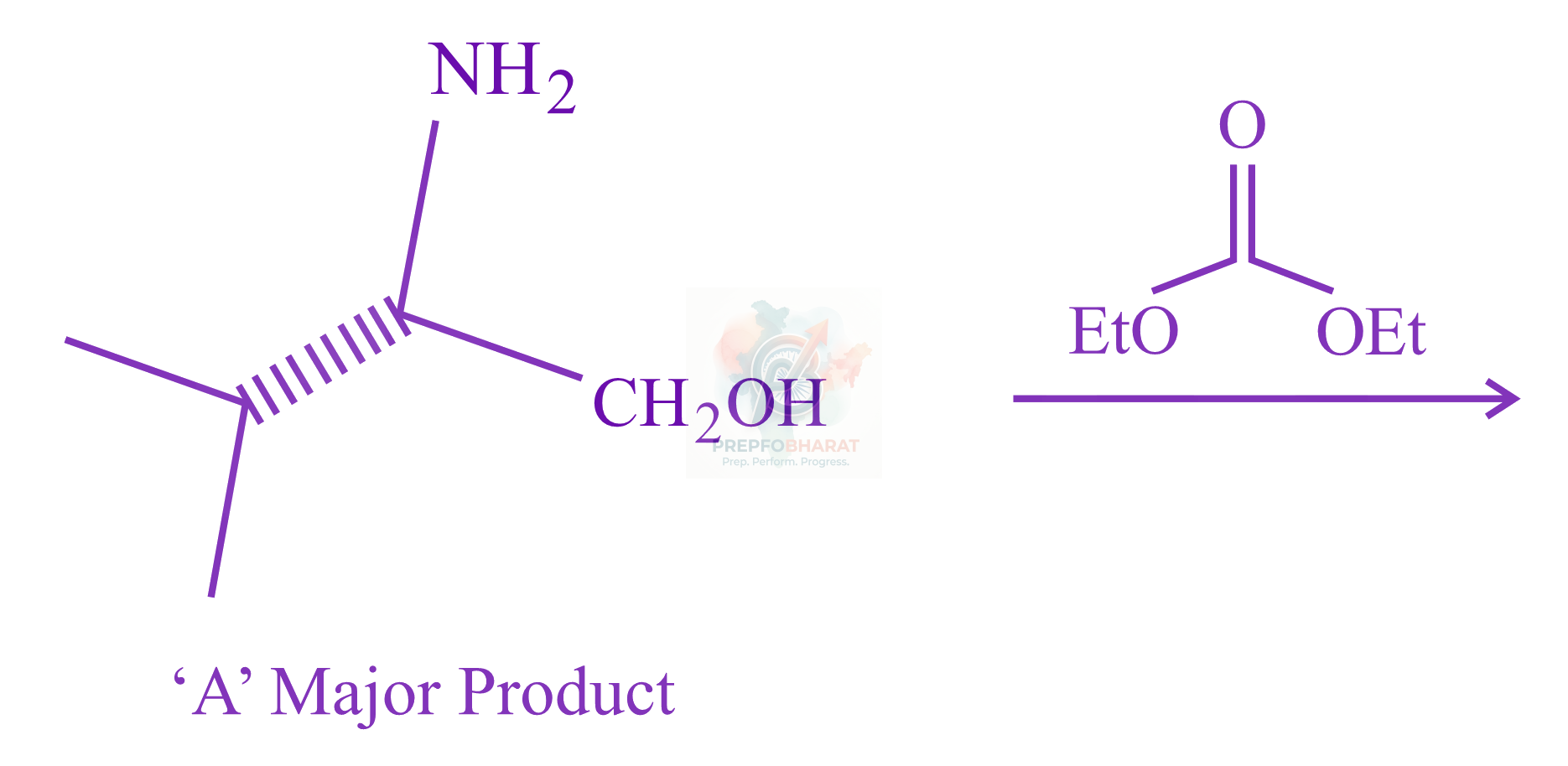
A short peptide on complete hydrolysis produces $3$ moles of glycine $(G)$, two moles of leucine $(L)$ and two moles of valine $(V)$ per mole of peptide. The number of peptide linkages in it are _____ .
The increasing order of ${\mathrm{pK}}_{a}$ for the following phenols is (A) 2,4-Dinitrophenol (B) 4-Nitrophenol (C) 2,4,5-Trimethylphenol (D) Phenol (E) 3-Chlorophenol Choose the correct answer from the option given below :
In SN2 reactions, the rate of reaction depends on:
How many of the transformation given below would result in aromatic amines? 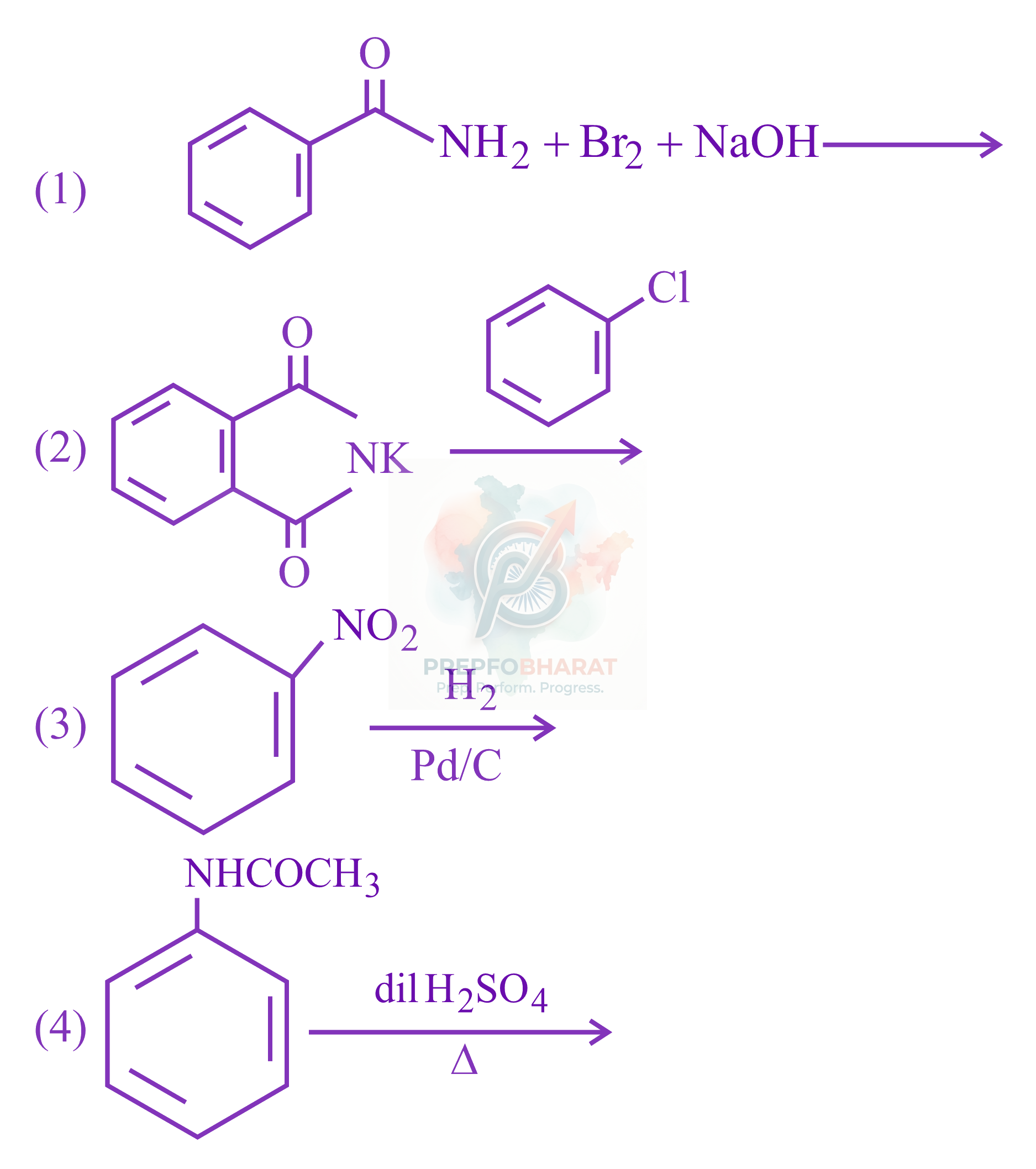
The naturally occurring amino acid that contains only one basic functional group in its chemical structure is
Which of the following compounds would give the following set of qualitative analysis? (i) Fehling’s Test: Positive (ii) $\mathrm{Na}$ fusion extract upon treatment with sodium nitroprusside gives a blood red colour but not prussian blue.
Match List I with List II<table class="pyq-table"><tbody><tr><td></td><td>List I Natural amino acid</td><td></td><td>List II One Letter Code</td></tr><tr><td>(A)</td><td>Glutamic acid</td><td>(I)</td><td>$Q$</td></tr><tr><td>(B)</td><td>Glutamine</td><td>(II)</td><td>$W$</td></tr><tr><td>(C)</td><td>Tyrosine</td><td>(III)</td><td>$E$</td></tr><tr><td>(D)</td><td>Tryptophan</td><td>(IV)</td><td>$Y$</td></tr></tbody></table> Choose the correct answer from the options given below:
The one giving maximum number of isomeric alkenes on dehydrohalogenation reaction is (excluding rearrangement)
In sulphur estimation. $0.471g$ of an organic compound gave $1.4439g$ of barium sulphate. The percentage of sulphur in the compound is _______(Nearest Integer) (Given: Atomic mass Ba: $137u:S:32u,O:16u$ )
In the following halogenated organic compounds the one with maximum number of chlorine atoms in its structure is:
The functional group in aldehydes is
Match List I with List II. <table class="pyq-table"><tbody><tr><td colspan="2" rowspan="1">List I</td><td colspan="2" rowspan="1">List II</td></tr><tr><td colspan="2" rowspan="1">Reaction</td><td colspan="2" rowspan="1">Reagents</td></tr><tr><td>(A)</td><td>Hoffmann Degradation</td><td>(I)</td><td>Conc.$\mathrm{KOH},\Delta$</td></tr><tr><td>(B)</td><td>Clemmensen reduction</td><td>(II)</td><td>${\mathrm{CHCl}}_{3},\mathrm{NaOH}/{H}_{3}{O}^{+}$</td></tr><tr><td>(C)</td><td>Cannizzaro reaction</td><td>(III)</td><td>${\mathrm{Br}}_{2},\mathrm{NaOH}$</td></tr><tr><td>(D)</td><td>Reimer-Tiemann reaction</td><td>(IV)</td><td>$\mathrm{Zn}-\mathrm{Hg}/\mathrm{HCl}$</td></tr></tbody></table>
The major product ‘$P$’ formed in the following sequence of reactions is 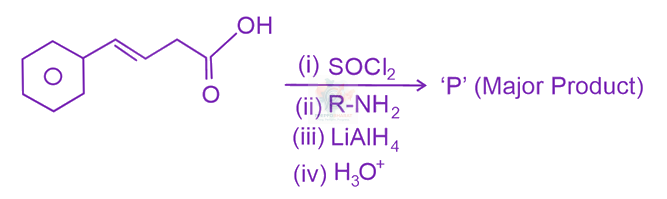
The major product formed in the following reaction is 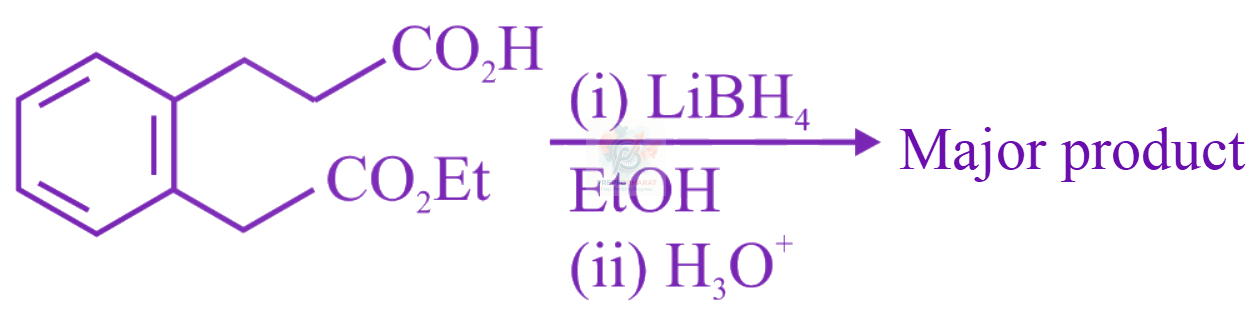
A trisubstituted compound '$A$', ${C}_{10}{H}_{12}{O}_{2}$ gives neutral ${\mathrm{FeCl}}_{3}$ test positive. Treatment of compound '$A$' with $\mathrm{NaOH}$ and ${\mathrm{CH}}_{3}\mathrm{Br}$ gives ${C}_{11}{H}_{14}{O}_{2}$, with hydroiodic acid gives methyl iodide and with hot conc. $\mathrm{NaOH}$ gives a compound $B$, ${C}_{10}{H}_{12}{O}_{2}$. Compound '$A$' also decolorises alkaline ${\mathrm{KMnO}}_{4}$. The number of $\pi$ bond/s present in the compound '$A$' is _____ .
Incorrect method of preparation for alcohols from the following is:
The number of possible isomeric products formed when $3$-chloro-$1$-butene reacts with $\mathrm{HCl}$ through carbocation formation is.........
Match List I and List II <table class="pyq-table"><tbody><tr><td colspan="2" rowspan="1">List I Vitamin</td><td colspan="2" rowspan="1">List II Deficiency disease</td></tr><tr><td>$A$</td><td>Vitamin A</td><td>$I$</td><td>Beri-Beri</td></tr><tr><td>$B$</td><td>Thiamine</td><td>$\mathrm{II}$</td><td>Cheilosis</td></tr><tr><td>$C$</td><td>Ascorbic acid</td><td>$\mathrm{III}$</td><td>Xerophthalmia</td></tr><tr><td>$D$</td><td>Riboflavin</td><td>$\mathrm{IV}$</td><td>Scurvy</td></tr></tbody></table>Choose the correct answer from the options given below
Identify the correct order for the given property for following compounds 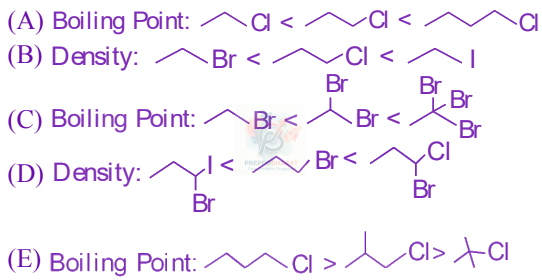 Choose the correct answer from the option given below :-
Number of bromo derivatives obtained on treating ethane with excess of ${\mathrm{Br}}_{2}$ in diffused sunlight is $_________$
Given below are two statements: one is labelled as Assertion (A) and the other is labelled as Reason (R). Assertion (A): $\alpha$-halocarboxylic acid on reaction with dil. ${\mathrm{NH}}_{3}$ gives good yield of $\alpha$-amino carboxylic acid whereas the yield of amines is very low when prepared from alkyl halides. Reason (R): Amino acids exist in zwitter ion form in aqueous medium. In the light of the above statements, choose the correct answer from the options given below :
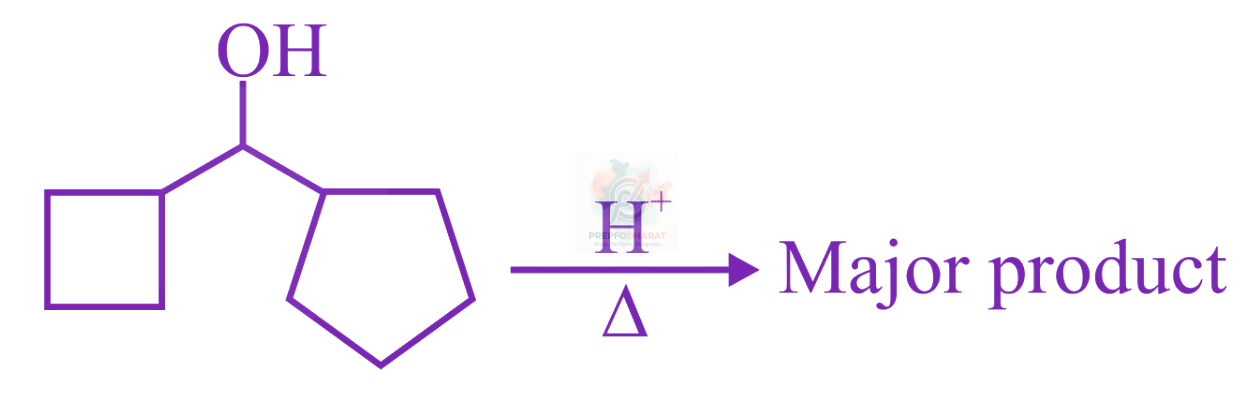 In the above reaction, left hand side and right hand side rings are named as $‘A’$ and $‘B’$ respectively. They undergo ring expansion. The correct statement for this process is:
An athlete is given $100g$ of glucose $({C}_{6}{H}_{12}{O}_{6})$ for energy. This is equivalent to $1800\mathrm{kJ}$ of energy. The $50%$ of this energy gained is utilized by the athlete for sports activities at the event. In order to avoid storage of energy, the weight of extra water he would need to perspire is $_____g$ (Nearest integer) Assume that there is no other way of consuming stored energy. Given : The enthalpy of evaporation of water is $45\mathrm{kJ}{\mathrm{mol}}^{-1}$ Molar mass of $C,H&O$ are $12.1$ and $16g{\mathrm{mol}}^{-1}$.
Given below are two statements : Statement I : Pure Aniline and other arylamines are usually colourless. Statement II : Arylamines get coloured on storage due to atmospheric reduction. In the light of the above statements, choose the most appropriate answer from the options given below :
Cyclohexylamine when treated with nitrous acid yields (P). On treating (P) with PCC results in (Q). When (Q) is heated with dil. $\mathrm{NaOH}$ we get (R) The final product (R) is:
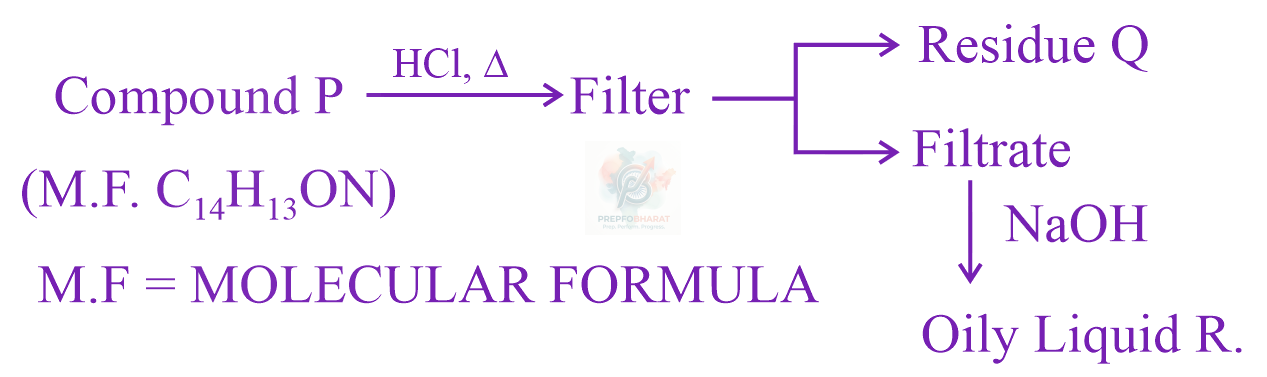 Compound $P$ is neutral, $Q$ gives effervescence with ${\mathrm{NaHCO}}_{3}$ while $R$ reacts with Hinsberg’s reagent to give solid soluble in $\mathrm{NaOH}.$ Compound $P$ is
'$R$' formed in the following sequence of reaction is: 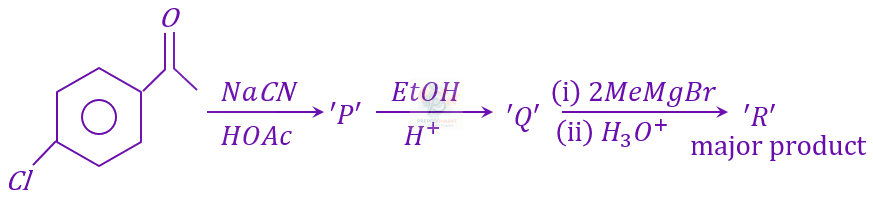
Sulphur (S) containing amino acids from the following are: (a) isoleucine (b) cysteine (c) lysine (d) methionine (e) glutamic acid
When $0.01\mathrm{mol}$ of an organic compound containing $60%$ carbon was burnt completely, $4.4g$ of ${\mathrm{CO}}_{2}$ was produced. The molar mass of compound is _____ ${\mathrm{gmol}}^{-1}$ (Nearest integer)
Total number of tripeptides possible by mixing of valine and proline is ________ .
Match List I with List II: <table class="pyq-table"><tbody><tr><td></td><td>List I (Mixture)</td><td></td><td>List II (Separation Technique)</td></tr><tr><td>(A)</td><td>${\mathrm{CHCl}}_{3}+{C}_{6}{H}_{5}{\mathrm{NH}}_{2}$</td><td>I</td><td>Steam distillation</td></tr><tr><td>(B)</td><td>${C}_{6}{H}_{14}+{C}_{5}{H}_{12}$</td><td>II</td><td>Differential extraction</td></tr><tr><td>(C)</td><td>${C}_{6}{H}_{5}{\mathrm{NH}}_{2}+{H}_{2}O$</td><td>III</td><td>Distillation</td></tr><tr><td>(D)</td><td>Organic compound in ${H}_{2}O$</td><td>IV</td><td>Fractional distillation</td></tr></tbody></table>
Reaction of propanamide with ${\mathrm{Br}}_{2}/\mathrm{KOH}$ (aq) produces:
For the reaction ${\mathrm{RCH}}_{2}\mathrm{Br}+{I}^{-}\overset{\text{ Acetone }}{\longrightarrow }\underset{\text{ major }}{{\mathrm{RCH}}_{2}I}+{\mathrm{Br}}^{-}$ The correct statement is
Identify the incorrect option from the following:
Match List I with List II <table class="pyq-table"><tbody><tr><td colspan="2" rowspan="1">List I</td><td colspan="2" rowspan="1">List II</td></tr><tr><td>A</td><td><img src="https://prepforbharat.s3.ap-south-1.amazonaws.com/exam/615f0e999476412f48314daf/Chemistry/images/Haloalkanes_and_Haloarenes/648b5a6f417cc3fb48d681e0/question_1__q_648b5a6f417cc3fb48d681e0__cdn-question-pool.getmarks.app__0330938c-4009-4fcf-abce-975bc19ab9bf-9895888_A__d7deb547ef_final_ppt_sync.png" alt="JEE Main 2023 Chemistry, Haloalkanes and Haloarenes — question figure 1"></td><td>I</td><td>Fittig reaction</td></tr><tr><td>B</td><td><img src="https://prepforbharat.s3.ap-south-1.amazonaws.com/exam/615f0e999476412f48314daf/Chemistry/images/Haloalkanes_and_Haloarenes/648b5a6f417cc3fb48d681e0/question_2__q_648b5a6f417cc3fb48d681e0__cdn-question-pool.getmarks.app__92db8cc8-1059-496b-a315-7fdb7fb6f3d6-9895888_B__40dfbebf2c_final_ppt_sync.png" alt="JEE Main 2023 Chemistry, Haloalkanes and Haloarenes — question figure 2"></td><td>II</td><td>Wurtz Fittig reaction</td></tr><tr><td>C</td><td><img src="https://prepforbharat.s3.ap-south-1.amazonaws.com/exam/615f0e999476412f48314daf/Chemistry/images/Haloalkanes_and_Haloarenes/648b5a6f417cc3fb48d681e0/question_3__q_648b5a6f417cc3fb48d681e0__cdn-question-pool.getmarks.app__0624c322-bc4b-4992-97ec-168d19f0034c-9895888_C__2a80acb97b_final_ppt_sync.png" alt="JEE Main 2023 Chemistry, Haloalkanes and Haloarenes — question figure 3"></td><td>III</td><td>Finkelstein reaction</td></tr><tr><td>D</td><td>${C}_{2}{H}_{5}\mathrm{Cl}+\mathrm{NaI}\rightarrow {C}_{2}{H}_{5}I+\mathrm{Nacl}$</td><td>IV</td><td>Sandmeyer reaction</td></tr></tbody></table>
Number of compounds from the following which will not dissolve in cold ${\mathrm{NaHCO}}_{3}$ and $\mathrm{NaOH}$ solutions but will dissolve in hot $\mathrm{NaOH}$ solution is _____ . 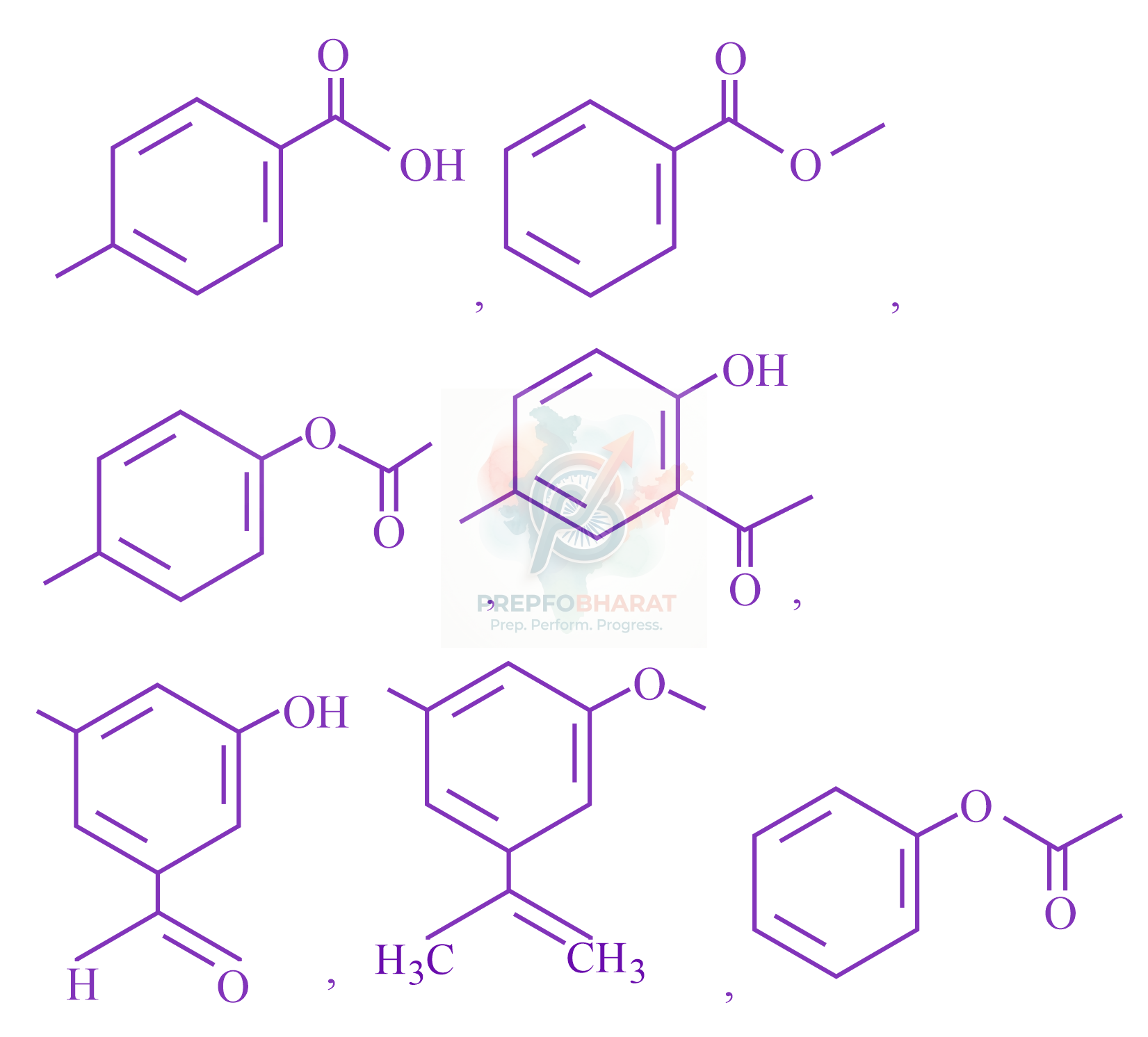
Decreasing order of dehydration of the following alcohols is 
Find out the major product from the following reaction. 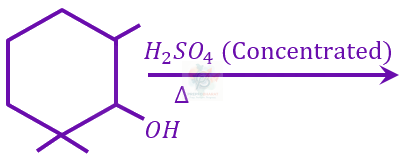
Find out the major product for the following reaction 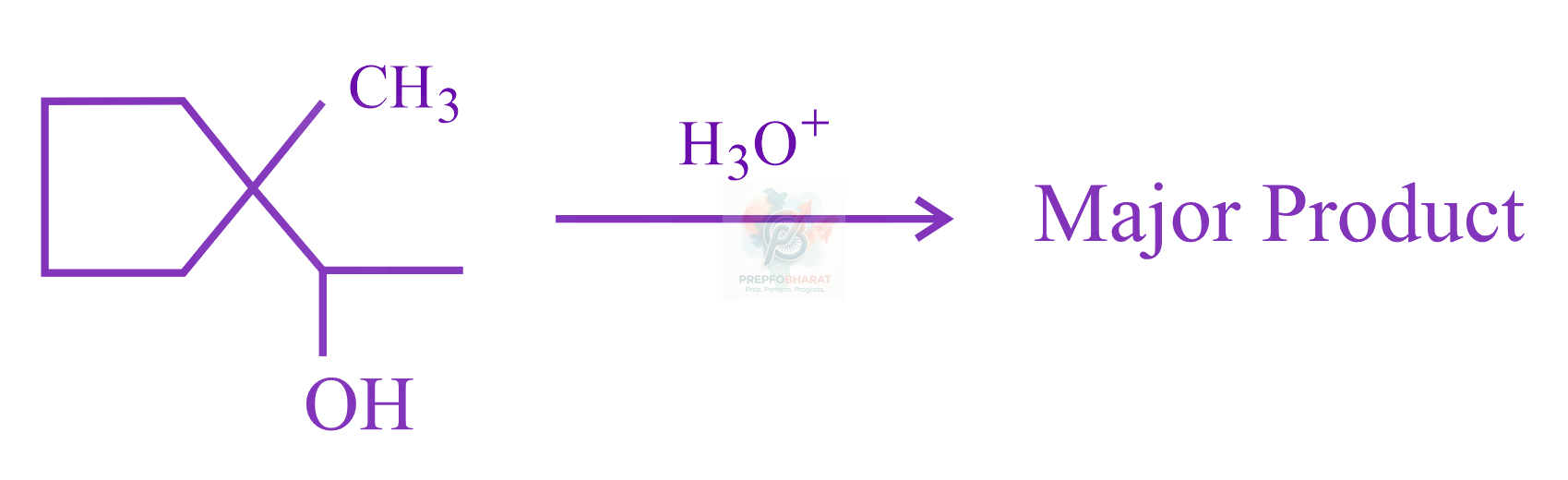
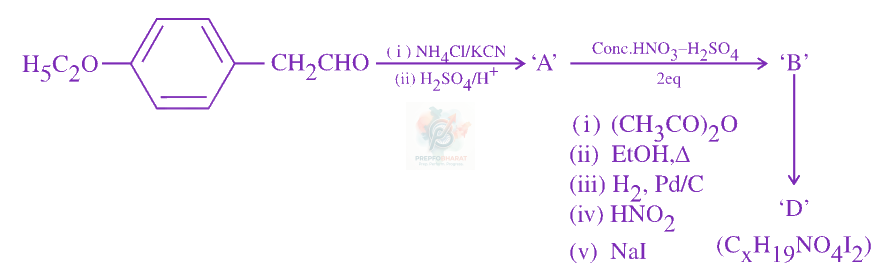 The value of $x$ in compound ‘$D$’ is _____
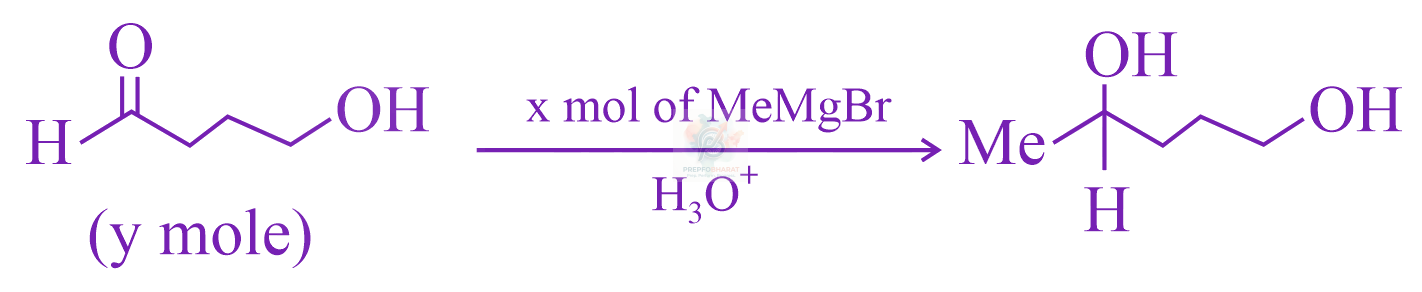 The ratio x/y on completion of the above reaction is ______ .
Given below are two statements: one is labelled as Assertion A and the other is labelled as Reason R: Assertion A: Acetal/Ketal is stable in basic medium. Reason R: The high leaving tendency of alkoxide ion gives the stability to acetal/ketal in basic medium. In the light of the above statements, choose the correct answer from the options given below:
Consider the following sequence of reactions  The product ‘$B$’ is
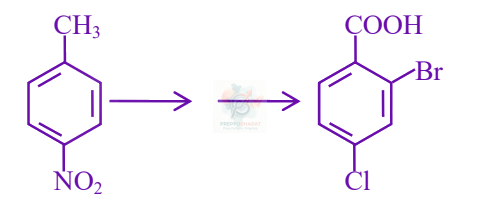 In the above conversion the correct sequence of reagents to be added is
Compound A from the following reaction sequence is : 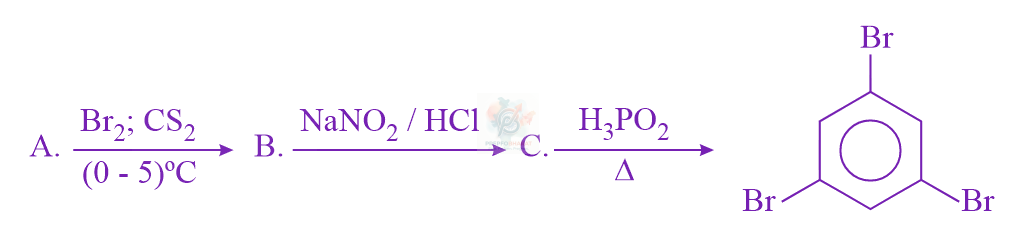
The product $(P)$ formed from the following multistep reaction is: 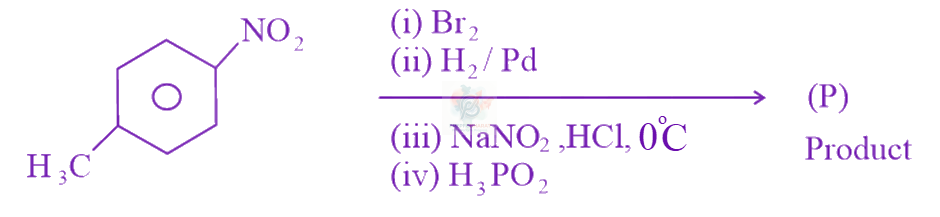
The correct order in aqueous medium of basic strength in case of methyl substituted amines is:
Match List I with List II <table class="pyq-table"><tbody><tr><td colspan="2" rowspan="1">List I (Amines)</td><td colspan="2" rowspan="1">List II $(\mathrm{pKb})$</td></tr><tr><td>A.</td><td>Aniline</td><td>I.</td><td>$3.25$</td></tr><tr><td>B.</td><td>Ethanamine</td><td>II.</td><td>$3.00$</td></tr><tr><td>C.</td><td>N-Ethylethanamine</td><td>III.</td><td>$9.38$</td></tr><tr><td>D.</td><td>N, N-Diethylethanamine</td><td>IV.</td><td>$3.29$</td></tr></tbody></table>Choose the correct answer from the options given below:-
Choose the correct colour of the product for the following reaction. 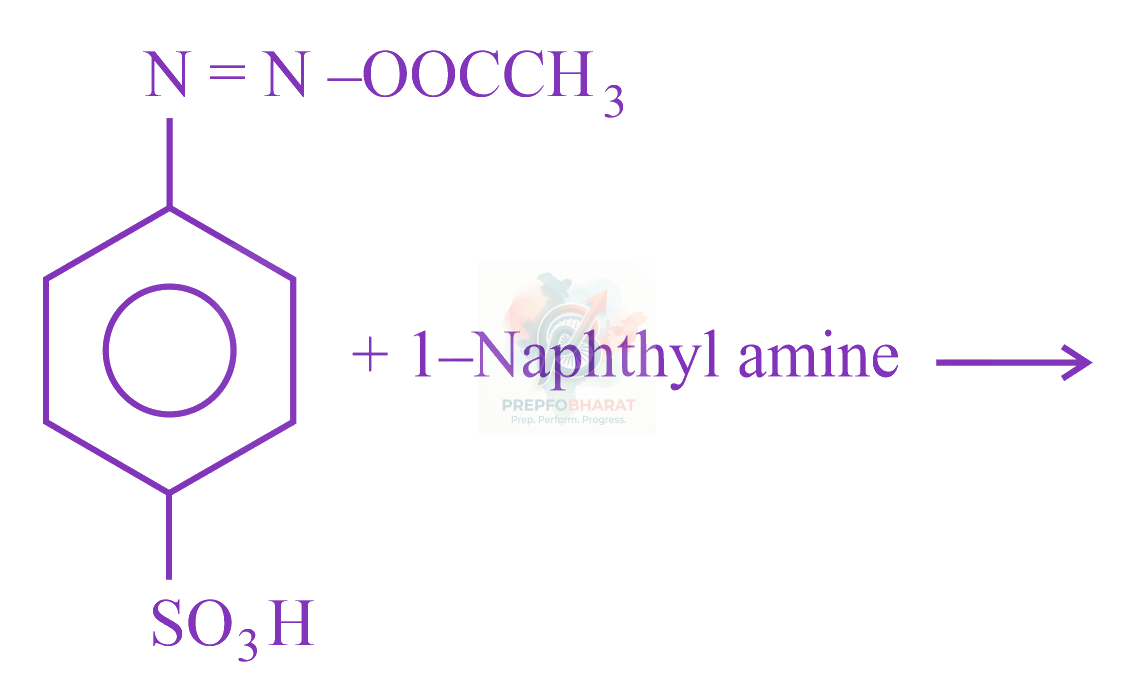
Match List-I with List-II. <table class="pyq-table"><tbody><tr><td></td><td>List-I Natural Amino acid</td><td></td><td>List-II One Letter Code</td></tr><tr><td>(A)</td><td>Arginine</td><td>(I)</td><td>$D$</td></tr><tr><td>(B)</td><td>Aspartic acid</td><td>(II)</td><td>$N$</td></tr><tr><td>(C)</td><td>Asparagine</td><td>(III)</td><td>$A$</td></tr><tr><td>(D)</td><td>Alanine</td><td>(IV)</td><td>$R$</td></tr></tbody></table>Choose the correct answer from the options given below:
Following tetrapeptide can be represented as 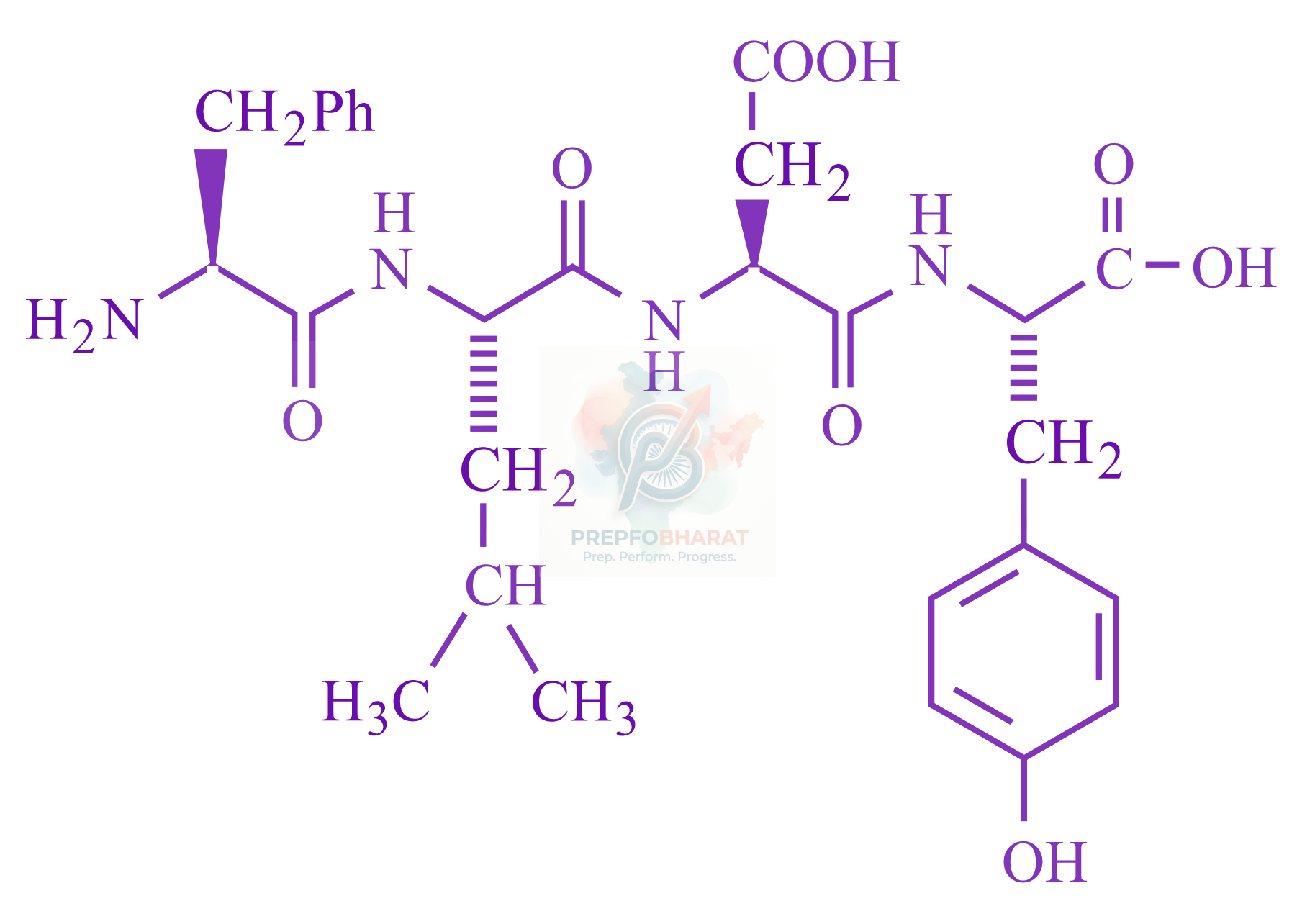 ($F,L,D,Y,I,Q,P$ are one letter codes for amino acids)
Number of cyclic tripeptides formed with $2$ amino acids $A$ and $B$ is:
Uracil is base present in $\mathrm{RNA}$ with the following structure. $%\mathrm{of}N$ in uracil is _______. 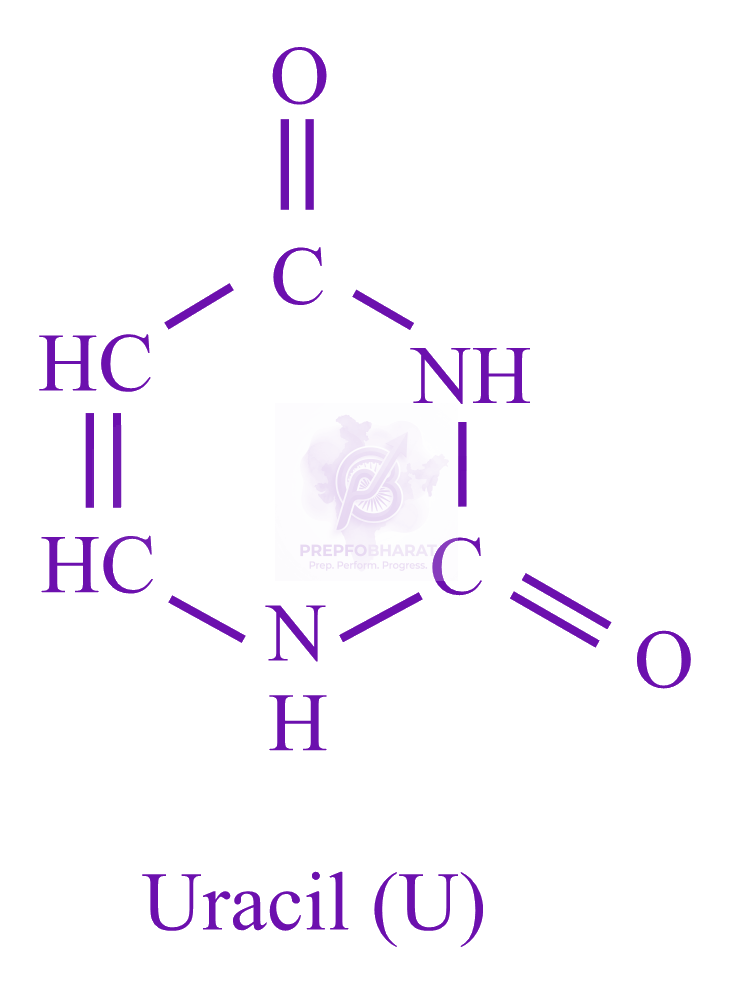
In the following given reaction '$A$' is 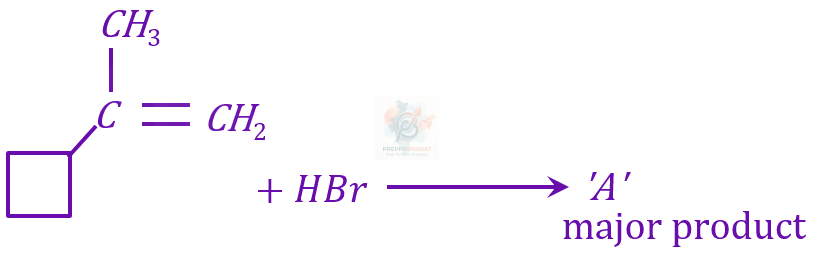
Consider the following reaction $\mathrm{Propanal}+\mathrm{Methanal}=\rightarrow _{(\mathrm{ii})\Delta (\mathrm{iii})\mathrm{NaCN} (\mathrm{iv}){H}_{3}{O}^{+}}^{(i)\mathrm{dil}.\mathrm{NaOH}}P\underset{({C}_{5}{H}_{8}{O}_{3})}{\mathrm{roduct}B}$ The correct statement for product $B$ is. It is
. Match List I with List II : <table class="pyq-table"><tbody><tr><td colspan="2" rowspan="1">List I (Reagents used)</td><td colspan="2" rowspan="1">List II (Compound with Functional group detected)</td></tr><tr><td>A.</td><td>Alkaline solution of copper sulphate and sodium citrate</td><td>I.</td><td><img src="https://prepforbharat.s3.ap-south-1.amazonaws.com/exam/615f0e999476412f48314daf/Chemistry/images/Aldehydes_and_Ketones/648b5a70417cc3fb48d68402/question_1__q_648b5a70417cc3fb48d68402__cdn-question-pool.getmarks.app__d3130153-0692-4959-b528-b5b6fa417b45__e9b2522ab3_final_ppt_sync.png" alt="JEE Main 2023 Chemistry, Aldehydes and Ketones — question figure 1"></td></tr><tr><td>B.</td><td>Neutral ${\mathrm{FeCl}}_{3}$ solution</td><td>II.</td><td><img src="https://prepforbharat.s3.ap-south-1.amazonaws.com/exam/615f0e999476412f48314daf/Chemistry/images/Aldehydes_and_Ketones/648b5a70417cc3fb48d68402/question_2__q_648b5a70417cc3fb48d68402__cdn-question-pool.getmarks.app__500acecd-e89e-4bc5-b5a5-2fc8c85b569e__2173145188_final_ppt_sync.png" alt="JEE Main 2023 Chemistry, Aldehydes and Ketones — question figure 2"></td></tr><tr><td>C.</td><td>Alkaline chloroform solution</td><td>III.</td><td><img src="https://prepforbharat.s3.ap-south-1.amazonaws.com/exam/615f0e999476412f48314daf/Chemistry/images/Aldehydes_and_Ketones/648b5a70417cc3fb48d68402/question_3__q_648b5a70417cc3fb48d68402__cdn-question-pool.getmarks.app__62dd3115-cd71-4c0d-9119-b371a81d5690__be682f3272_final_ppt_sync.png" alt="JEE Main 2023 Chemistry, Aldehydes and Ketones — question figure 3"></td></tr><tr><td>D.</td><td>Potassium iodide and sodium hypochloride</td><td>IV</td><td><img src="https://prepforbharat.s3.ap-south-1.amazonaws.com/exam/615f0e999476412f48314daf/Chemistry/images/Aldehydes_and_Ketones/648b5a70417cc3fb48d68402/question_4__q_648b5a70417cc3fb48d68402__cdn-question-pool.getmarks.app__5801308d-075f-4405-818a-0811629d2710__04d2cf7a55_final_ppt_sync.png" alt="JEE Main 2023 Chemistry, Aldehydes and Ketones — question figure 4"></td></tr></tbody></table>Choose the correct answer from the options given below :
The product formed in the following multistep reaction is: 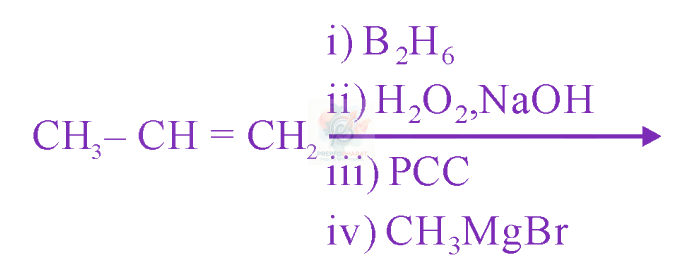
But-$2$-yne is reacted separately with one mole of Hydrogen as shown below: $\underset{¯}{B}\leftarrow _{\mathrm{liq}{\mathrm{NH}}_{3}}^{\mathrm{Na}}{\mathrm{CH}}_{3}-\underset{+{H}_{2}}{C\equiv }C-{\mathrm{CH}}_{3}\rightarrow _{\Delta }^{\mathrm{Pd}/C}\underset{¯}{A}$ Identify the incorrect statements from the options given below: A. A is more soluble than $B$. B. The boiling point & melting point of $A$are higher and lower than $B$ respectively. C. A is more polar than $B$ because dipole moment of $A$ is zero. D. ${\mathrm{Br}}_{2}$ adds easily to $B$ than $A$.
Match List-I with List-II. 1-Bromopropane is reacted with reagents in List-I to give product in List-II <table class="pyq-table"><tbody><tr><td></td><td>List-I Reagent</td><td></td><td>List-II Product</td></tr><tr><td>A.</td><td>KOH (alc)</td><td>I.</td><td>Nitrile</td></tr><tr><td>B.</td><td>KCN (alc)</td><td>II.</td><td>Ester</td></tr><tr><td>C.</td><td>AgNO$_{2}$</td><td>III.</td><td>Alkene</td></tr><tr><td>D</td><td>H$_{3}$CCOOAg</td><td>IV.</td><td>Nitroalkane</td></tr></tbody></table>Choose the correct answer from the options given below
In the reaction given below 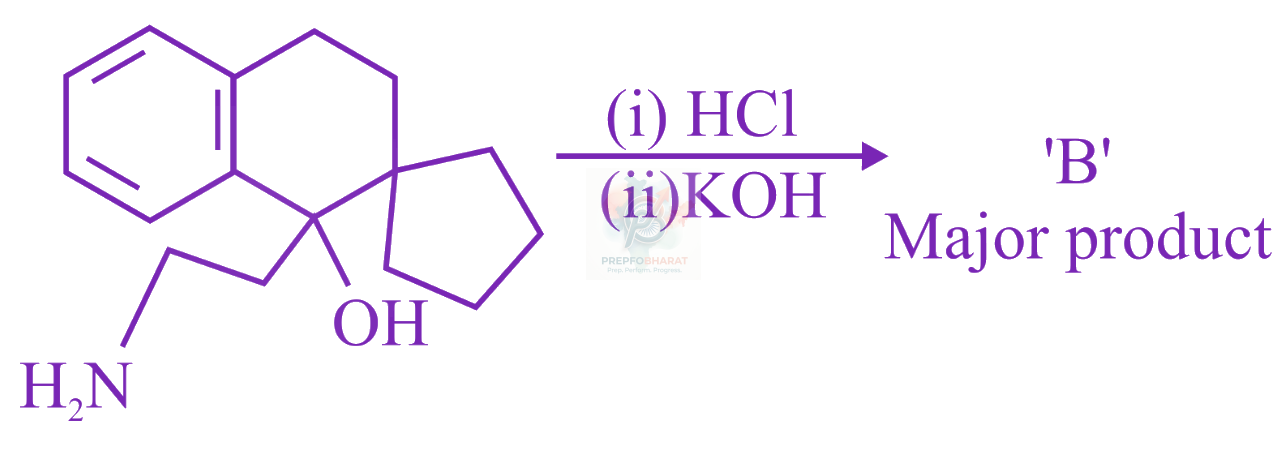 $'B'$ is:
Number of moles of $\mathrm{AgCl}$ formed in the following reaction is _____ . 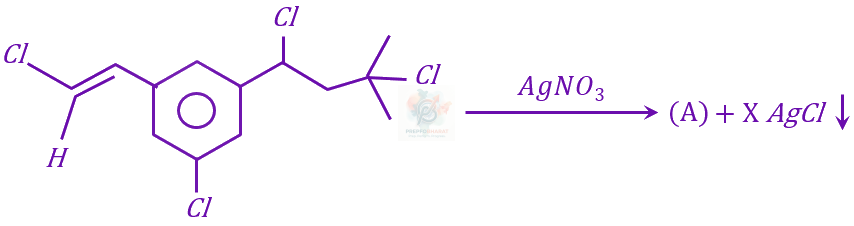
Three organic compounds $A,B$ and $C$ were allowed to run in thin layer chromatography using hexane and gave the following result (see figure). The ${R}_{f}$ value of the most polar compound is _____ $\times {10}^{–2}$ 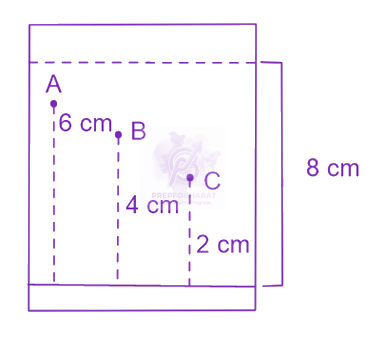
‘$X$’ is: 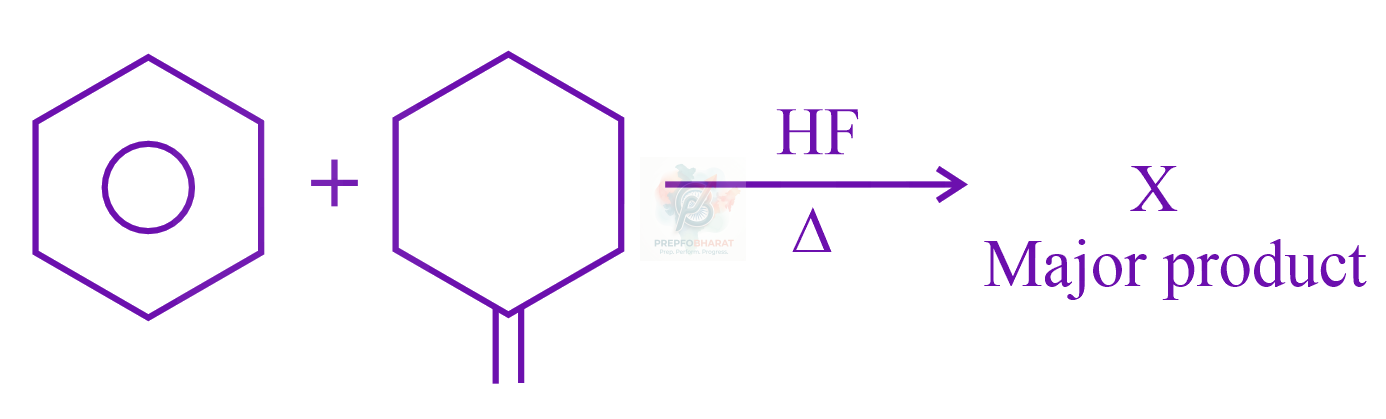
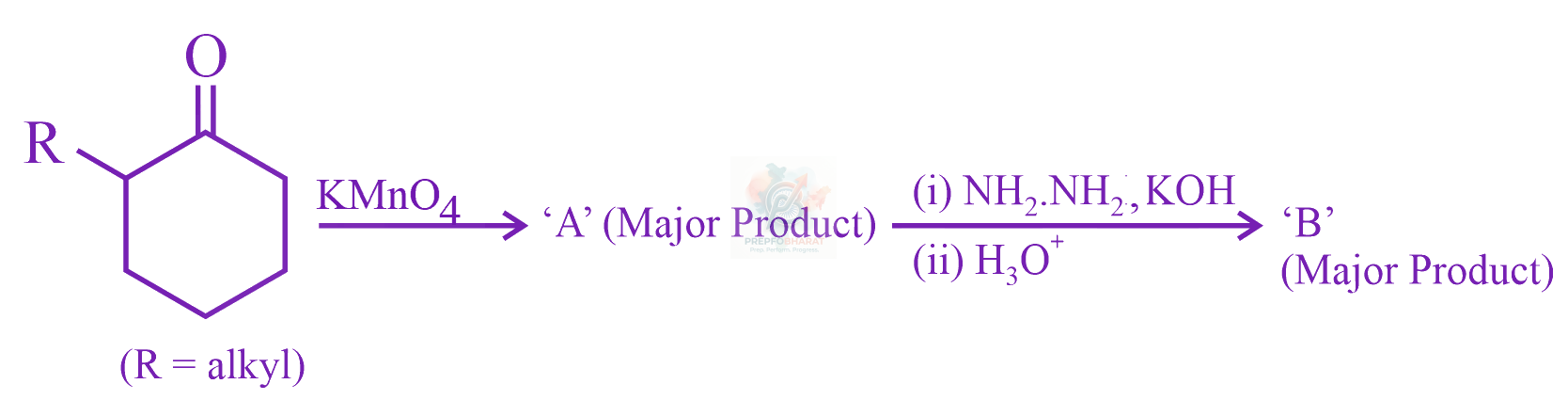 ‘A’ and ‘B’ in the above reactions are:
The correct order of ${\mathrm{pK}}_{a}$ values for the following compounds is: 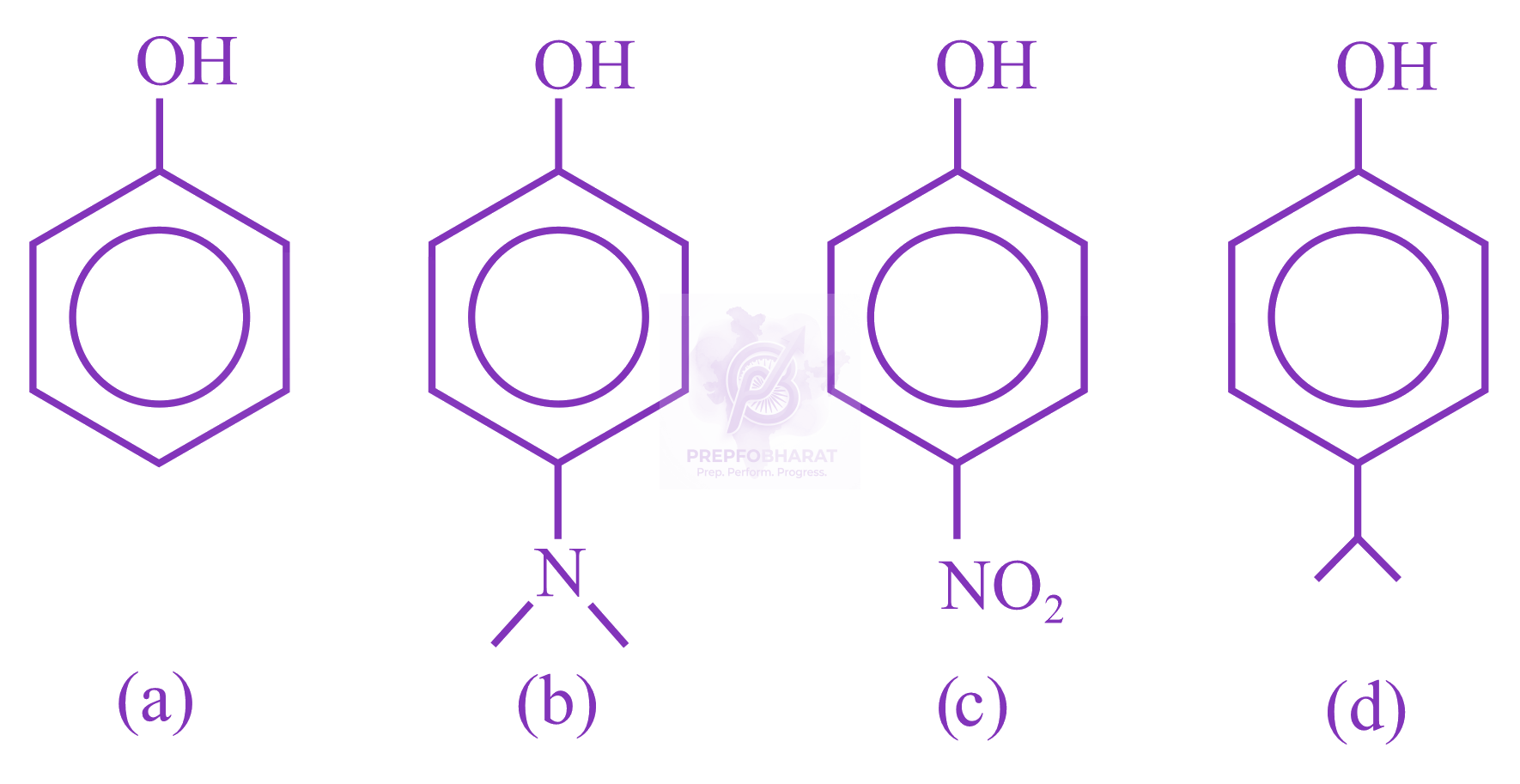
Isomeric amines with molecular formula ${C}_{8}{H}_{11}N$ give the following tests Isomer$(P)\Rightarrow$ Can be prepared by Gabriel phthalimide synthesis Isomer$(Q)\Rightarrow$ Reacts with Hinsberg’s reagent to give solid insoluble in $\mathrm{NaOH}$ Isomer$(R)\Rightarrow$ Reacts with $\mathrm{HONO}$ followed by $\beta$-naphthol in $\mathrm{NaOH}$ to give red dye. Isomers$(P),(Q)$ and $(R)$ respectively are
Choose the halogen which is most reactive towards SN1 reaction in the given compounds (A, B, C & D) A. 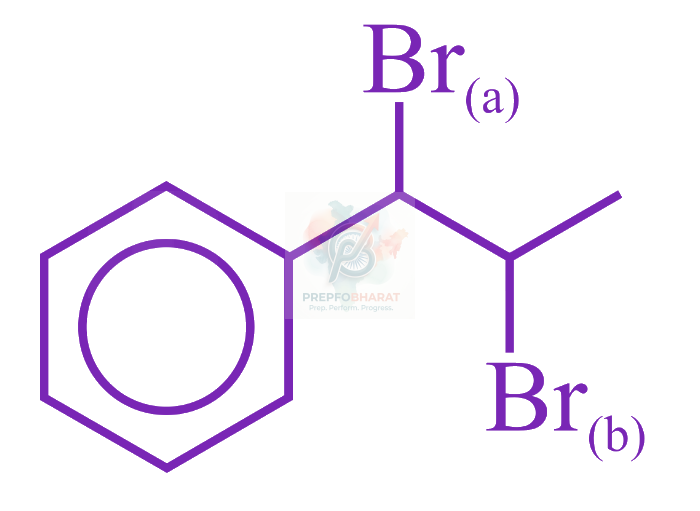 B. 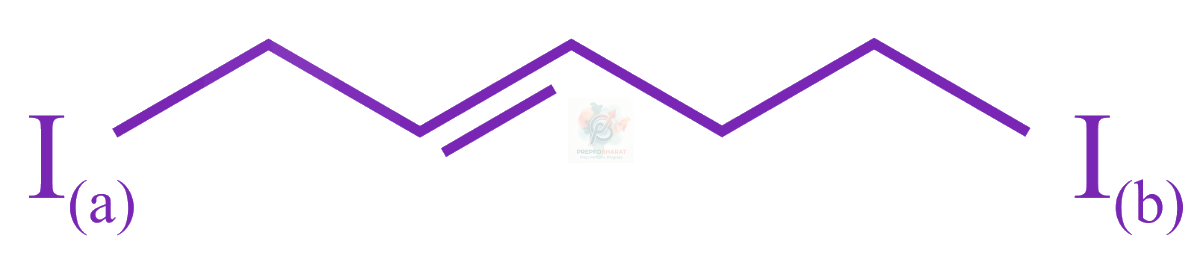 C. 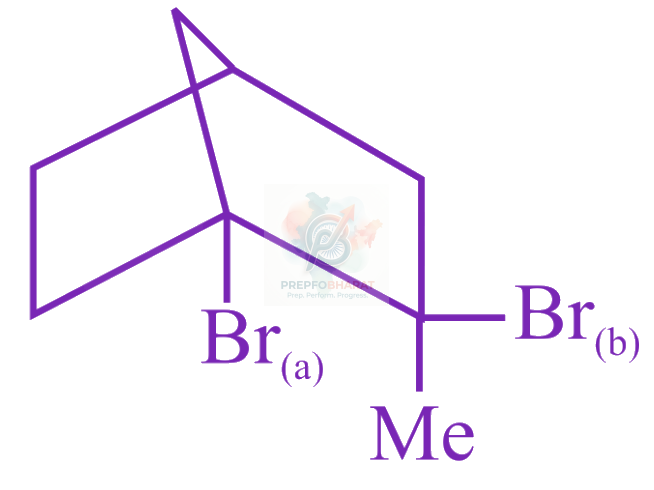 D. 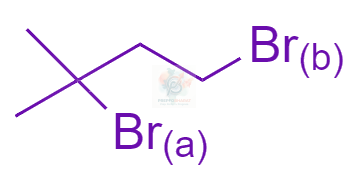
' A ' in the given reaction is 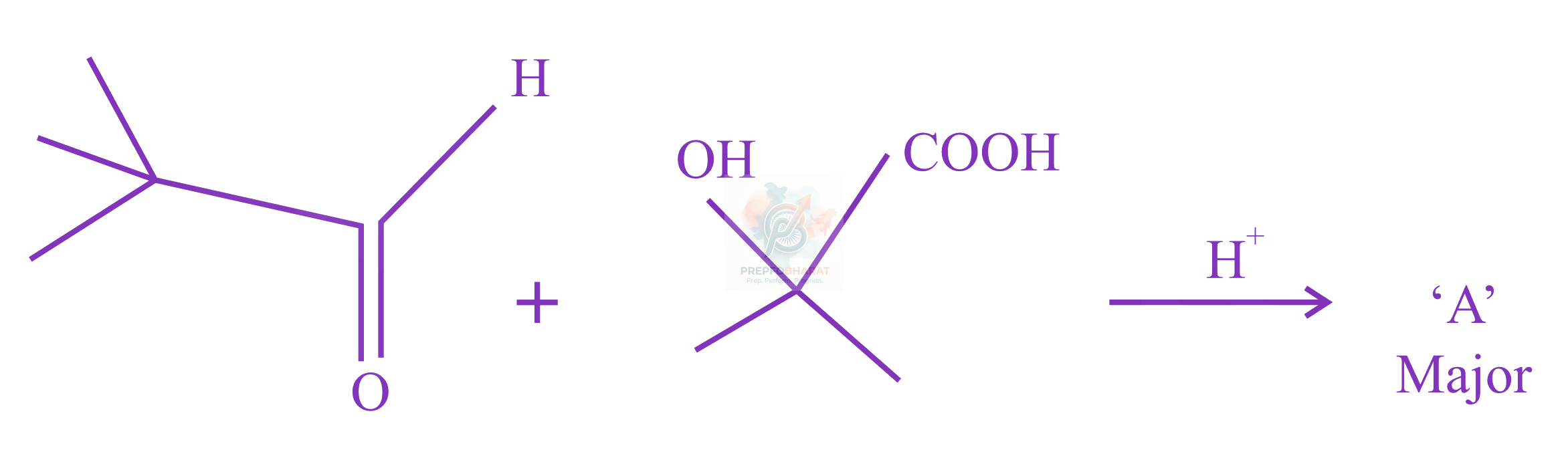
Which of the following conformations will be the most stable?
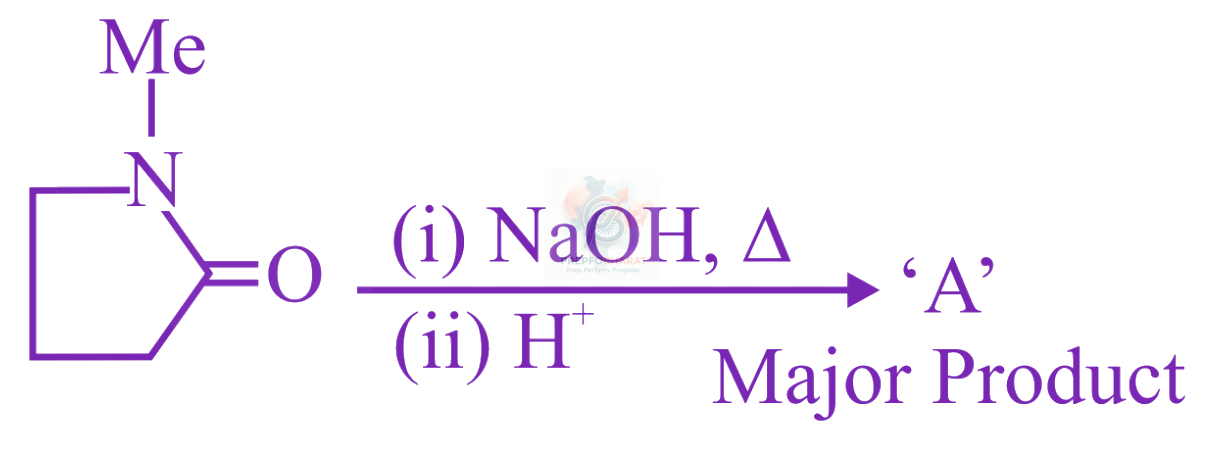 $'A'$ is
Following chromatogram was developed by adsorption of compound '$A$' on a $6\mathrm{cm}$ TLC glass plate. Retardation factor of the compound '$A$' is _____ $\times {10}^{-1}$. 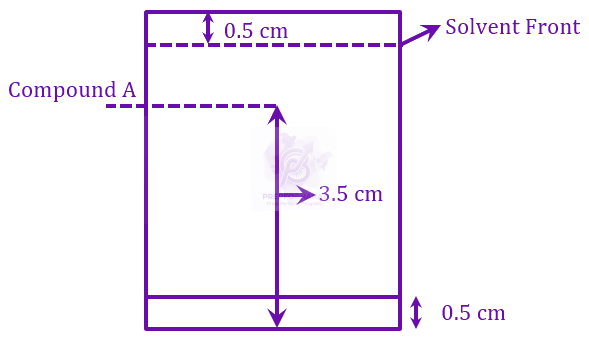
The major product for the following reaction is : 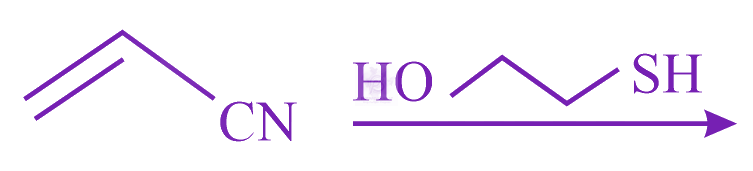
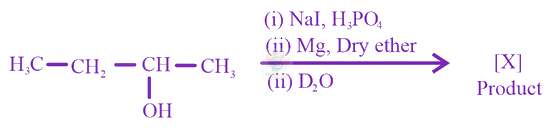 Product $[X]$ formed in the above reaction is:
Major product $'P'$ formed in the following reaction is 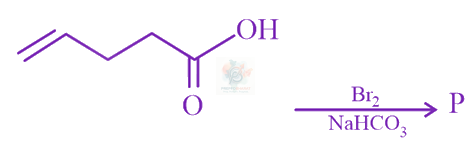 Major product
Assertion A: Hydrolysis of an alkyl chloride is a slow reaction but in the presence of $\mathrm{NaI}$, the rate of hydrolysis increases. Reason R: ${I}^{-}$$^{ }$is a good nucleophile as well as a good leaving group. In the light of the above statements, choose the correct answer from the options given below.
An organic compound ' $A$ ' with empirical formula ${C}_{6}{H}_{6}O$ gives sooty flame on burning. Its reaction with bromine solution in low polarity solvent results in high yield of $B.B$ is
The correct representation in six membered pyranose form for the following sugar [$X$] is 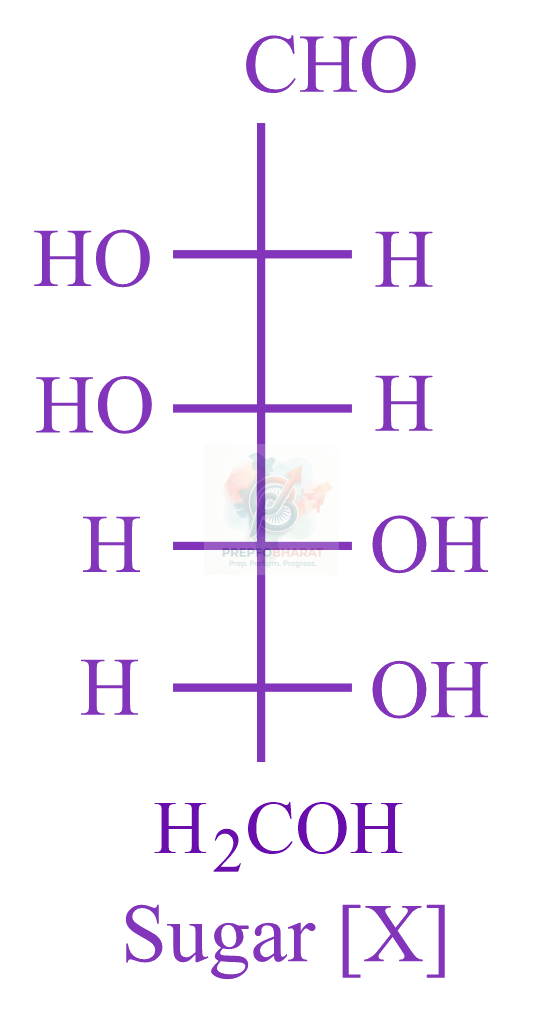
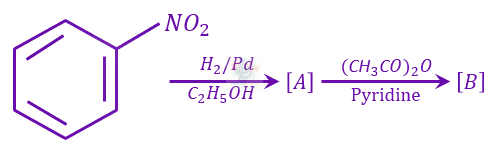
The major product '$P$' formed in the given reaction is 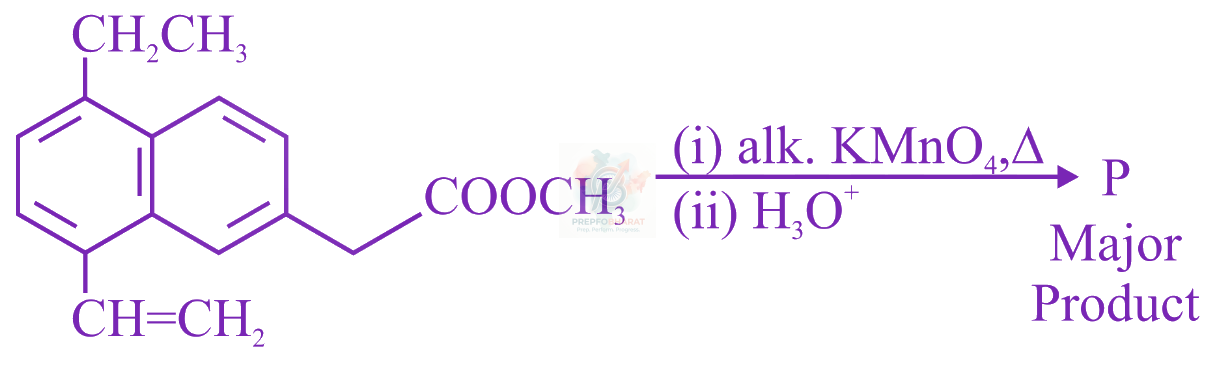
$2-\mathrm{hexene}\rightarrow _{(\mathrm{ii}){H}_{2}O}^{(i){O}_{3}}\mathrm{Products}$ The two products formed in above reaction are
In the following reaction, ‘$B$’ is 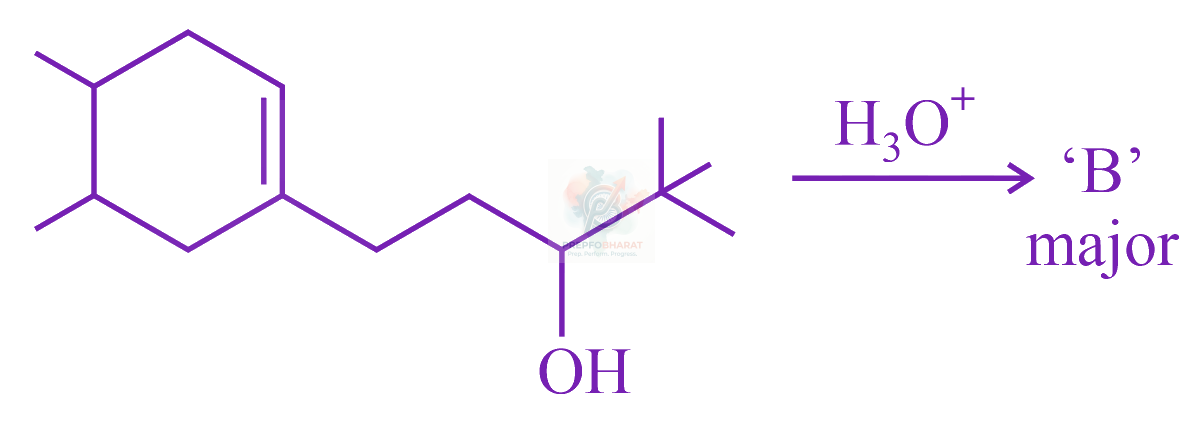
Find out the major products from the following reactions. 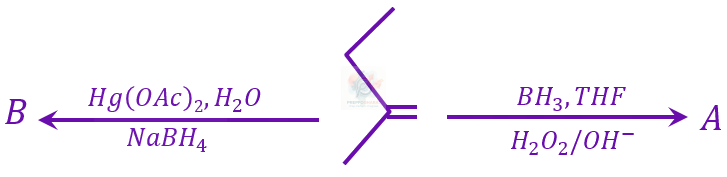
Maximum number of isomeric monochloro derivatives which can be obtained from 2,2,5,5- tetramethylhexane by chlorination is _________
The correct order of melting point of dichlorobenzenes is
The major product '$P$' for the following sequence of reactions is: 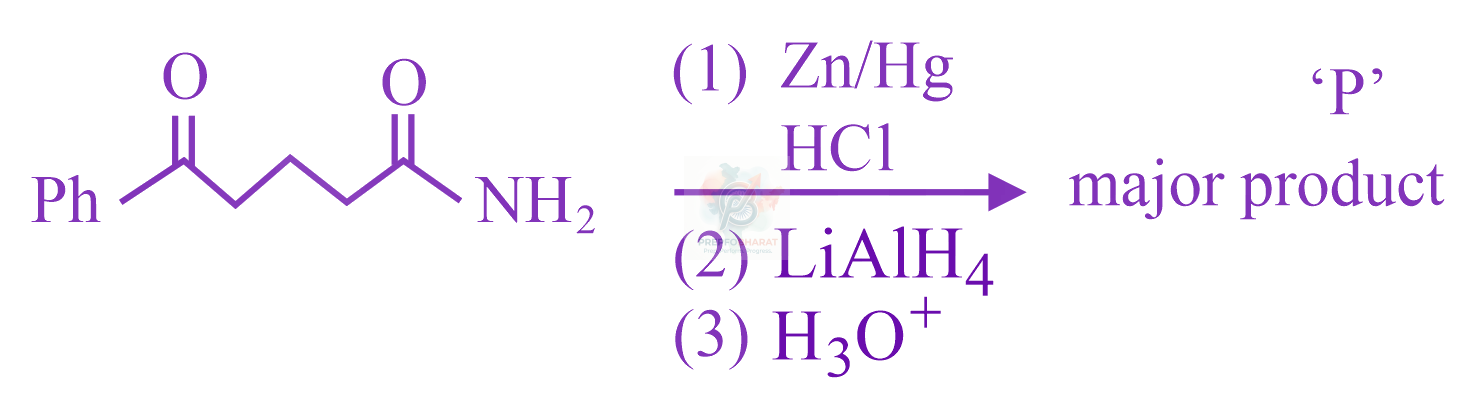
$0.400g$ of an organic compound $(X)$ gave $0.376g$ of $\mathrm{AgBr}$ in Carius method for estimation of bromine. $%$ of bromine in the compound $(X)$ is (Given: Molar mass $\mathrm{AgBr}=188g{\mathrm{mol}}^{-1}$ $\mathrm{Br}=80g{\mathrm{mol}}^{-1})$
The major product ‘$P$’ formed in the given reaction is 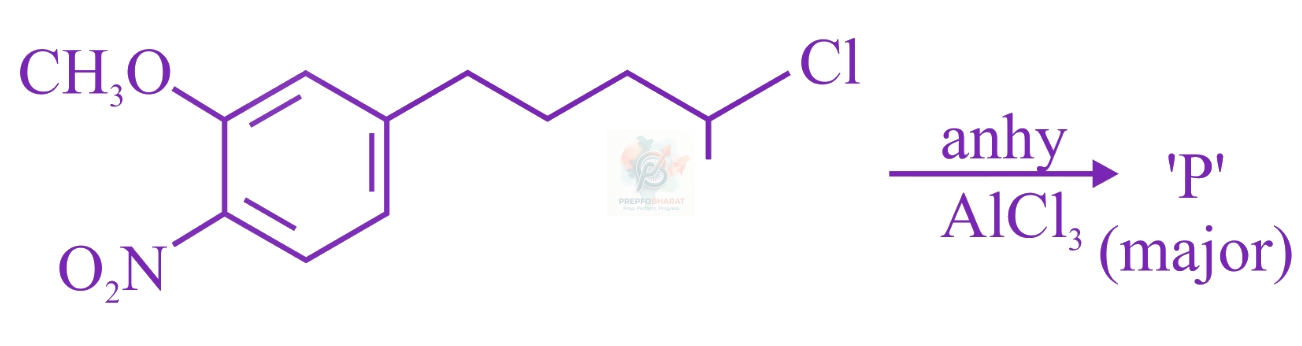
Match List I and List II <table class="pyq-table"><tbody><tr><td>List I</td><td>List II</td></tr><tr><td>Test</td><td>Functional group / Class of Compound</td></tr><tr><td>(A) Molisch's Test</td><td>(I)Peptide</td></tr><tr><td>(B) Biuret Test</td><td>(II)Carbohydrate</td></tr><tr><td>(C) Carbylamine Test</td><td>(III) Primary amine</td></tr><tr><td>(D) Schiff's Test</td><td>(IV) Aldehyde</td></tr></tbody></table>Choose the correct answer from the options given below:
All structures given below are of vitamin $C$. Most stable of them is:
The one that does not stabilize ${2}^{\circ }$ and ${3}^{\circ }$ structures of proteins is
 'X'
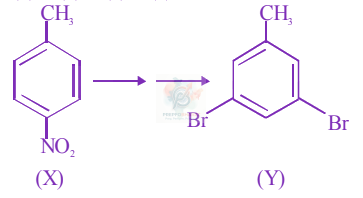 In the above conversion of compound ($X$) to product ($Y$), the sequence of reagents to be used will be:
The major products ‘$A$’ and ‘$B$’, respectively, are 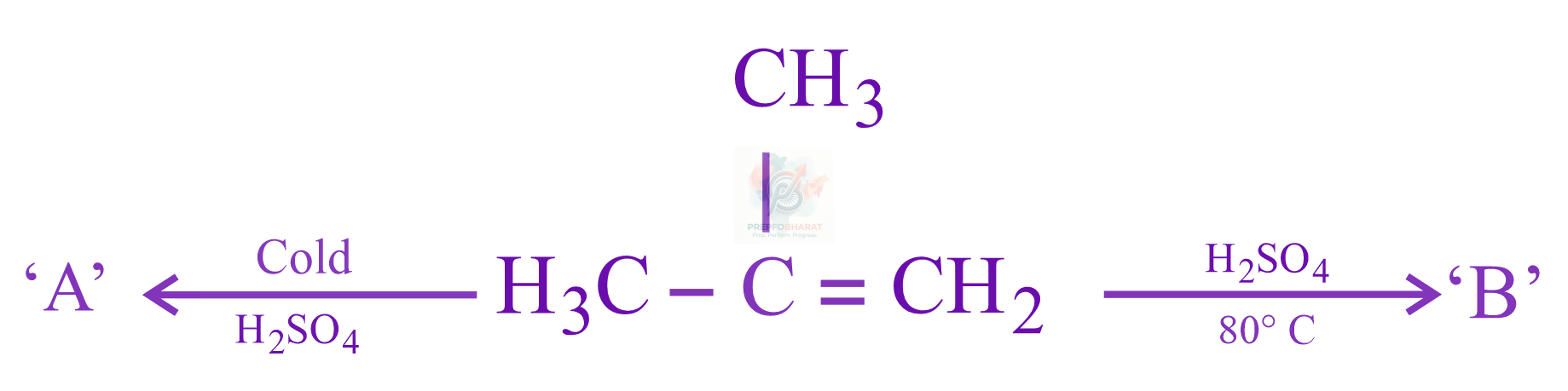
Given below are two statements : Statement I : Tropolone is an aromatic compound and has $8\pi$ electrons. Statement II : $\pi$ electrons of $>C=O$ group in tropolone is involved in aromaticity. In the light of the above statements choose the correct answer from the options given below:
Compound from the following that will not produce precipitate on reaction with ${\mathrm{AgNO}}_{3}$ is
Given below are two statements, one is labelled as Assertion A and the other is labelled as Reason R Assertion A:- Butylated hydroxyl anisole when added to butter increases its shelf life. Reason R:- Butylated hydroxyl anisole is more reactive towards oxygen than food. In the light of the above statements, choose the most appropriate answer from the options given below:-
The structures of major products $A,B$ and $C$ in the following reaction are sequence. 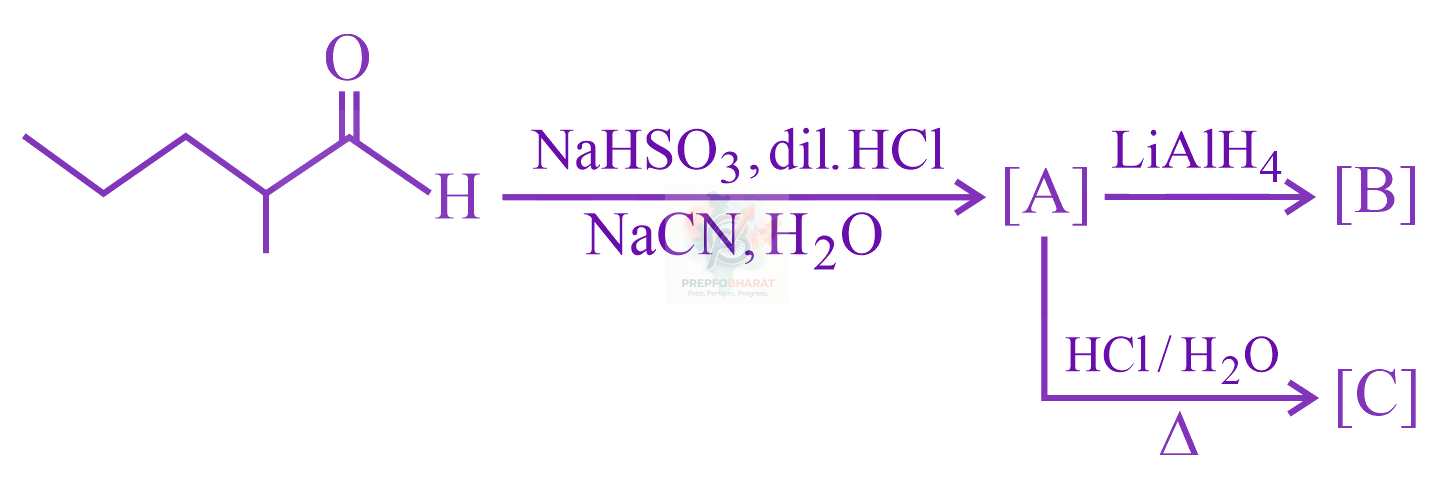
What is the correct order of acidity of the protons marked $A–D$ in the given compounds? 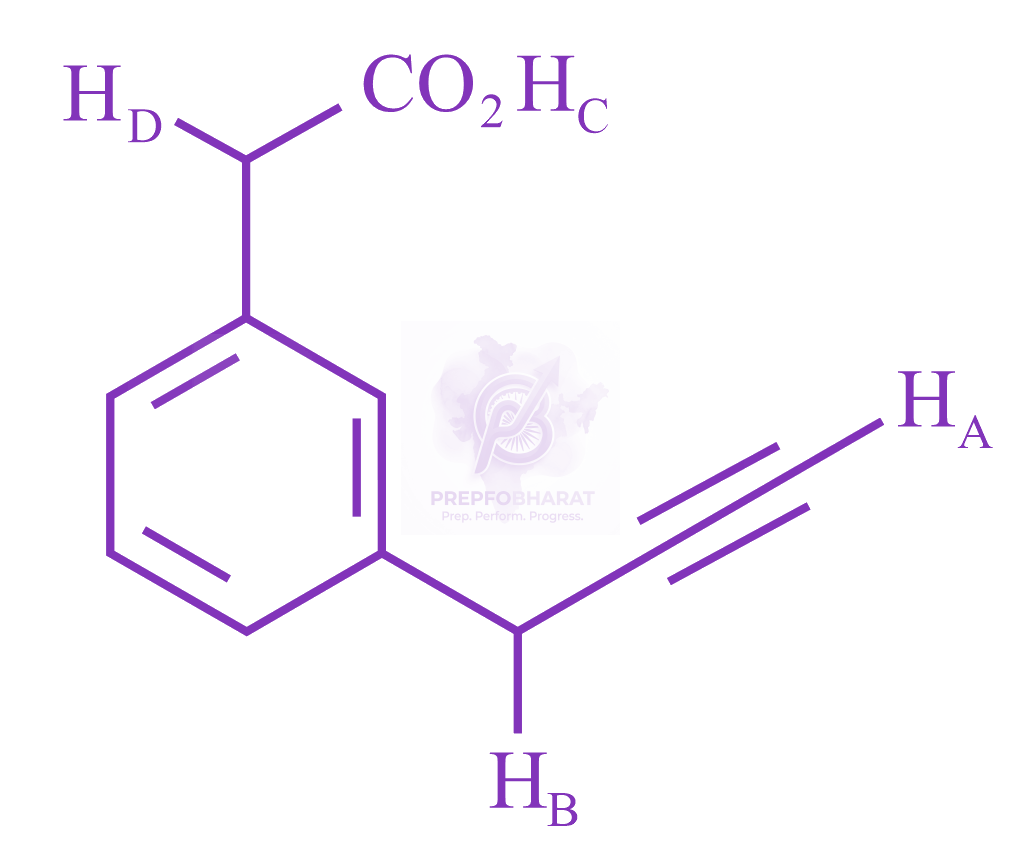
For the given reaction 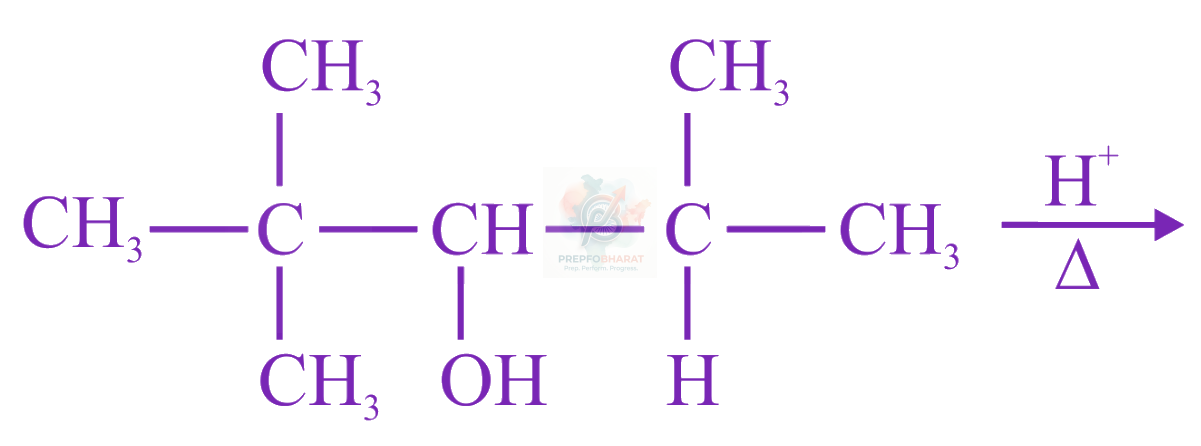 The, total number of possible products formed by tertiary carbocation of $A$ is$_______.$
Thin layer chromatography of a mixture shows the following observation: 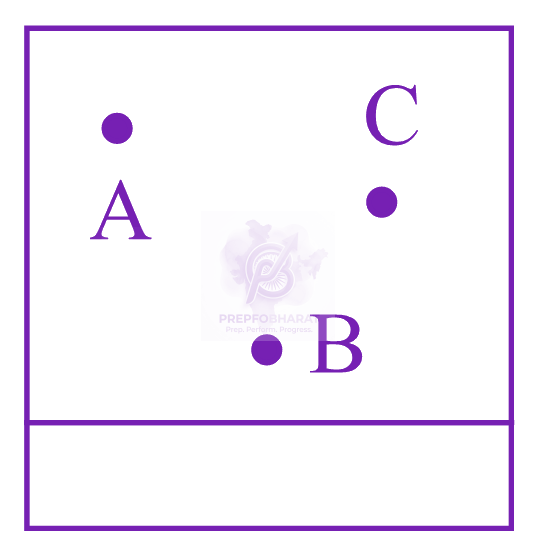 The correct order of elution in the silica gel column chromatography is
In Carius tube, an organic compound ' $X$ ' is treated with sodium peroxide to form a mineral acid ' $Y$ '. The solution of ${\mathrm{BaCl}}_{2}$ is added to ' $Y$ ' to form a precipitate ' $Z$ '. ' $Z$ ' is used for the quantitative estimation of an extra element. ' $X$ ' could be
An organic compound $[A]({C}_{4}{H}_{11}N)$, shows optical activity and gives ${N}_{2}$ gas on treatment with ${\mathrm{HNO}}_{2}$. The compound $[A]$ reacts with ${\mathrm{PhSO}}_{2}\mathrm{Cl}$ producing a compound which is soluble in $\mathrm{KOH}$. The structure of $A$ is :
$D-(+)-$Glyceraldehyde$\rightarrow _{\underset{\mathrm{iii}){\mathrm{HNO}}_{3}}{\mathrm{ii}){H}_{2}O/{H}^{+}}}^{i)\mathrm{HCN}}$ The products formed in the above reaction are
The major product formed in the Friedel-Craft acylation of chlorobenzene is
The major product formed in the following reaction is  A. 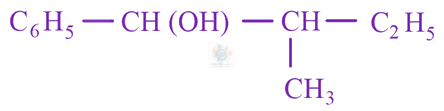 B. 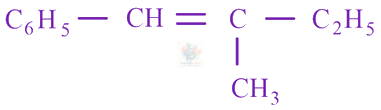 C. 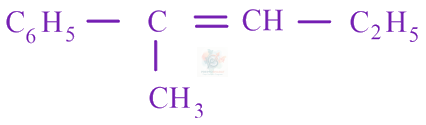 D. 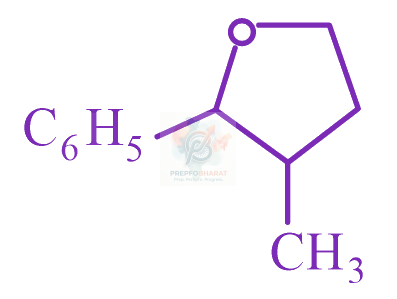 choose the correct answer from the options Given below:
$2-$Methyl propyl bromide reacts with ${C}_{2}{H}_{5}{O}^{-}$and gives $‘A’$ whereas on reaction with ${C}_{2}{H}_{5}\mathrm{OH}$ it gives $‘B’.$ The mechanism followed in these reactions and the products $‘A’$ and $‘B’$ respectively are:
From the figure of column chromatography given below, identify incorrect statements. 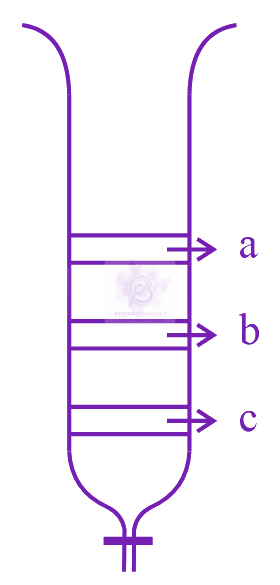 $A$. Compound ‘$c$’ is more polar than ‘$a$’ and ‘$b$’ $B$. Compound ‘$a$’ is least polar $C$. Compound ‘$b$’ comes out of the column before ‘$c$’ and after ‘$a$’ $D$. Compound ‘$a$’ spends more time in the column Choose the correct answer from the options given below
The correct IUPAC nomenclature for the following compound is: 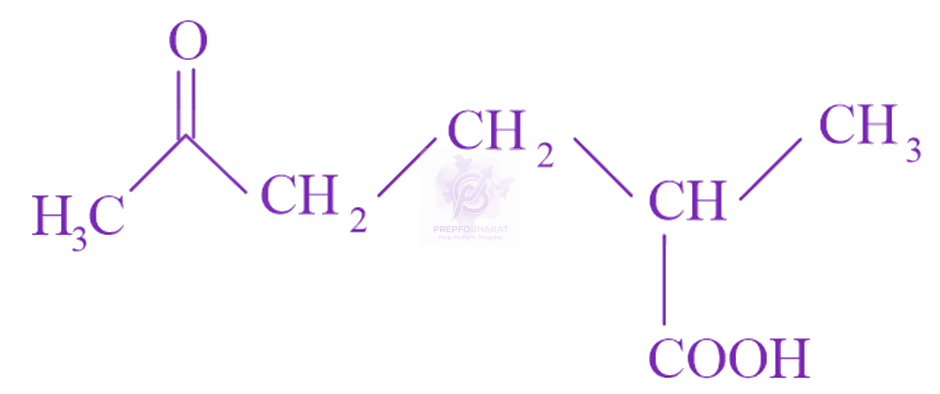
Given below are two statements, one is labelled as Assertion $A$ and the other is labelled as Reason $R$. Assertion $A$: 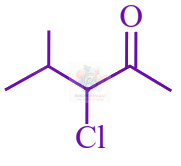can be subjected to Wolff-Kishner reduction to give 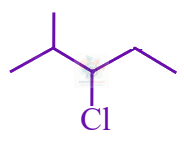 Reason $R$: Wolff-Kishner reduction is used to convert 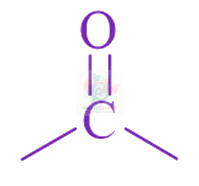 into 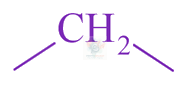 In the light of the above statements, choose the correct answer from the options given below:
Match items of Row I with those of Row II. Row I: (P) 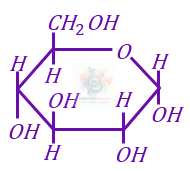 (Q) 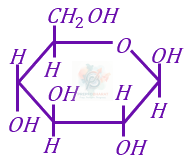 (R) 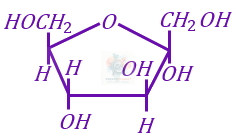 (S) 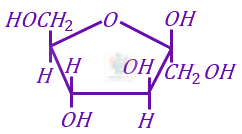 Row II: (i) $\alpha ‐D‐(—)$ Fructofuranose. (ii) $\beta ‐D‐(—)$ Fructofuranose. (iii) $\alpha ‐D‐(‐)$ Glucopyranose. (iv) $\beta ‐D‐(‐)$ Glucopyranose. Correct match is
Decreasing order towards ${S}_{N}1$ reaction for the following compounds is: 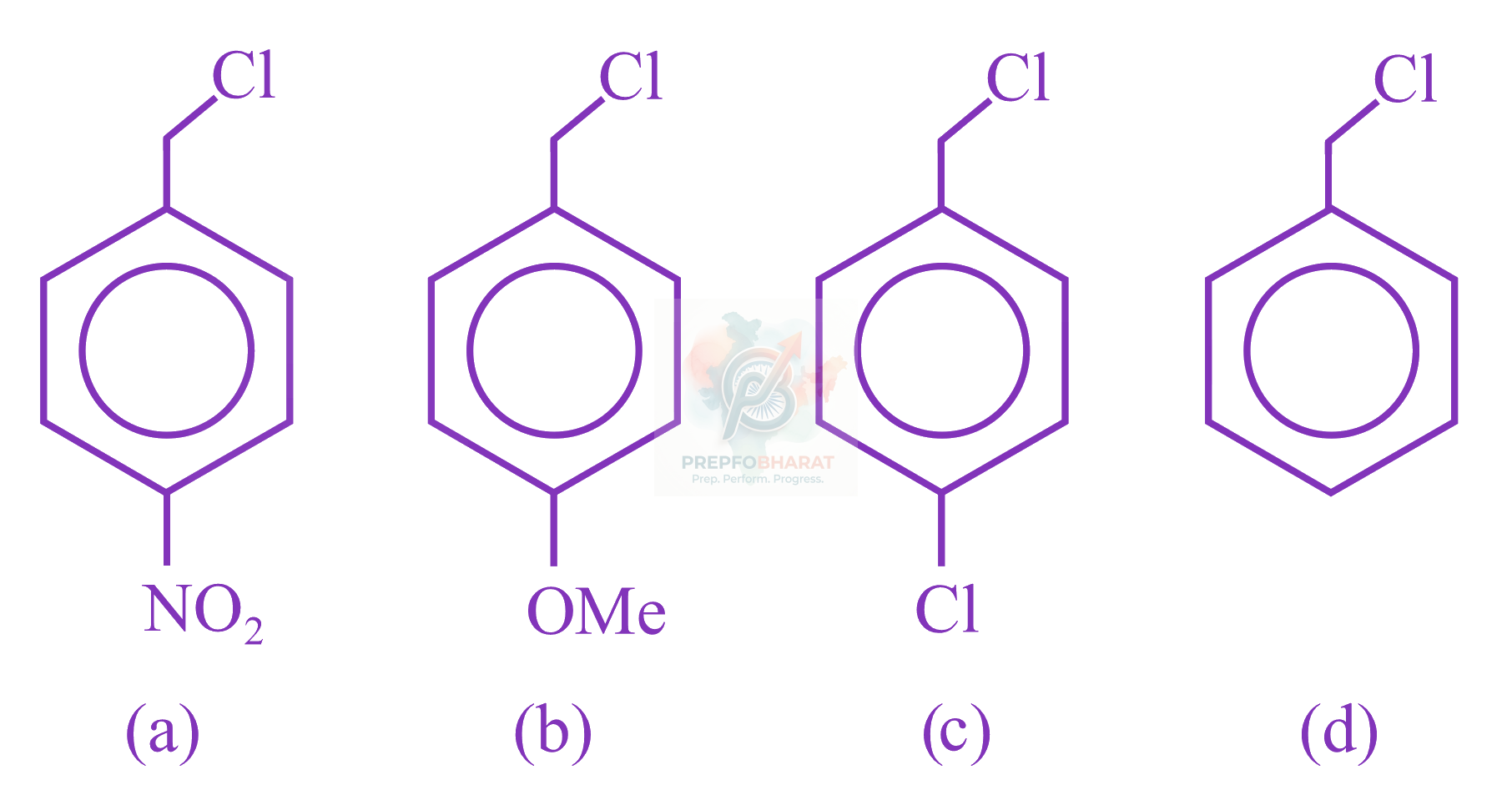
Which is not true for arginine?
In an oligopeptide named Alanylglycylphenyl alanyl isoleucine, the number of ${\mathrm{sp}}^{2}$ hybridised carbons is _____.
Compoun $'B'$ is 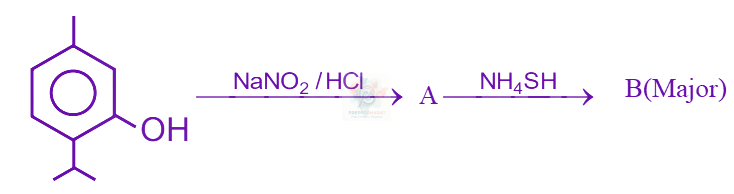
A hydrocarbon 'X' with formula ${C}_{6}{H}_{8}$ uses two moles of ${H}_{2}$ on catalystic hydrogenation of its one mole. On ozonolysis, 'X' yields two moles of methane dicarbaldehyde. The hydrocarbon 'X' is :
The total number of chiral compound/s from the following is 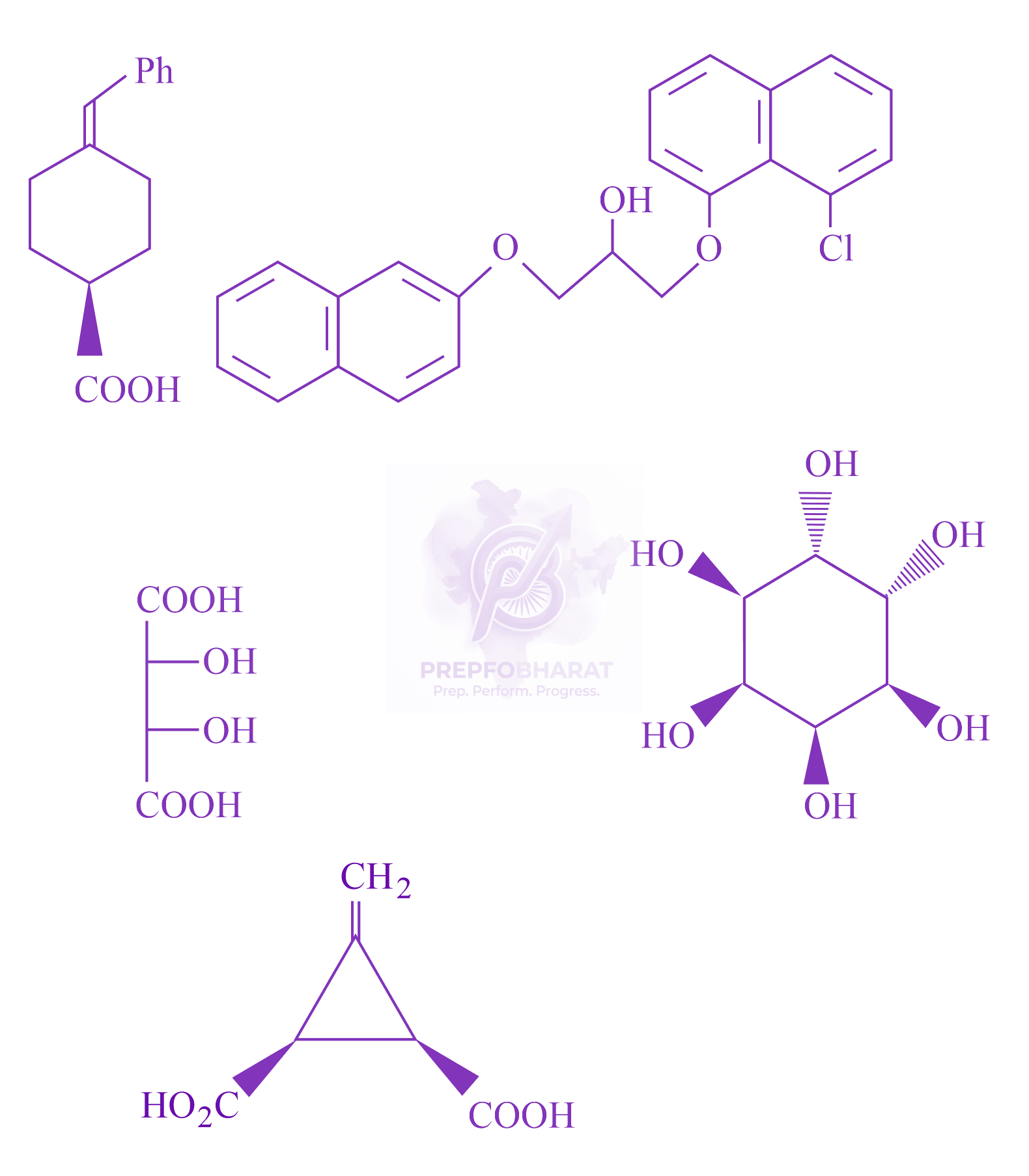
The compound which will have the lowest rate towards nucleophilic aromatic substitution on treatment with ${\mathrm{OH}}^{–}$ is
Molar mass of the hydrocarbon (X) which on ozonolysis consumes one mole of ${O}_{3}$ per mole of (X) and gives one mole each of ethanal and propanone is ______ g mol$^{–1}$ (Molar mass of C : 12 g mol$^{–1}$ , H : 1 g mol$^{–1}$ )
Number of isomeric aromatic amines with molecular formula ${C}_{8}{H}_{11}N$, which can be synthesized by Gabriel Phthalimide synthesis is _____.
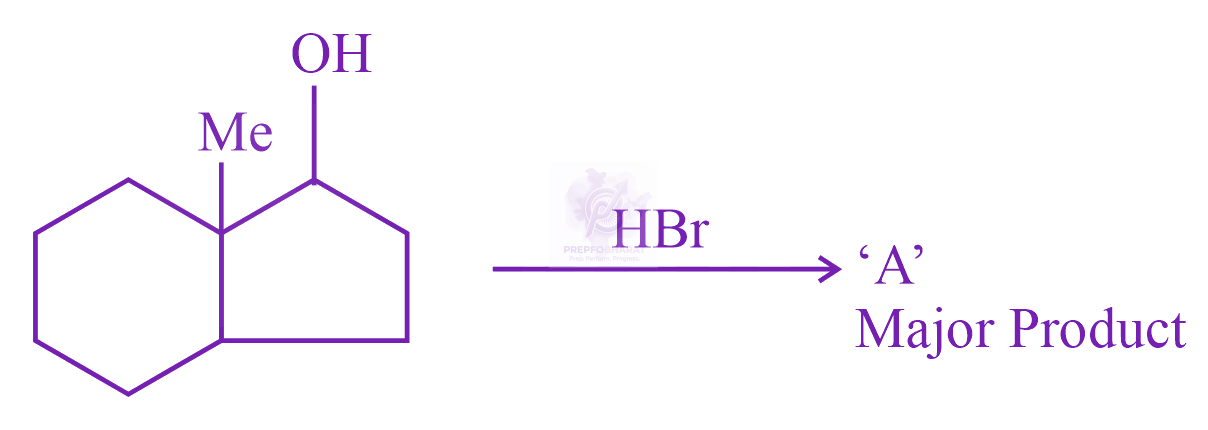 The number of hyperconjugation structures involved to stabilize carbocation formed in the above reaction is __________.
Arrange the following compounds in increasing order of rate of aromatic electrophilic substitution reaction. 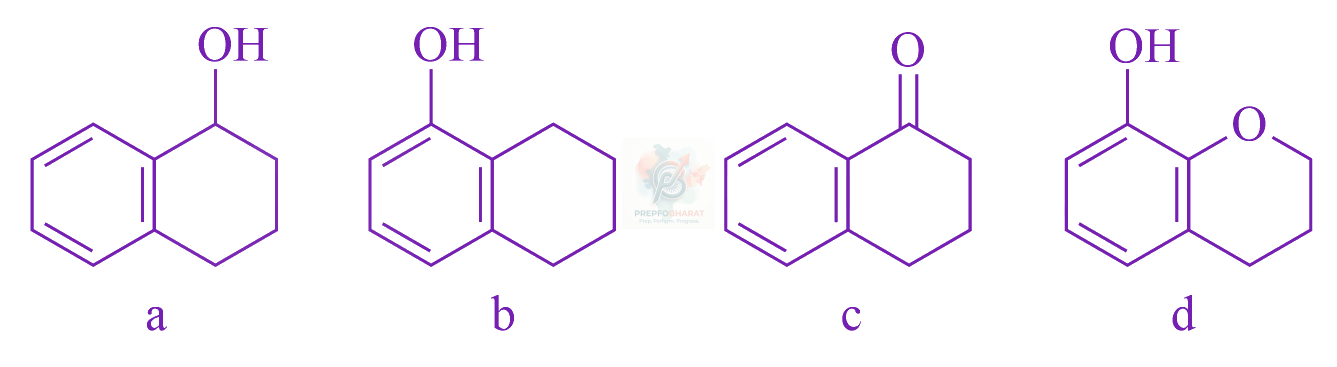
The mass of ${\mathrm{NH}}_{3}$ produced when $131.8\mathrm{kg}$ of cyclohexane carbaldehyde undergoes Tollen’s test is _____ $\mathrm{kg}$. (Nearest Integer) Molar mass of $C=12g/\mathrm{mol}$ $N=14g/\mathrm{mol}$ $O=16g/\mathrm{mol}$
A protein ‘$X$’ with molecular weight of $70,000u$, on hydrolysis gives amino acids. One of these amino acid is
In the cumene to phenol preparation in presence of air, the intermediate is
When a hydrocarbon $A$ undergoes combustion in the presence of air, it requires $9.5$ equivalents of oxygen and produces $3$ equivalents of water. What is the molecular formula of $A$?
In a reaction 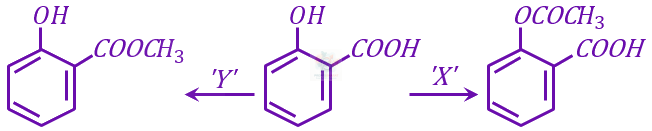 reagents ‘$X$’ and ‘$Y$’ respectively are:
The number of molecules which gives haloform test among the following molecules is : 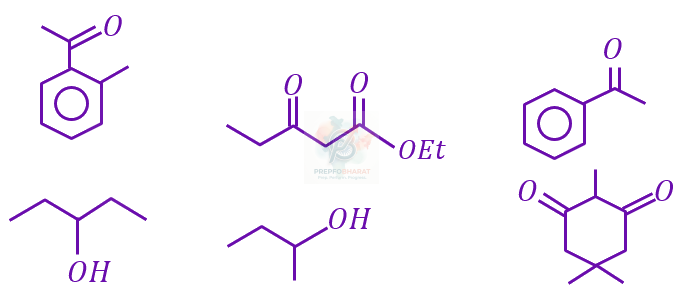
The most stable carbocation for the following is: 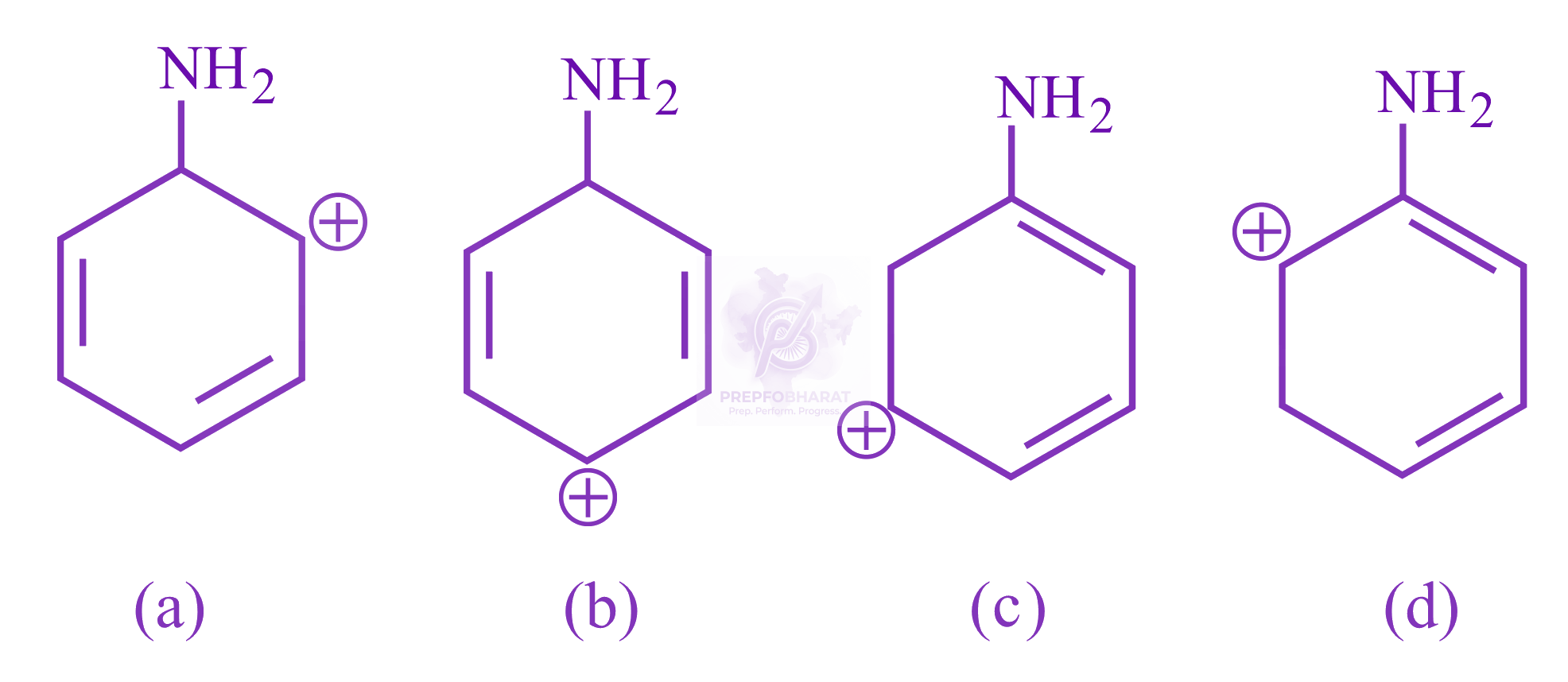
Compound that will give positive Lassaigne's test for both nitrogen and halogen is
Decreasing order of reactivity towards electrophilic substitution for the following compounds is: 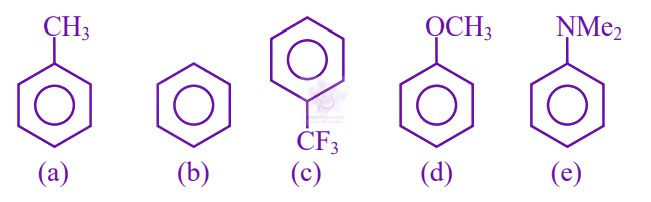
Given below are two statements : Statement I : 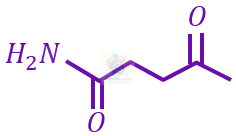 under Clemmensen reduction conditions will give 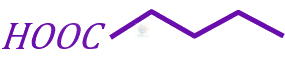 Statement II : 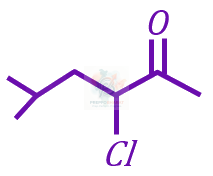 under Wolff-Kishner reduction condition will give 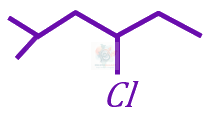 In the light of the above statements, choose the correct answer from the options given below :
Choose the correct set of reagents for the following conversion trans$(\mathrm{Ph}-\mathrm{CH}=\mathrm{CH}-{\mathrm{CH}}_{3})\rightarrow \text{ cis }(\mathrm{Ph}-\mathrm{CH}=\mathrm{CH}-{\mathrm{CH}}_{3})$
  Where Nu = Nucleophile Find out the correct statement from the options given below for the above two reactions.
Number of compounds giving (i) red colouration with ceric ammonium nitrate and also (ii) positive iodoform test from the following is _________ 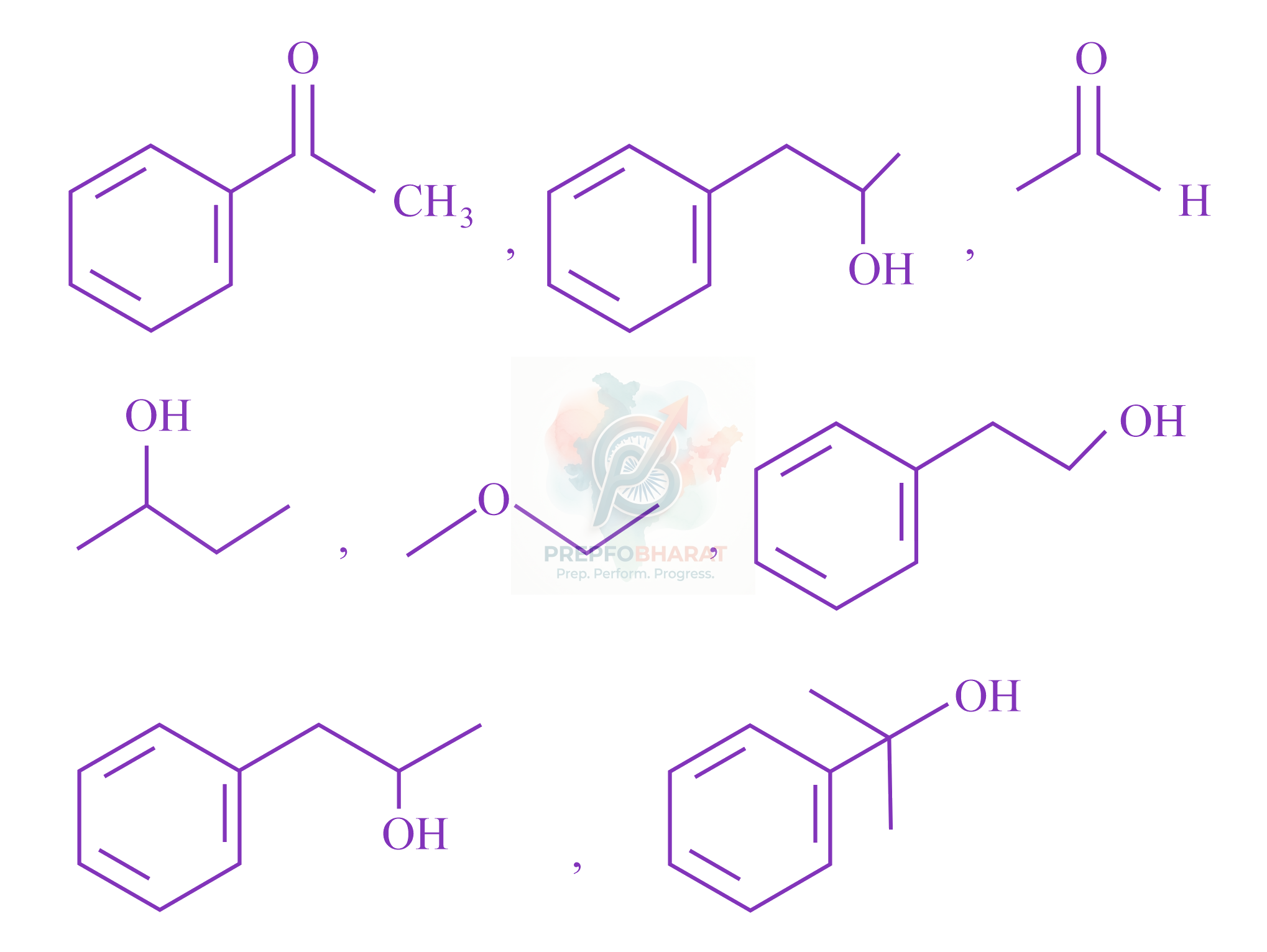
In the reaction given below 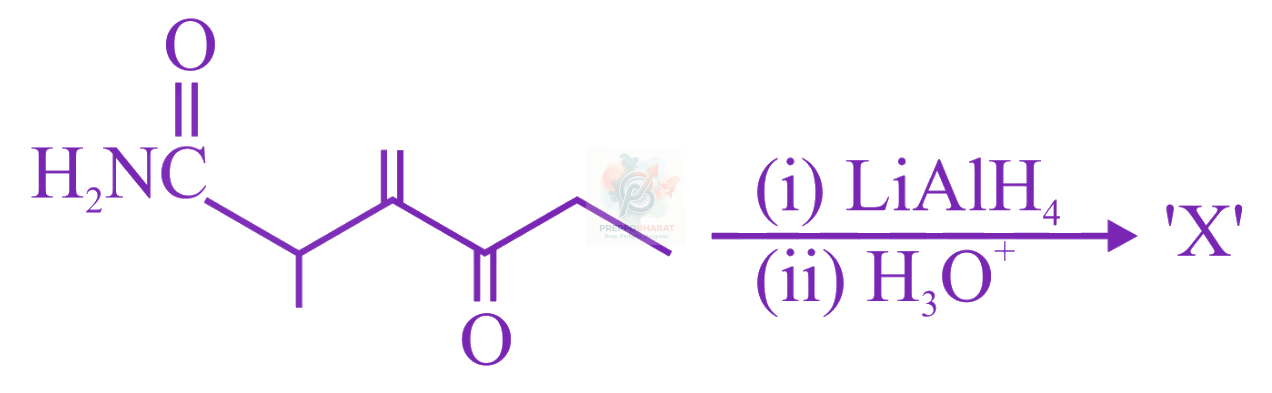 The product ‘$X$’ is :
Compound $A,{C}_{5}{H}_{10}{O}_{5}$, given a tetraacetate with ${\mathrm{AC}}_{2}O$ and oxidation of $A$ with ${\mathrm{Br}}_{2}-{H}_{2}O$ gives an acid, ${C}_{5}{H}_{10}{O}_{6}$. Reduction of $A$ with $\mathrm{HI}$ gives isopentane. The possible structure of $A$ is :