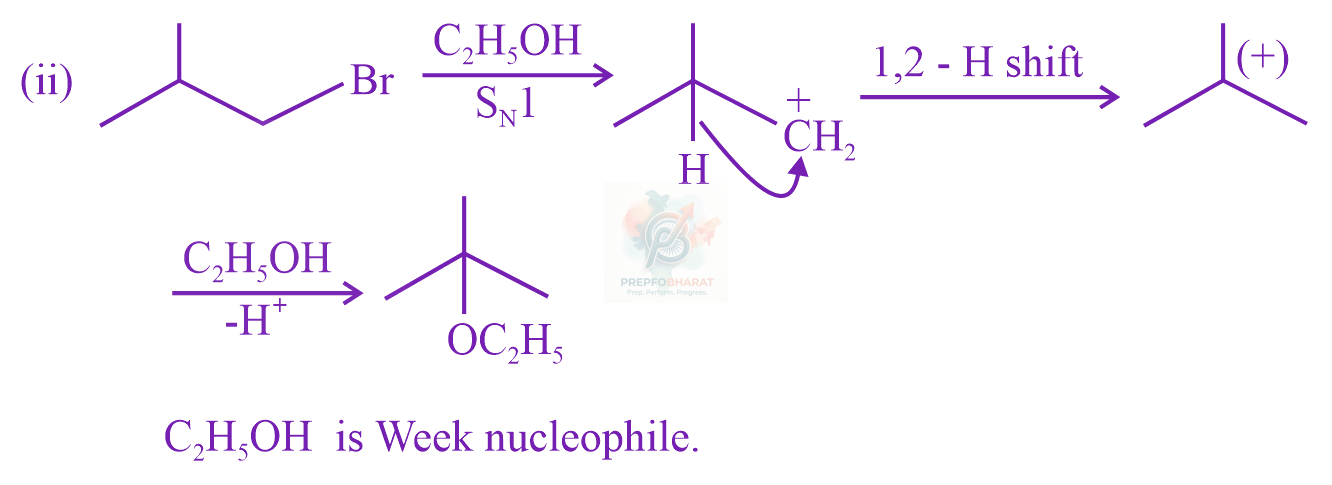
The reaction between methyl propyl bromide and C2H5O− proceeds via an SN2 (substitution nucleophilic bimolecular) mechanism. In this mechanism, the nucleophile attacks the carbon atom bearing the bromine (the electrophilic carbon) in a single step, leading to the displacement of the bromine atom.
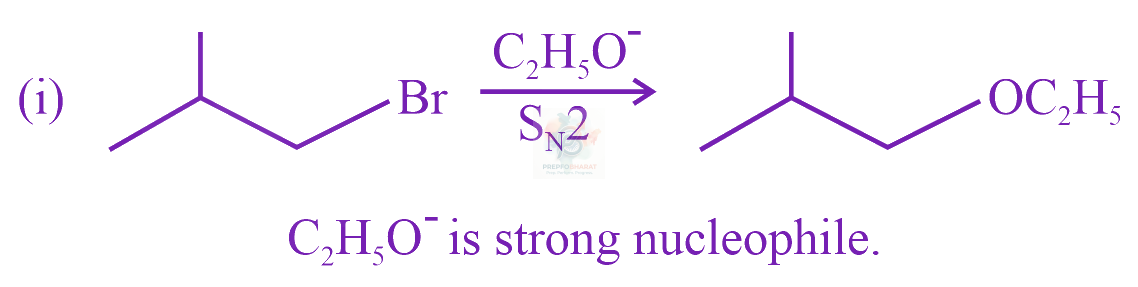
The reaction between methyl propyl bromide and C2H5OH can proceed via either an SN1 (substitution nucleophilic unimolecular). Here C2H5OH is a weak nucleophile. During the reaction 1,2-hydrogen shift will occur and tert-butyl ethyl ether is formed.