JEE Main 2025 — Organic Chemistry
Chemistry Organic Chemistry questions from JEE Main 2025.
Other Years
164 Organic Chemistry Questions from 2025
Given below are two statements: Statement I: Fructose does not contain an aldehydic group but still reduces Tollen's reagent Statement II: In the presence of base, fructose undergoes rearrangement to give glucose. In the light of the above statements, choose the correct answer from the options given below
The ascending order of relative rate of solvolysis of following compounds is : 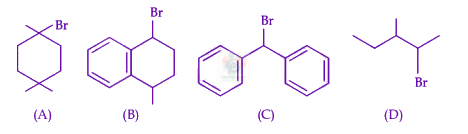
Given below are two statements : Statement I : Dimethyl ether is completely soluble in water. However, diethyl ether is soluble in water to a very small extent.Statement II : Sodium metal can be used to dry diethyl ether and not ethyl alcohol. In the light of given statements, choose the correct answer from the options given below
Which of the following amine (s) show (s) positive carbylamines test? (A) 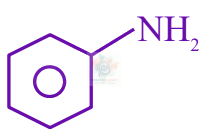 (B) $\left(\mathrm{CH}_3\right)_2 \mathrm{NH}$ (C) $\mathrm{CH}_3 \mathrm{NH}_2$ (D) $\left(\mathrm{CH}_3\right)_3 \mathrm{~N}$ (E)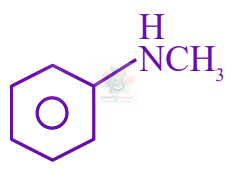
The most stable carbocation from the following is :
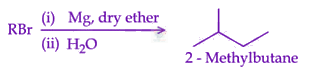 The maximum number of RBr producing 2-methylbutane by above sequence of reactions is ________ - (Consider the structural isomers only)
Given below are two statements : 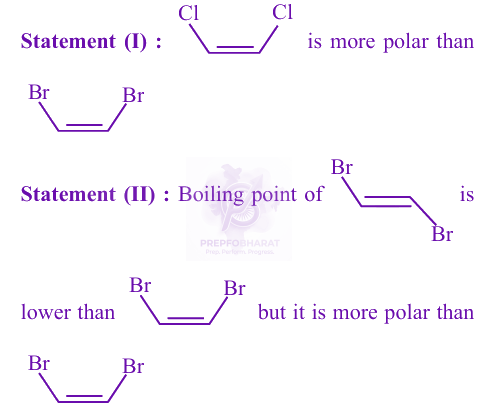 In the light of the above statements, choose the most appropriate answer from the options given below :
An optically active alkyl halide \(\mathrm{C}_4 \mathrm{H}_9 \mathrm{Br}\) [A] reacts with hot KOH dissolved in ethanol and forms alkene [B] as major product which reacts with bromine to give dibromide [C]. The compound [C] is converted into a gas [D] upon reacting with alcoholic \(\mathrm{NaNH}_2\). During hydration 18 gram of water is added to 1 mole of gas [D] on warming with mercuric sulphate and dilute acid at 333 K to form compound [E]. The IUPAC name of compound \([\mathrm{E}]\) is :
Which one of the following reaction sequences will give an azo dye?
During " S " estimation, 160 mg of an organic compound gives 466 mg of barium sulphate. The percentage of Sulphur in the given compound is _______ %. (Given molar mass in $\mathrm{g} \mathrm{mol}^{-1}$ of $\mathrm{Ba}: 137, \mathrm{~S}: 32, \overline{\mathrm{O}: 16}$ )
Identify $[\mathrm{A}],[\mathrm{B}]$, and $[\mathrm{C}]$, respectively in the following reaction sequence : 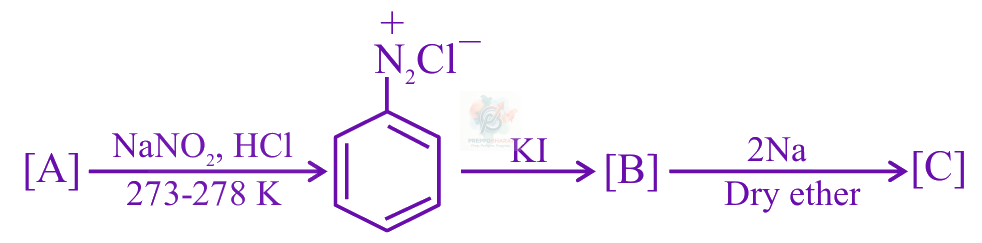
X g of nitrobenzene on nitration gave 4.2 g of m-dinitrobenzene. $\mathrm{X}=$______ g. (nearest integer) [Given : molar mass (in $\mathrm{g} \mathrm{mol}^{-1}$) $\mathrm{C}: 12, \mathrm{H}: 1$, $\mathrm{O}: 16, \mathrm{~N}: 14]$
Identify the number of structure/s from the following which can be correlated to D-glyceraldehyde. 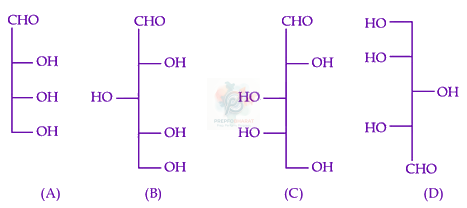
Which one of the following, with HBr will give a phenol?
How many different stereoisomers are possible for the given molecule? 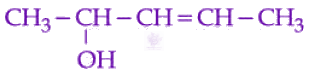
Given below are two statements: Statement I: The conversion proceeds well in the less polar medium. $\mathrm{CH}_3-\mathrm{CH}_2-\mathrm{CH}_2-\mathrm{CH}_2-\mathrm{Cl} \xrightarrow{\mathrm{HO}^{-}} \mathrm{CH}_3-\mathrm{CH}_2-\mathrm{CH}_2-\mathrm{CH}_2-\mathrm{OH}+\mathrm{Cl}^{(-)}$ Statement II: The conversion proceeds well in the more polar medium.  In the light of the above statements, choose the correct answer from the options given below
In Dumas' method for estimation of nitrogen 1 g of an organic compound gave 150 mL of nitrogen collected at 300 K temperature and 900 mm Hg pressure. The percentage composition of nitrogen in the compound is _____ $\%$ (nearest integer). (Aqueous tension at $300 \mathrm{~K}=15 \mathrm{~mm} \mathrm{Hg}$)
Consider the following compound (X)  The most stable and least stable carbon radicals, respectively, produced by homolytic cleavage of corresponding \(\mathrm{C}-\mathrm{H}\) bond are :
In the following substitution reaction: 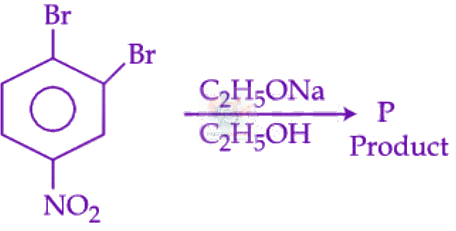 product \({ }^{\prime} \mathrm{P}^{\prime}\) formed is :
Given below are two statements : Statement I : One mole of propyne reacts with excess of sodium to liberate half a mole of $\mathrm{H}_2$ gas. Statement II : Four g of propyne reacts with $\mathrm{NaNH}_2$ to liberate $\mathrm{NH}_3$ gas which occupies 224 mL at STP. In the light of the above statements, choose the most appropriate answer from the options given below:
The total number of structural isomers possible for the substituted benzene derivatives with the molecular formula $\mathrm{C}_9 \mathrm{H}_{12}$ is ______.
Identify correct statement/s : (A) $-\mathrm{OCH}_3$ and $-\mathrm{NHCOCH}_3$ are activating group. (B) -CN and -OH are meta directing group. (C) -CN and $-\mathrm{SO}_3 \mathrm{H}$ are meta directing group. (D) Activating groups act as ortho - and para directing groups. (E) Halides are activating groups. Choose the correct answer from the options given below :
Predict the major product of the following reaction sequence :- 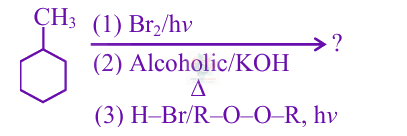
The sequence from the following that would result in giving predominantly $3,4,5$-Tribromoaniline is :
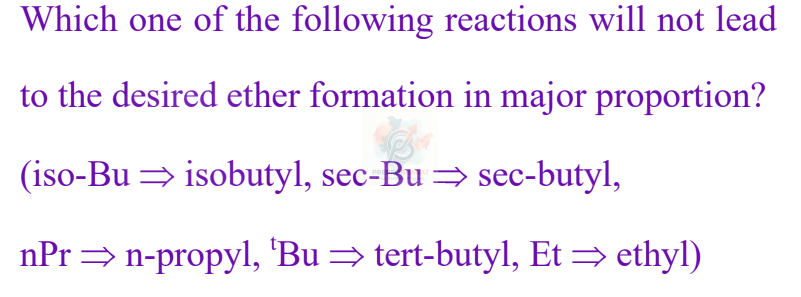
"P" is an optically active compound with molecular formula $\mathrm{C}_6 \mathrm{H}_{12} \mathrm{O}$. When " P " is treated with 2,4-dinitrophenylhydrazine, it gives a positive test. However, in presence of Tollens reagent, "P" gives a negative test. Predict the structure of "P".
Given below are two statements : Consider the following reaction 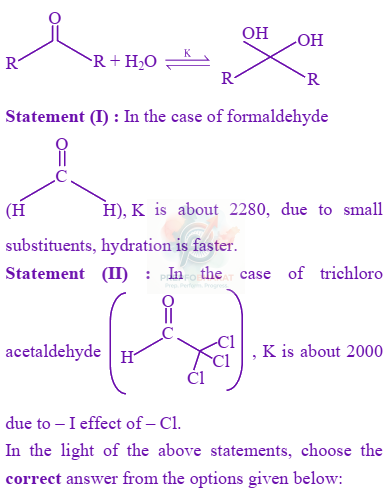
When a concentrated solution of sulphanilic acid and 1-naphthylamine is treated with nitrous acid ( 273 K) and acidified with acetic acid, the mass ( g) of 0.1 mole of product formed is : (Given molar mass in $\mathrm{g} \mathrm{mol}^{-1} \mathrm{H}: 1, \mathrm{C}: 12, \mathrm{~N}: 14$, $\mathrm{O}: 16, \mathrm{~S}: 32)$
Which among the following compounds give yellow solid when reacted with $\mathrm{NaOI} / \mathrm{NaOH}$ ? 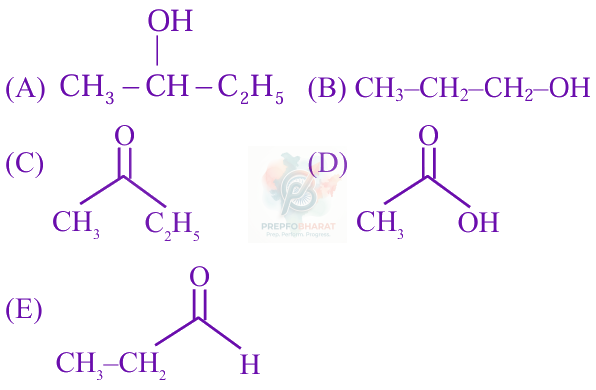 Choose the correct answer from the options given below :
Given below are two statements : Statement (I): In partition chromatography, stationary phase is thin film of liquid present in the inert support. Statement (II) : In paper chromatography, the material of paper acts as a stationary phase. In the light of the above statements, choose the correct answer from the options given below :
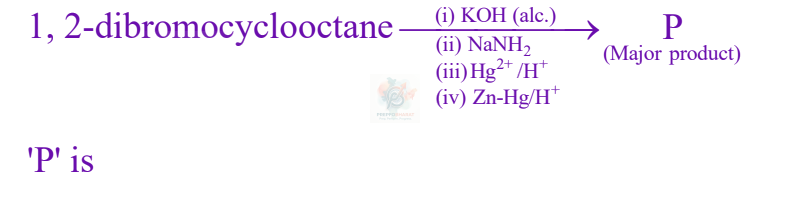
The steam volatile compounds among the following are : (A) 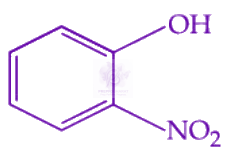 (B)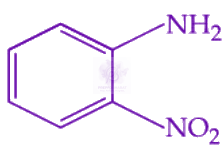 (C)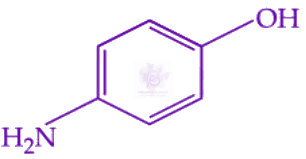 (D)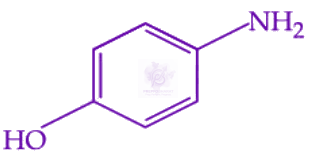 Choose the correct answer from the options given below :
Match List - I with List - II. \(\begin{array}{ll|ll} & \begin{array}{l} \text { List - I } \\ \text { (Carbohydrate) } \end{array} & \begin{array}{l} \text { List - II } \\ \text { (Linkage Source) } \end{array} \\ \hline \text { (A) } & \text { Amylose } & \text { (I) } \beta-C_1-C_4 \text {, plant } \\ \text { (B) } & \text { Cellulose } & \text { (II) } \alpha-C_1-C_4, \text { animal } \\ \text { (C) } & \text { Glycogen } & \text { (III) } \alpha-C_1-C_4, \alpha-C_1-C_6, \text { plant } \\ \text { (D) } & \text{ Amylopectin } & \text { (IV) } \alpha-C_1-C_4, \text { plant } \end{array}\) Choose the correct answer from the options given below :
Match the LIST-I with LIST-II $\begin{array}{|l|l|l|l|}\hline & \text{LIST-I} & & \text{LIST-II} \\ \hline \text{A.} & \text{Carbocation} & \text{I.} & \begin{array}{l} \text{Species that can} \\ \text{supply a pair of} \\ \text{electrons.} \end{array} \\ \hline \text{B.} & \begin{array}{l} \text{C-Free} \\ \text{radical} \end{array} & \text{II.} & \begin{array}{l} \text{Species that can} \\ \text{receive a pair of} \\ \text{electrons.} \end{array} \\ \hline \text{C.} & \text{Nucleophile} & \text{III.} & \begin{array}{l} sp ^2 \text{ hybridized} \\ \text{carbon with empty} \\ \text{p-orbital.} \end{array} \\ \hline \text{D.} & \text{Electrophile} & \text{IV.} & \begin{array}{l} sp ^2 / sp ^3 \text{ hybridized} \\ \text{carbon with one} \\ \text{unpaired electron.} \end{array} \\ \hline \end{array}$ Choose the correct answer from the options given below :
Which among the following halides will generate the most stable carbocation in the nucleophilic substitution reaction?
Which of the following acids is a vitamin?
Match List-I with List-II 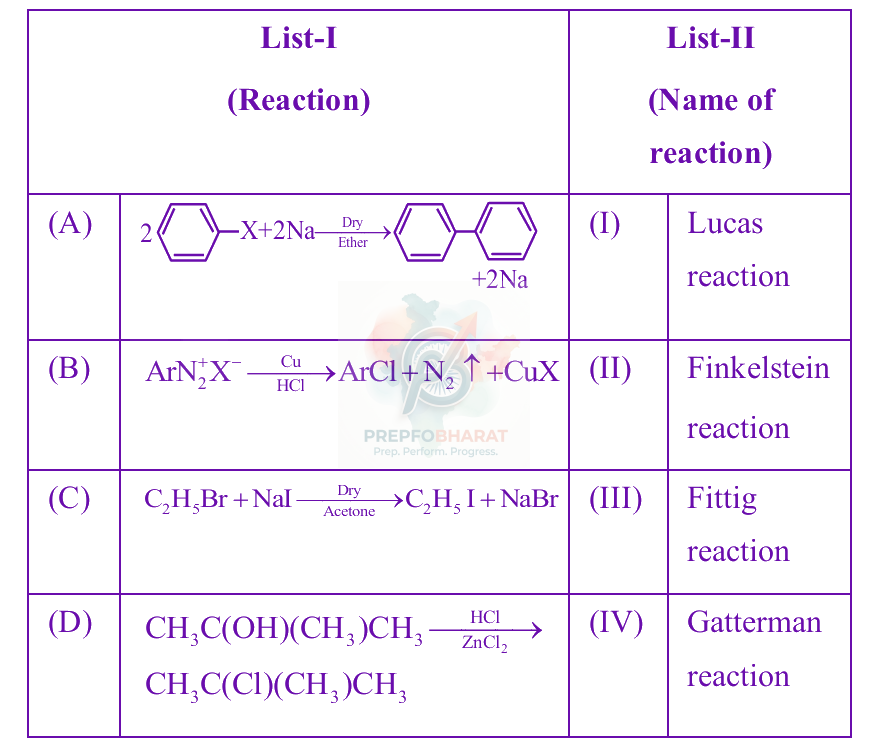 Choose the correct answer from the options given below :
When sec-butylcyclohexane reacts with bromine in the presence of sunlight, the major product is :
The compound with molecular formula $\mathrm{C}_6 \mathrm{H}_6$, which gives only one monobromo derivative and takes up four moles of hydrogen per mole for complete hydrogenation has ________ $=$ electrons.
Given below are two statements : Statement (I) : On hydrolysis, oligo peptides give rise to fewer number of $\alpha$-amino acids while proteins give rise to a large number of $\beta$-amino acids. Statement (II) : Natural proteins are denatured by acids which convert the water soluble form of fibrous proteins to their water insoluble form. In the light of the above statements, choose the most appropriate answer from the options given below :
Match the LIST-I with LIST-II $\begin{array}{|l|l|l|l|} \hline & \begin{array}{l} \text{LIST-I} \\ \text{(Reagent)} \end{array} & & \begin{array}{c} \text{LIST-II} \\ \text{(Functional Group} \\ \text{detected)} \end{array} \\ \hline \text{A.} & \begin{array}{l} \text{Sodium} \\ \text{bicarbonate} \\ \text{solution} \end{array} & \text{I.} & \begin{array}{l} \text{double} \\ \text{bond/unsaturation} \end{array} \\ \hline \text{B.} & \begin{array}{l} \text{Neutral ferric} \\ \text{chloride} \end{array} & \text{II.} & \text{carboxylic acid} \\ \hline \text{C.} & \begin{array}{l} \text{ceric} \\ \text{ammonium} \\ \text{nitrate} \end{array} & \text{III.} & \text{phenolic - OH} \\ \hline \text{D.} & \begin{array}{l} \text{alkaline} \\ \text{KMnO} \end{array} & \text{IV.} & \text{alcoholic - OH} \\ \hline \end{array}$ Choose the correct answer from the options given below :
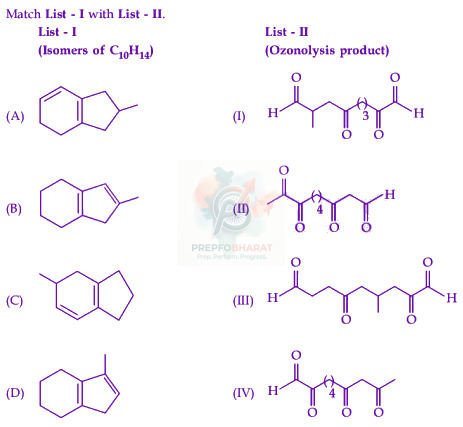 Choose the correct answer from the options given below :
The $\alpha$-Helix and $\beta$ - Pleated sheet structures of protein are associated with its :
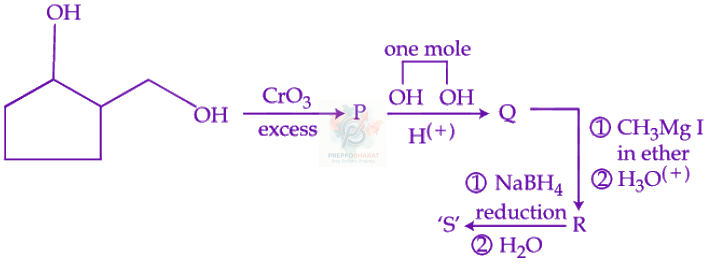 0.1 mole of compound ' S ' will weigh _______ g. (Given molar mass in \(\mathrm{g} \mathrm{mol}^{-1} \mathrm{C}: 12, \mathrm{H}: 1, \mathrm{O}: 16\))
Both acetaldehyde and acetone (individually) undergo which of the following reactions? A. Iodoform Reaction B. Cannizaro Reaction C. Aldol Condensation D. Tollen's Test E. Clemmensen Reduction Choose the correct answer from the options given below:
The major product of the following reaction is: $\mathrm{CH}_3 \mathrm{CH}_2 \mathrm{CH}=\mathrm{O} \xrightarrow[\text { reflux }]{\substack{\text { excess } \mathrm{HCHO} \\ \text { alkali }}}$ ?
Consider the following molecule (X). The structure of X is 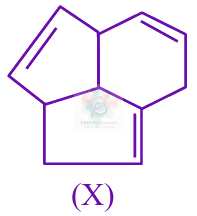
Given below are two statements : Statement (I) : Nitrogen, sulphur, halogen and phosphorus present in an organic compound are detected by Lassaigne's Test. Statement (II) : The elements present in the compound are converted from covalent form into ionic form by fusing the compound with Magnesium in Lassaigne's test. In the light of the above statements, choose the correct anower from the options given below :
Given below are two statements : Statement (I) : The boiling points of alcohols and phenols increase with increase in the number of C-atoms. Statement (II) : The boiling points of alcohols and phenols are higher in comparison to other class of compounds such as ethers, haloalkanes. In the light of the above statements, choose the correct answer from the options given below :
In the following reactions, which one is NOT correct?
The compounds which give positive Fehling's test are : (A)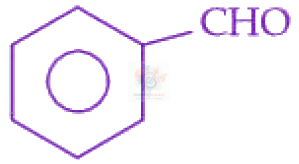 (B)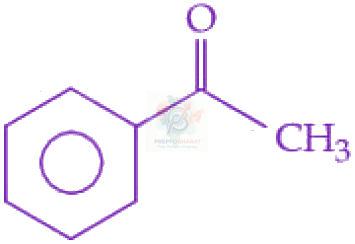 (C)$\mathrm{HOCH}_2-\mathrm{CO}-(\mathrm{CHOH})_3-\mathrm{CH}_2-\mathrm{OH}$ (D)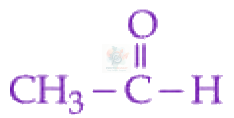 (E)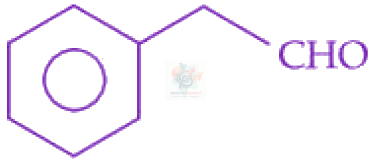 Choose the correct answer from the options given below :
Identify the structure of the final product (D) in the following sequence of the reactions : 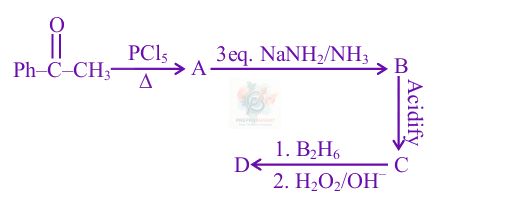 Total number of $\mathrm{sp}^2$ hybridised carbon atoms in product D is.
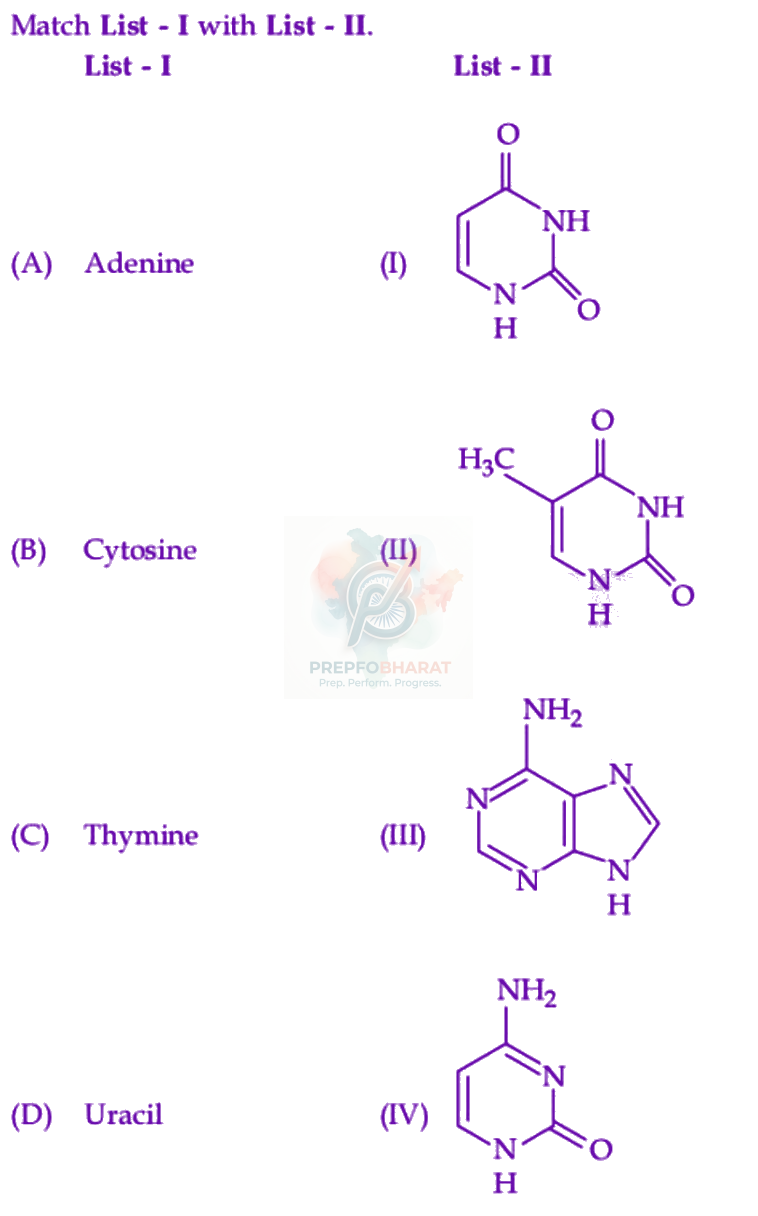 Choose the correct answer from the options given below :
The product $B$ formed in the following reaction sequence is : 
Match List-I with List-II 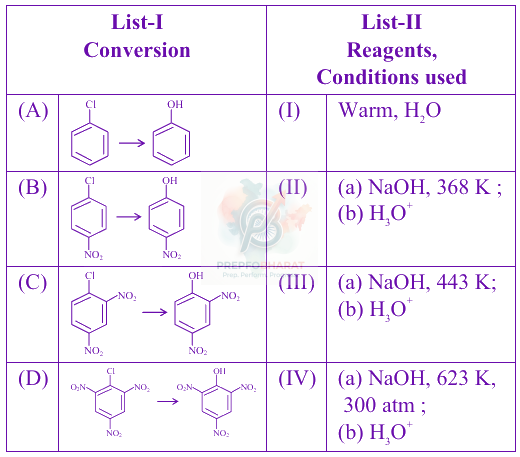 Choose the correct answer from the options given below :
Propane molecule on chlorination under photochemical condition gives two di-chloro products, " x " and " y ". Amongst " x " and " y ", " x " is an optically active molecule. How many tri-chloro products (consider only structural isomers) will be obtained from " x " when it is further treated with chlorine under the photochemical condition?
The possible number of stereoisomers for 5-phenylpent-4-en-2-ol is $\ldots\ldots$
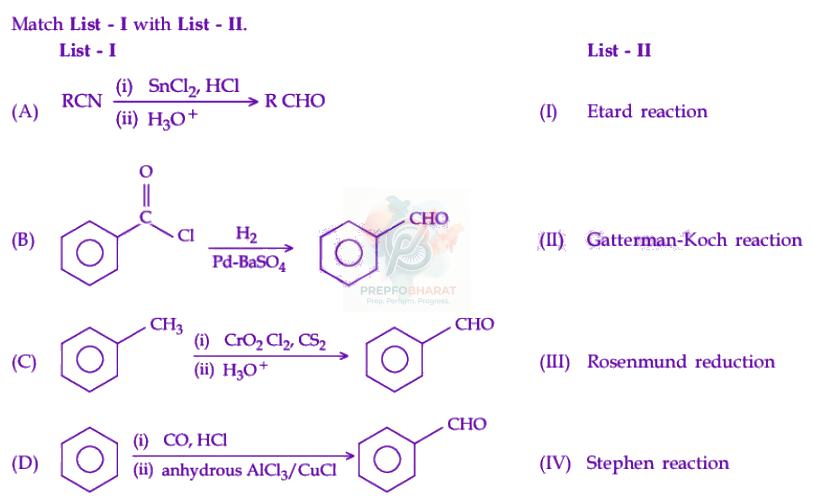 Choose the correct answer from the options given below :
The least acidic compund, among the following is : 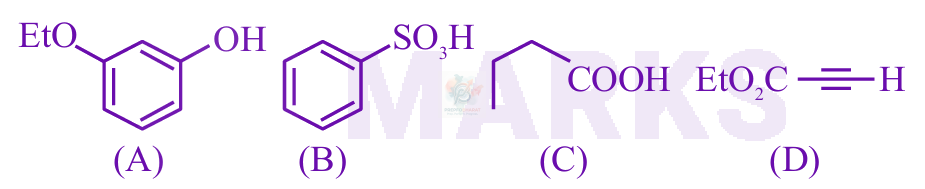
The correct order of stability of following carbocations is : 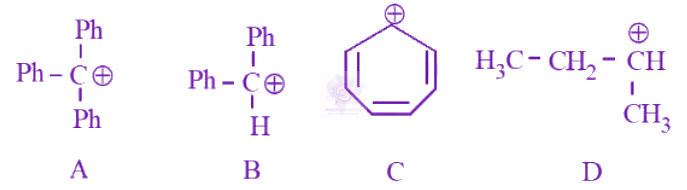
Given below are two statements : Statement (I) :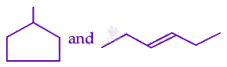 are isomeric compounds.Statement (II) : are functional group isomers.
Consider the following sequence of reactions: 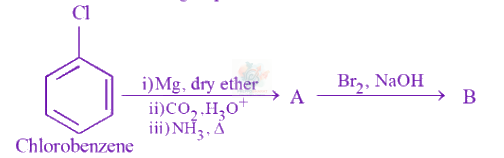 11.25 mg of chlorobenzene will produce __________ $\times 10^{-1} \mathrm{mg}$ of product B . (Consider the reactions result in complete conversion.) [Given molar mass of $\mathrm{C}, \mathrm{H}, \mathrm{O}, \mathrm{N}$ and Cl as $12,1,16,14$ and $35.5 \mathrm{~g} \mathrm{~mol}^{-1}$ respectively]
The correct order of basic nature on aqueous solution for the bases \(\mathrm{NH}_3, \mathrm{H}_2 \mathrm{~N}-\mathrm{NH}_2, \mathrm{CH}_3 \mathrm{CH}_2 \mathrm{NH}_2\), \(\left(\mathrm{CH}_3 \mathrm{CH}_2\right)_2 \mathrm{NH}\) and \(\left(\mathrm{CH}_3 \mathrm{CH}_2\right)_3 \mathrm{~N}\) is :
Match List-I with List-II 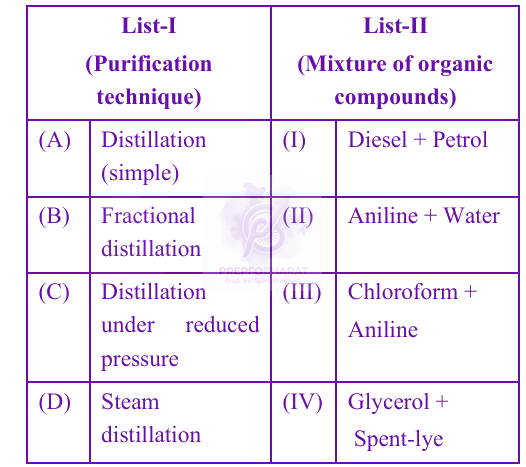 Choose the correct answer from the options given below :
In Carius method for estimation of halogens, 180 mg of an organic compound produced 143.5 mg of AgCl . The percentage composition of chlorine in the compound is _______ \%. (Given : molar mass in $\mathrm{g} \mathrm{mol}^{-1}$ of $\mathrm{Ag}: 108, \mathrm{Cl}: 35.5$ )
Identify correct statements : (A) Primary amines do not give diazonium salts when treated with $\mathrm{NaNO}_2$ in acidic condition. (B) Aliphatic and aromatic primary amines on heating with $\mathrm{CHCl}_3$ and ethanolic KOH form carbylamines. (C) Secondary and tertiary amines also give carbylamine test. (D) Benzenesulfonyl chloride is known as Hinsberg's reagent. (E) Tertiary amines reacts with benzenesulfonyl chloride very easily. Choose the correct answer from the options given below :
Which of the following compounds is least likely to give effervescence of $\mathrm{CO}_2$ in presence of aq. $\mathrm{NaHCO}_3$ ?
Match the LIST-I with LIST-II 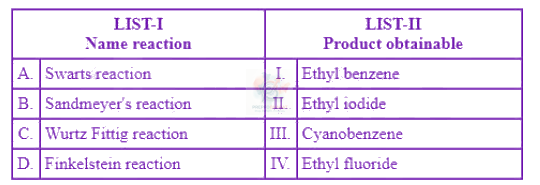 Choose the correct answer from the options given below:
Consider the following reactions. From these reactions which reaction will give carboxylic acid as a major product ? (A) $\mathrm{R}-\mathrm{C} \equiv \mathrm{N} \xrightarrow[\text { mild condition }]{\text { (i) } \mathrm{H}^{+} / \mathrm{H}_2 \mathrm{O}}$ (B) $\mathrm{R}-\mathrm{MgX} \xrightarrow[\text { (ii) } \mathrm{H}_3 \mathrm{O}^{+}]{\text {(i) } \mathrm{CO}_2}$ (C) $\mathrm{R}-\mathrm{C} \equiv \mathrm{N} \xrightarrow[\text { (ii) } \mathrm{H}_3 \mathrm{O}^{+}]{\text {(i) } \mathrm{SnCl}_2 / \mathrm{HCl}}$ (D) $\mathrm{R} \cdot \mathrm{CH}_2 \cdot \mathrm{OH} \xrightarrow{\mathrm{PCC}}$ (E)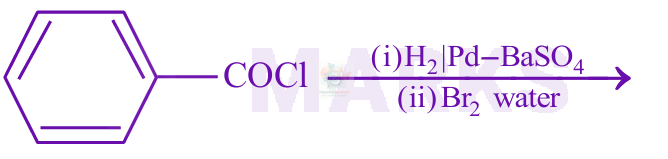 Choose the correct answer from the options given below:
Given below are two statements : Statement (I) : Alcohols are formed when alkyl chlorides are treated with aqueous potassium hydroxide by elimination reaction. Statement (II) : In alcoholic potassium hydroxide, alkyl chlorides form alkenes by abstracting the hydrogen from the $\beta$-carbon. In the light of the above statements, choose the most appropriate answer from the options given below :
Given below are two statements: 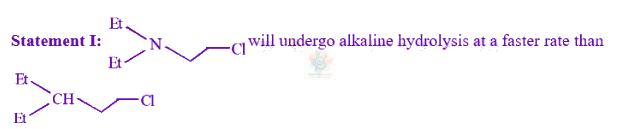  involving lone pair of electrons on nitrogen. In the light of the above statements, choose the most appropriate answer from the options given below
Given below are two statements: Statement I : D-(+)-glucose $+\mathrm{D}-(+)$ fructose $\xrightarrow{-\mathrm{H}_2 \mathrm{O}}$ sucrose Statement II : Invert sugar is formed during sucrose hydrolysis. In the light of the above statements, choose the correct answer from the options given below -
Given below are some nitrogen containing compounds 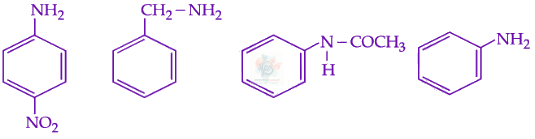 Each of them is treated with HCl separately. 1.0 g of the most basic compound will consume _______ mg of HCl. (Given molar mass in \(\mathrm{g} \mathrm{mol}^{-1} \mathrm{C}: 12, \mathrm{H}: 1, \mathrm{O}: 16, \mathrm{Cl}: 35.5\))
What amount of bromine will be required to convert 2 g of phenol into 2,4,6-tribromophenol? (Given molar mass in $\mathrm{g} \mathrm{mol}^{-1}$ of $\mathrm{C}, \mathrm{H}, \mathrm{O}, \mathrm{Br}$ are $12,1,16,80$ respectively )
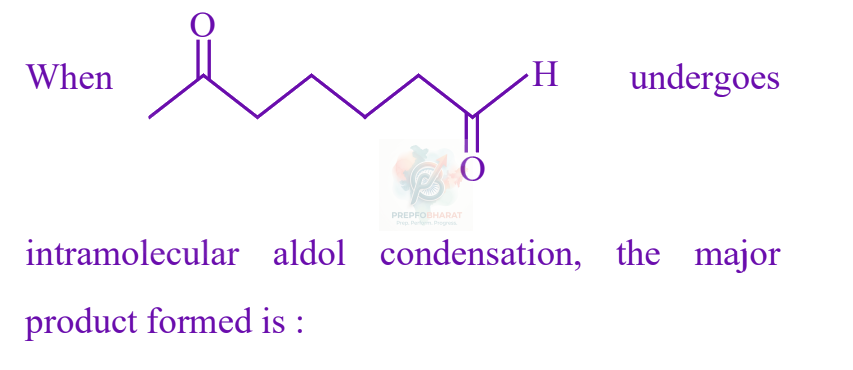
The compounds that produce $\mathrm{CO}_2$ with aqueous $\mathrm{NaHCO}_3$ solution are: A. 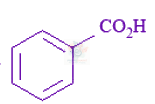 B.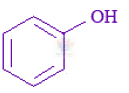 C.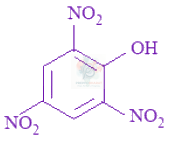 D.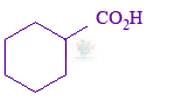 E.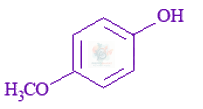 Choose the correct answer from the options given below:
Consider the following molecules : 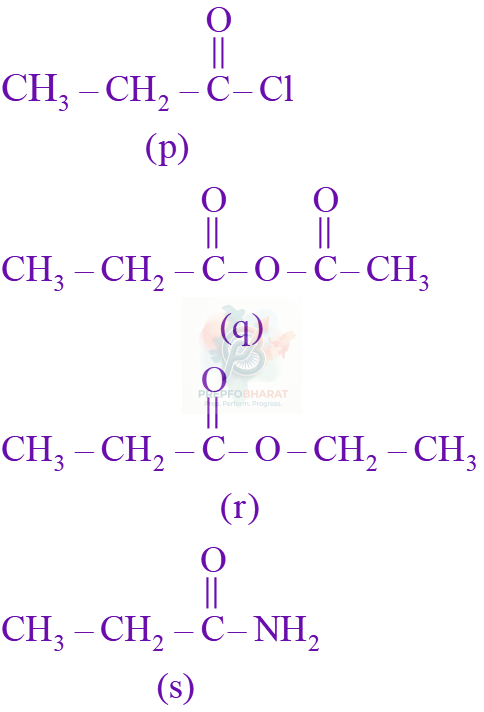 The correct order of rate of hydrolysis is :
Consider the following sequence of reactions. 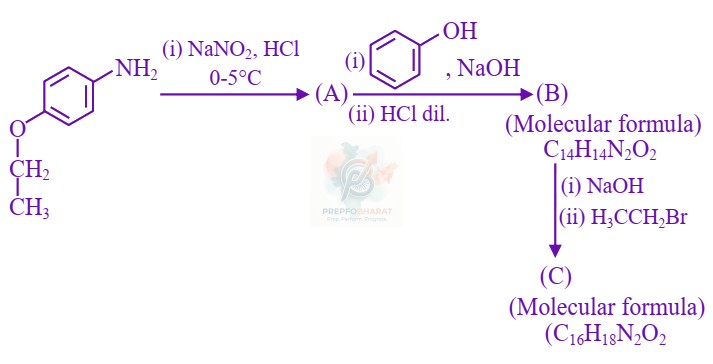 Total number of $\mathrm{sp}^3$ hybridised carbon atoms in the major product C formed is________
$\mathrm{A} \xrightarrow[\text { (ii) } \mathrm{H}_3 \mathrm{O}^{+}]{\text {(i) } \mathrm{NaOH}} \mathrm{B} \xrightarrow[\text { (ii) } \mathrm{H}_2 \mathrm{SO}_4, \Delta]{\text { (i) } \mathrm{EtOH}} \mathrm{C}$ ' A ' shows positive Lassaign's test for N and its molar mass is 121. ' B ' gives effervescence with aq. $\mathrm{NaHCO}_3$. 'C' gives fruity smell. Identify $\mathrm{A}, \mathrm{B}$ and C from the following.
A dipeptide, " $x$ " on complete hydrolysis gives " $y$ " and " $z$ ". " $y$ " on treatment with aq. $\mathrm{HNO}_2$ produces lactic acid. On the other hand " $z$ " on heating gives the following cyclic molecule. 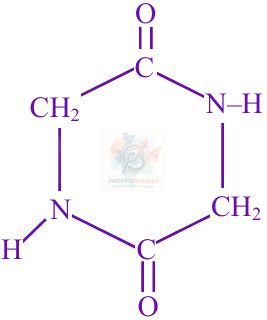 Based on the information given, the dipeptide X is:
Identify the correct statement among the following:
Given below are two statements: Statement I : D-glucose pentaacetate reacts with 2, 4-dinitrophenylhydrazine Statement II : Starch, on heating with concentrated sulfuric acid at $100^{\circ} \mathrm{C}$ and 2-3 atmosphere pressure produces glucose. In the light of the above statements, choose the correct answer from the options given below
Given below are two statements. Statement I : The dipole moment of $\stackrel{4}{\mathrm{CH}_3}-\stackrel{3~~~~}{\mathrm{CH}}=\stackrel{3~~~~}{\mathrm{CH}}-\stackrel{1~~~~}{\mathrm{CH}}=\mathrm{O}$ is greater than $\stackrel{4}{\mathrm{CH}_3}-\stackrel{3}{\mathrm{CH}_2}-\stackrel{2}{\mathrm{CH}_2}-\stackrel{1}{\mathrm{CH}}=\mathrm{O}$ Statement II : $\mathbf{C}_1-\mathbf{C}_2$ bond length of $\underset{4}{\mathrm{CH}_3-\mathrm{}} \underset{3}{\mathrm{CH=}} \underset{2}{\mathrm{CH}}-\mathrm{CH}=\mathrm{O}$ is greater than $\mathrm{C}_1-\mathrm{C}_2$ bond length of 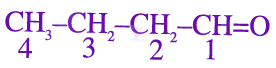 In the light of the above statements, choose the correct answer from the options given below:
Thyroxine, the hormone has given below structure 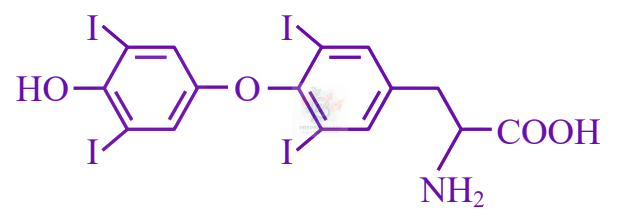 The percentage of iodine in thyroxine is ____ $\%$. (nearest integer) (Given molar mass in $\mathrm{g} \mathrm{mol}^{-1} \mathrm{C}: 12. \mathrm{H}: 1, \mathrm{O}: 16$, $\mathrm{N}: 14, \mathrm{I}: 127)$
The alkane from below having two secondary hydrogens is :
In the sulphur estimation, 0.20 g of a pure organic compound gave 0.40 g of barium sulphate. The percentage of sulphur in the compound is ______ $\times 10^{-1} \%$. (Molar mass : $\mathrm{O}=16, \mathrm{~S}=32, \mathrm{Ba}=137$ in $\mathrm{g} \mathrm{mol}^{-1}$ )
Match the Compounds (List - I) with the appropriate Catalyst/Reagents (List - II) for their reduction into corresponding amines. 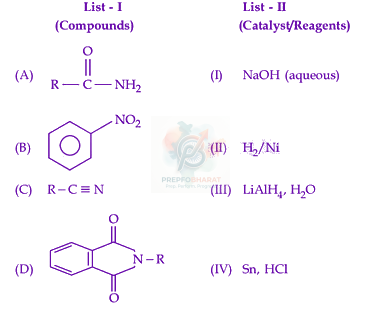 Choose the correct answer from the options given below :
A compound ' $\mathrm{X}^{\prime}$ absorbs 2 moles of hydrogen and ' $\mathrm{X}^{\prime}$ upon oxidation with $\mathrm{KMnO}_4 \mid \mathrm{H}^{+}$gives  The total number of $\sigma$ bonds present in the compound ' $\mathrm{X}^{\prime}$ is______
The structure of the major product formed in the following reaction is : 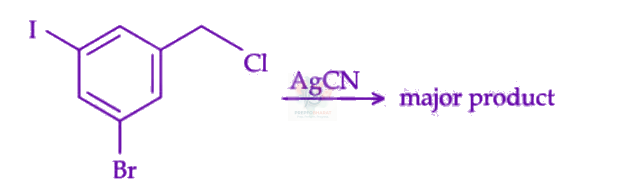
In Dumas' method for estimation of nitrogen, 0.5 gram of an organic compound gave 60 mL of nitrogen collected at 300 K temperature and 715 mm Hg pressure. The percentage composition of nitrogen in the compound (Aqueous tension at $300 \mathrm{~K}=15 \mathrm{~mm} \mathrm{Hg})$ is
Following are the four molecules "P", "Q", "R" and "S". Which one among the four molecules will react with $\mathrm{H}-\mathrm{Br}_{(\mathrm{aq})}$ at the fastest rate? 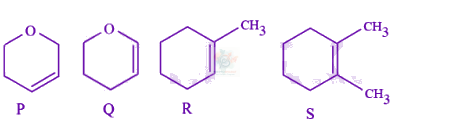
Which of the following arrangements with respect to their reactivity in nucleophilic addition reaction is correct?
In Dumas' method 292 mg of an organic compound released 50 mL of nitrogen gas $\left(\mathrm{N}_2\right)$ at 300 K temperature and 715 mm Hg pressure. The percentage composition of ' N ' in the organic compound is ________ % (Nearest integer) (Aqueous tension at $300 \mathrm{~K}=15 \mathrm{~mm} \mathrm{Hg}$)
An organic compound (X) with molecular formula $\mathrm{C}_3 \mathrm{H}_6 \mathrm{O}$ is not readily oxidised. On reduction it gives $\mathrm{C}_3 \mathrm{H}_8 \mathrm{O}(\mathrm{Y})$ which reacts with HBr to give a bromide (Z) which is converted to Grignard reagent. This Grignard reagent on reaction with (X) followed by hydrolysis give 2,3-dimethylbutan-2-ol. Compounds $(\mathrm{X}),(\mathrm{Y})$ and $(\mathrm{Z})$ respectively are :
The correct stability order of the following species/molecules is: 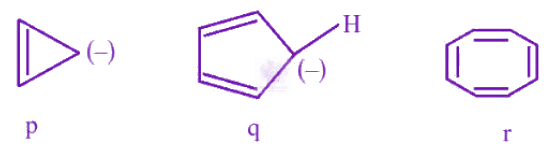
In Carius method of estimation of halogen, 0.25 g of an organic compound gave 0.15 g of silver bromide $(\mathrm{AgBr})$. The percentage of Bromine in the organic compound is $\ldots\ldots$ $\times 10^{-1 \%}$ (Nearest integer). (Given : Molar mass of Ag is 108 and Br is $80 \mathrm{~g} \mathrm{~mol}^{-1}$ )
Match List-I with List-II - $\begin{array}{|l|l|l|l|}<br />\hline & \begin{array}{l}<br />\text { List-I } \\ \text { (Separation of) }<br />\end{array} & & \begin{array}{l}<br />\text { List-II } \\ \text { (Separation } \\ \text { Technique) }<br />\end{array} \\ \hline \text { (A) } & \begin{array}{l}<br />\text { Aniline from } \\ \text { aniline-water } \\ \text { mixture }<br />\end{array} & \text { (I) } & \begin{array}{l}<br />\text { Simple } \\ \text { distillation }<br />\end{array} \\ \hline \text { (B) } & \begin{array}{l}<br />\text { Glycerol from } \\ \text { spent-lye in soap } \\ \text { industry }<br />\end{array} & \text { (II) } & \begin{array}{l}<br />\text { Fractional } \\ \text { distillation }<br />\end{array} \\ \hline \text { (C) } & \begin{array}{l}<br />\text { Different } \\ \text { fractions of crude } \\ \text { oil in petroleum } \\ \text { industry }<br />\end{array} & \text { (III) } & \begin{array}{l}<br />\text { Distillation } \\ \text { at reduced } \\ \text { pressure }<br />\end{array} \\ \hline \text { (D) } & \begin{array}{l}<br />\text { Chloroform- } \\ \text { Aniline mixture }<br />\end{array} & \text { (IV) } & \begin{array}{l}<br />\text { Steam } \\ \text { distillation }<br />\end{array} \\ \hline<br />\end{array}$ Choose the correct answer from the options given below :
In the following series of reactions identify the major products A \& B respectively. 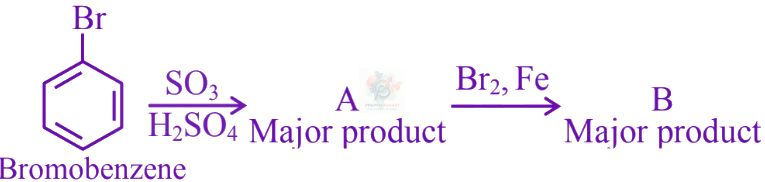
Identify correct conversion during acidic hydrolysis from the following : (A) starch gives galactose. (B) cane sugar gives equal amount of glucose and fructose. (C) milk sugar gives glucose and galactose. (D) amylopectin gives glucose and fructose. (E) amylose gives only glucose. Choose the correct answer from the options given below :
Given below are two statements : Statement (I) : On nitration of m-xylene with $\mathrm{HNO}_3, \mathrm{H}_2 \mathrm{SO}_4$ followed by oxidation, 4-nitrobenzene-1,3-dicarboxylic acid is obtained as the major product. Statement (II) : $-\mathrm{CH}_3$ group is o/p-directing while $-\mathrm{NO}_2$ group is m-directing group. In the light of the above statements, choose the correct answer from the options given below :
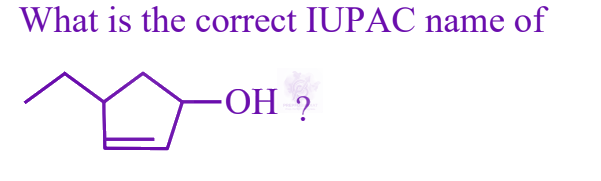
What is the correct IUPAC name of 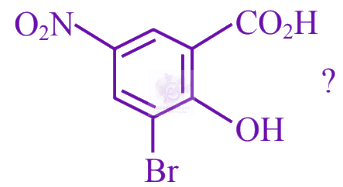
Which of the following is the correct IUPAC name of given organic compound $(\mathrm{X})$ ? 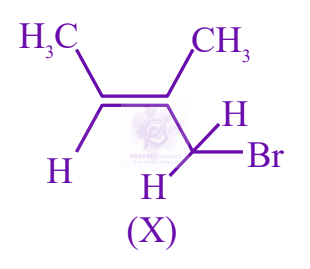
Identify the correct statements from the following 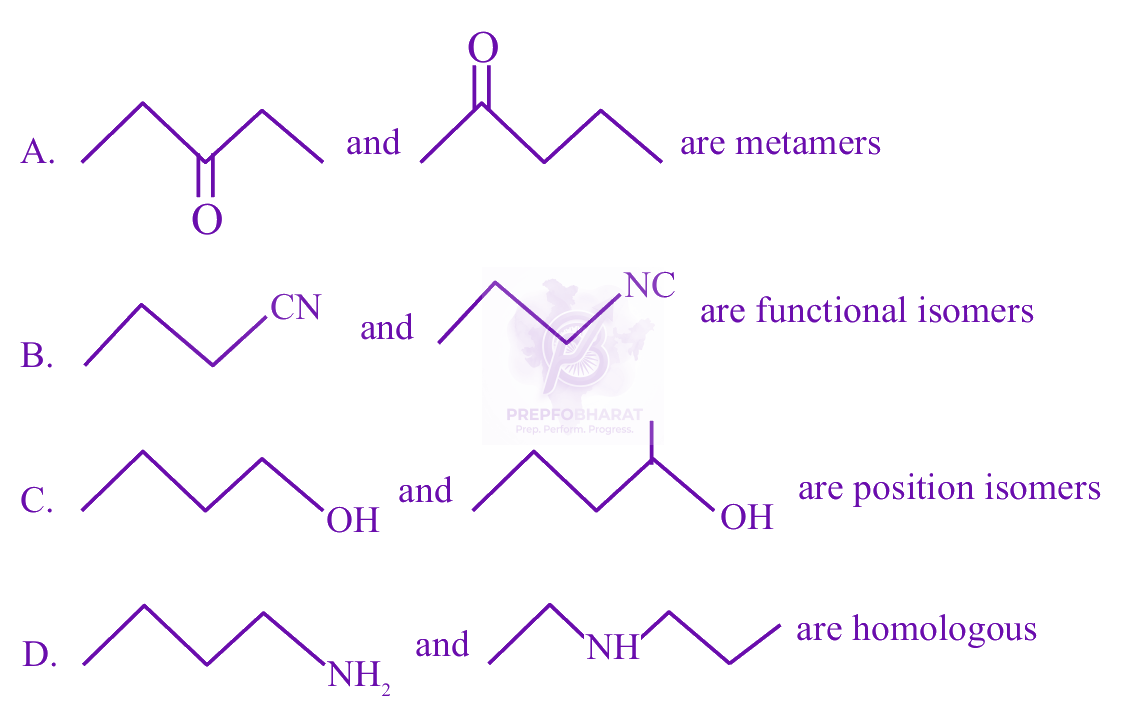 Choose the correct answer from the options given below
Given below are two statements: Statement I: In Lassaigne's test, the covalent organic molecules are transformed into ionic compounds. Statement II: The sodium fusion extract of an organic compound having N and S gives prussian blue colour with $\mathrm{FeSO}_4$ and $\mathrm{Na}_4\left[\mathrm{Fe}(\mathrm{CN})_6\right]$ In the light of the above statements, choose the correct answer from the options given below.
During estimation of nitrogen by Dumas' method of compound $\mathrm{X}(0.42 \mathrm{~g})$ : 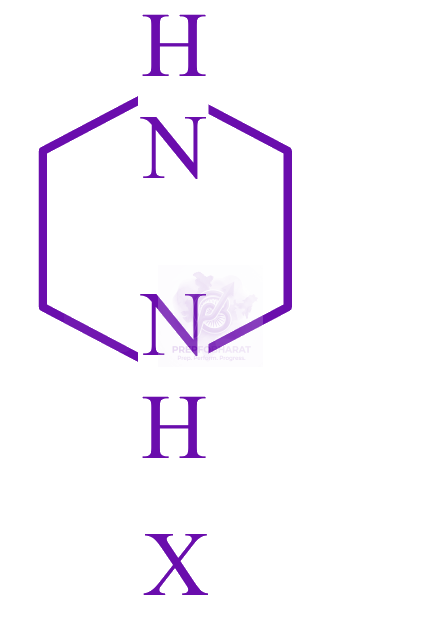 _____ mL of $\mathrm{N}_2$ gas will be liberated at STP. (nearest integer) (Given molar mass in $\mathrm{g} \mathrm{mol}^{-1}: \mathrm{C}: 12, \mathrm{H}: 1$, $\mathrm{N}: 14)$
Fat soluble vitamins are : A. Vitamin $B_1$ B. Vitamin C C. Vitamin E D. Vitamin $\mathrm{B}_{12}$ E. Vitamin K Choose the correct answer from the options given below :
The purification method based on the following physical transformation is : 
Benzene is treated with oleum to produce compound (X) which when further heated with molten sodium hydroxide followed by acidification produces compound (Y).The compound Y is treated with zinc metal to produce compound $(\mathrm{Z})$. Identify the structure of compound $(\mathrm{Z})$ from the following option.
Designate whether each of the following compounds is aromatic or not aromatic. 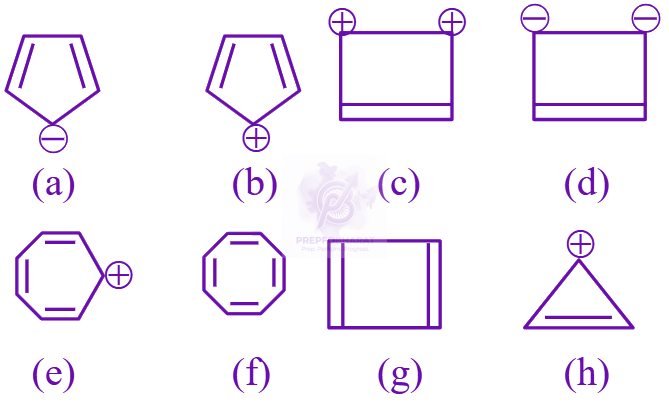
In the Claisen-Schmidt reaction to prepare, dibenzalacetone from 5.3 g of benzaldehyde, a total of 3.51 g of product was obtained. The percentage yield in this reaction was ______ %.
The product (A) formed in the following reaction sequence is 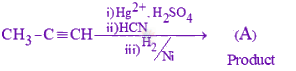
Mixture of 1 g each of chlorobenzene, aniline and benzoic acid is dissolved in 50 mL ethyl acetate and placed in a separating funnel, 5 M NaOH ( 30 mL) was added in the same funnel. The funnel was shaken vigorously and then kept aside. The ethyl acetate layer in the funnel contains :
Identify the pair of reactants that upon reaction, with elimination of HCl will give rise to the dipeptide Gly-Ala.
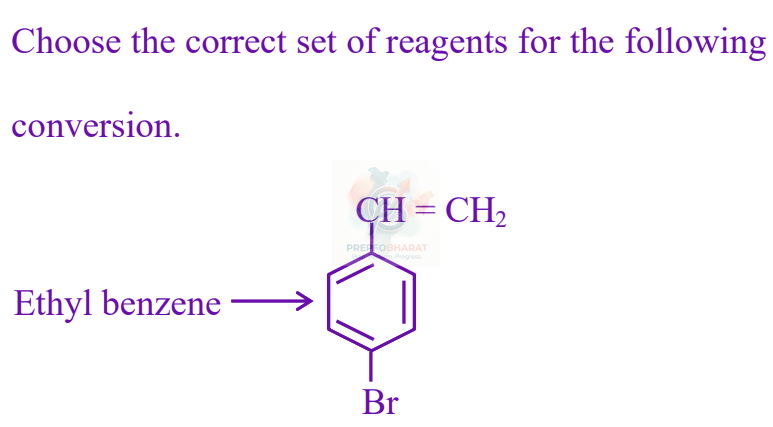
The major product (A) formed in the following reaction sequence is 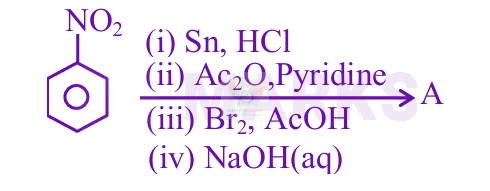
The IUPAC name of the following compound is : 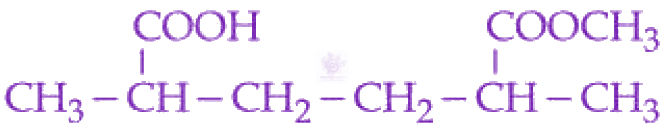
The major product of the following reaction is : 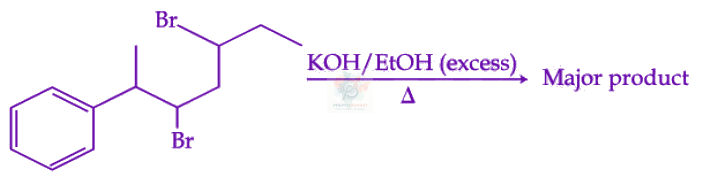
Given below are two statements : Statement I : $\mathrm{CH}_3-\mathrm{O}-\mathrm{CH}_2-\mathrm{Cl}$ will undergo $\mathrm{S}_{\mathrm{N}} 1$ reaction though it is a primary halide. Statement II : 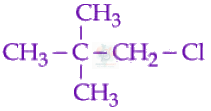 will not undergo $S_N 2$ reaction very easily though it is a primary halide. In the light of the above statements, choose the most appropriate answer from the options given below :
The total number of compounds from below when treated with hot $\mathrm{KMnO}_4$ giving benzoic acid is : 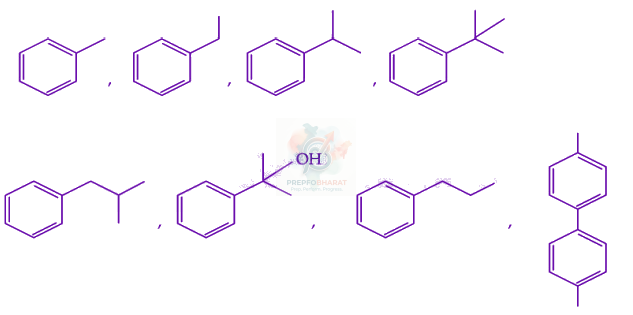
Consider the following sequence of reactions to produce major product (A) 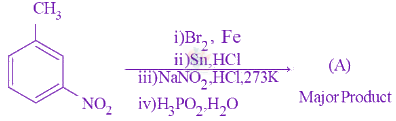 Molar mass of product $(\mathrm{A})$ is $\qquad$ $\mathrm{g} \mathrm{mol}^{-1}$. (Given molar mass in $\mathrm{g} \mathrm{mol}^{-1}$ of $\mathrm{C}: 12, \mathrm{H}: 1, \mathrm{O}: 16, \mathrm{Br}: 80, \mathrm{~N}: 14, \mathrm{P}: 31$ )
Given below are two statements : Statement I : Wet cotton clothes made of cellulose based carbohydrate takes comparatively longer time to get dried than wet nylon polymer based clothes. Statement II : Intermolecular hydrogen bonding with water molecule is more in nylon-based clothes than in the case of cotton clothes. In the light of above statements, choose the Correct answer from the options given below
The number of optically active products obtained from the complete ozonolysis of the given compound is : 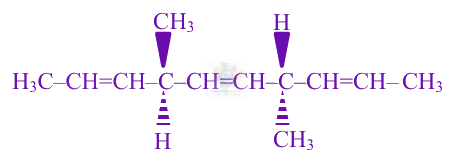
Given below are two statements I and II. Statement I: Dumas method is used for estimation of "Nitrogen" in an organic compound. Statement II: Dumas method involves the formation of ammonium sulphate by heating the organic compound with conc $\mathrm{H}_2 \mathrm{SO}_4$. In the light of the above statements, choose the correct answer from the options given below
Consider the following sequence of reactions : 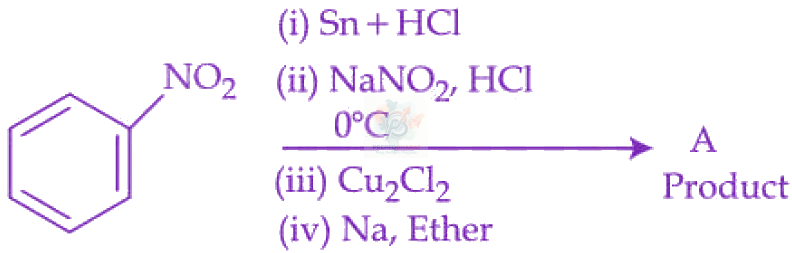 Molar mass of the product formed $(A)$ is _______ $\mathrm{g} \mathrm{mol}^{-1}$.
Identify the products $[A]$ and $[B]$, respectively in the following reaction : 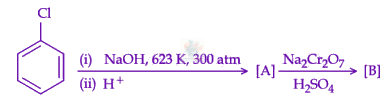
The molecular formula of benzene is:
Which one of the carbocations from the following is most stable?
The product \((\mathrm{P})\) formed in the following reaction is : 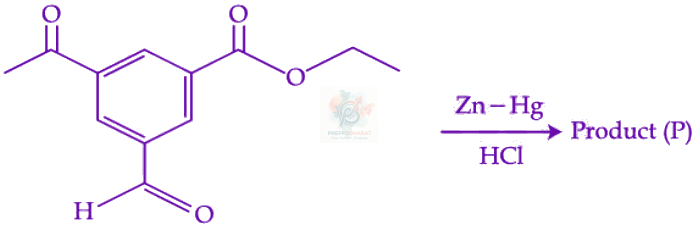
Which of the following is the correct structure of L-fructose?
Given below are two statements: Statement I : Hyperconjugation is not a permanent effect. Statement II : In general, greater the number of alkyl groups attached to a positively charged C -atom, greater is the hyperconjugation interaction and stabilization of the cation. In the light of the above statements, choose the correct answer from the options given below
Match List - I with List - II. 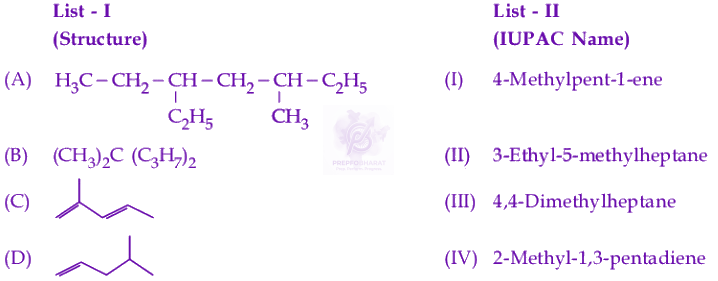 Choose the correct answer from the options given below :
Aldol condensation is a popular and classical method to prepare $\alpha, \beta$-unsaturated carbonyl compounds. This reaction can be both intermolecular and intramolecular. Predict which one of the following is not a product of intramolecular aldol condensation?
The incorrect statements regarding geometrical isomerism are : (A) Propene shows geometrical isomerism. (B) Trans isomer has identical atoms/groups on the opposite sides of the double bond. (C) Cis-but-2-ene has higher dipole moment than trans-but-2-ene. (D) 2-methylbut-2-ene shows two geometrical isomers. (E) Trans-isomer has lower melting point than cis isomer. Choose the correct answer from the options given below :
Match List - I with List - II. 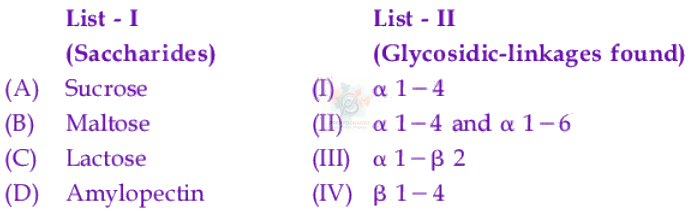 Choose the correct answer from the options given below :
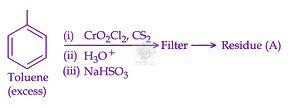 Residue $(\mathrm{A})+\mathrm{HCl}$ (dil) $\rightarrow$ Compound $(\mathrm{B})$ Structure of residue (A) and compound (B) formed respectively is :
The products $A$ and $B$ in the following reactions, respectively are $\mathrm{A} \stackrel{\mathrm{Ag}-\mathrm{NO}_2}{\longleftrightarrow} \mathrm{CH}_3-\mathrm{CH}_2-\mathrm{CH}_2-\mathrm{Br} \xrightarrow{\mathrm{AgCN}} \mathrm{B}$
The carbohydrate "Ribose" present in DNA, is A. A pentose sugar B. present in pyranose from C. in "D" configuration D. a reducing sugar, when free E. in $\propto$-anomeric form Choose the correct answer from the options given below:
0.5 g of an organic compound on combustion gave 1.46 g of $\mathrm{CO}_2$ and 0.9 g of $\mathrm{H}_2 \mathrm{O}$. The percentage of carbon in the compound is _______. (Nearest integer) [Given : Molar mass (in $\mathrm{g} \mathrm{mol}^{-1}$) $\mathrm{C}: 12, \mathrm{H}: 1$, O: 16]
In which pairs, the first ion is more stable than the second? 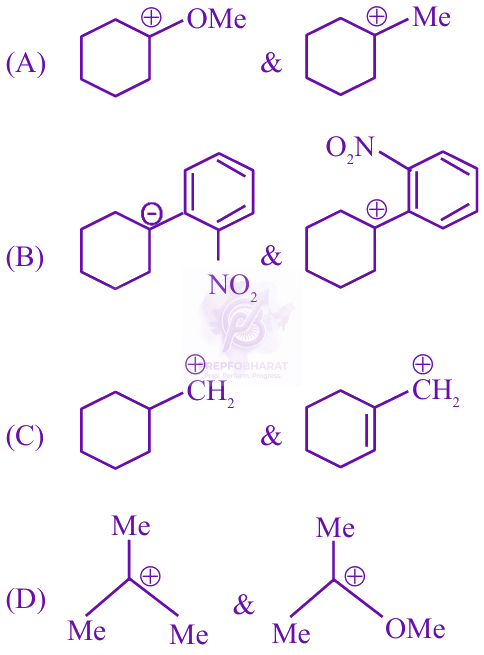
Given below are two statements : Statement (I) : Vanillin 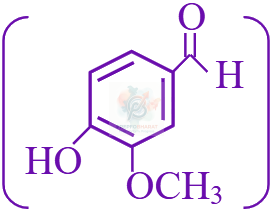 will react with NaOH and also with Tollen's reagent. Statement (II) : Vanillin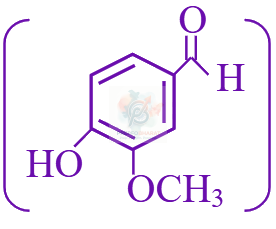 will undergo self aldol condensation very easily. In the light of the above statements, choose the most appropriate answer from the options given below :
Given below are two statements : Statement (I) : Neopentane forms only one monosubstituted derivative. Statement (II) : Melting point of neopentane is higher than n-pentane In the light of the above statements, choose the most appropriate answer from the options given below :
Aman has been asked to synthesise the molecule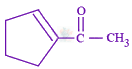 (x).He thought of preparing the molecule using an aldol condensation reaction. He found a few cyclic alkenes in his laboratory. He thought of performing ozonolysis reaction on alkene to produce a dicarbonyl compound followed by aldol reaction to prepare " x ". Predict the suitable alkene that can lead to the formation of " $x$ ".
Total number of nucleophiles from the following is : \(\mathrm{NH}_3, \mathrm{PhSH},\left(\mathrm{H}_3 \mathrm{C}\right)_2 \mathrm{~S}, \mathrm{H}_2 \mathrm{C}=\mathrm{CH}_2, \stackrel{\ominus}{\mathrm{O}} \mathrm{H}, \mathrm{H}_3 \mathrm{O}^{\oplus},\left(\mathrm{CH}_3\right)_2 \mathrm{CO},\) 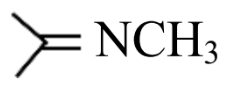
The descending order of basicity of following amines is: 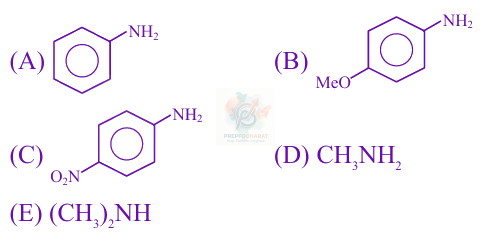 Choose the correct answer from the options given below :
The IUPAC name of the following compound is - 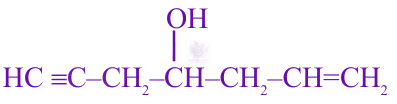
The products formed in the following reaction sequence are : 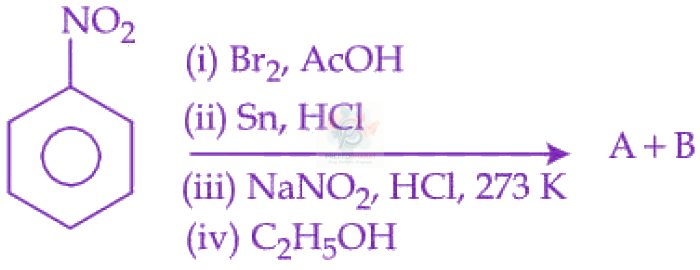
A molecule (" P ") on treatment with acid undergoes rearrangement and gives ("Q"). ("Q") on ozonolysis followed by reflux under alkaline condition gives (" R "). The structure of (" R ") is given below. 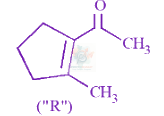 The structure of (" $\mathbf{P}^{\prime \prime}$ ) is
Isomeric hydrocarbons $\quad \rightarrow \quad$ negative Baeyer's test (Molecular formula $\mathrm{C}_9 \mathrm{H}_{12}$ ) The total number of isomers from above with four different non-aliphatic substitution sites is -
A tetrapeptide " $x$ " on complete hydrolysis produced glycine (Gly), alanine (Ala), valine (Val), leucine (Leu) in equimolar proportion each. The number of tetrapeptides (sequences) possible involving each of these amino acids is
Given below are two statements : Statement I : Ozonolysis followed by treatment with $\mathrm{Zn}, \mathrm{H}_2 \mathrm{O}$ of cis-2-butene gives ethanal.Statement II : The production obtained by ozonolysis followed by treatment with $\mathrm{Zn}, \mathrm{H}_2 \mathrm{O}$ of 3, 6-dimethyloct-4-ene has no chiral carbon atom. In the light of the above statements, choose the correct answer from the options given below
The correct order of basicity for the following molecules is: 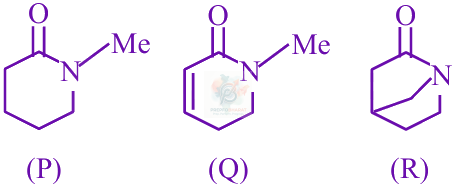
Identify the essential amino acids from below : (A) Valine (B) Proline (C) Lysine (D) Threonine (E) Tyrosine Choose the correct answer from the options given below :
Which compound would give 3-methyl-6oxoheptanal upon ozonolysis?
The major product $(\mathrm{P})$ in the following reaction is : 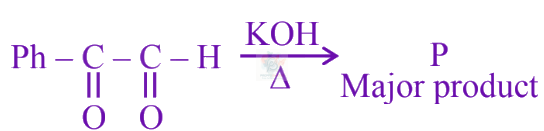
A toxic compound " A " when reacted with NaCN in aqueous acidic medium yields an edible cooking component and food preservative ' $B$ '. " $B$ " is converted to "C" by diborane and can be used as an additive to petrol to reduce emission. "C" upon reaction with oleum at $140^{\circ} \mathrm{C}$ yields an inhalable anesthetic "D". Identify "A", "B", "C" and "D", respectively.
The total number of hydrogen bonds of a DNA-double Helix strand whose one strand has the following sequence of bases is_______. $5^{\prime}$ - G - G-C-A-A-A-T-C-G-G-C-T-A-3'
For reaction  The correct order of set of reagents for the above conversion is :
Identify product $[A],[B]$ and $[C]$ in the following reaction sequence. 
Number of molecules from below which cannot give ioddoform reaction is : Ethanol, Isopropyl alcohol, Bromoacetone, 2-Butanol, 2-Butanone, Butanal, 2-Pentanone, 3-Pentanone, Pentanal and 3-Pentanol
The reactions which cannot be applied to prepare an alkene by elimination, are 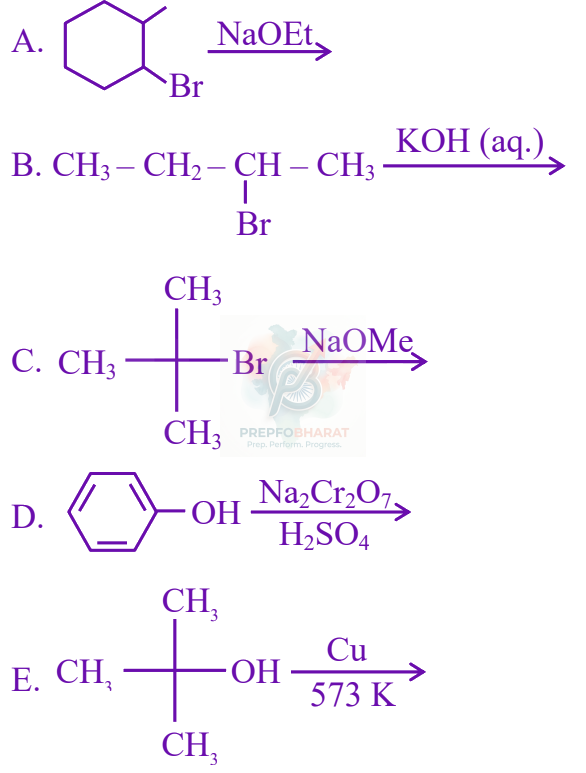 Choose the correct answer from the option given below :
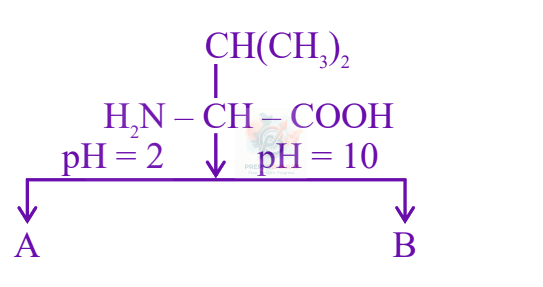 Choose the correct option for structures of A and $B$, respectively.
In Dumas' method for estimation of nitrogen 0.4 g of an organic compound gave 60 mL of nitrogen collected at 300 K temperature and 715 mm Hg pressure. The percentage composition of nitrogen in the compound is (Given : Aqueous tension at $300 \mathrm{~K}=15 \mathrm{~mm} \mathrm{Hg}$)
Which among the following react with Hinsberg's reagent? 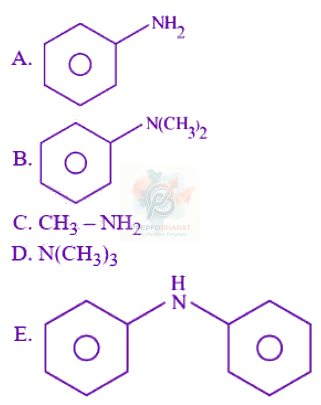 Choose the correct answer from the options given below: