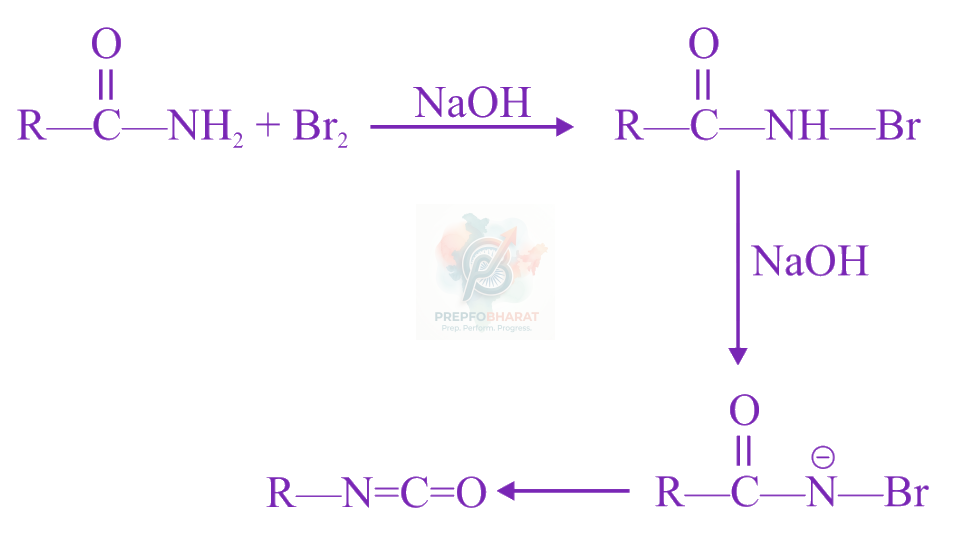
The given reaction follows Hoffman bromamide degradation mechanism for the preparation of primary amines. In this reaction alkyl or aryl isocynate is formed as an intermediate. The formation of intermediate is shown below.
JEE Main 2022 — Chemistry Organic Chemistry
The reaction of 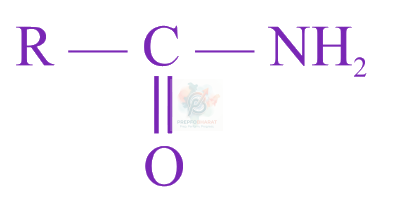 with bromine and KOH gives RNH2 as the end product. Which one of the following is the intermediate product formed in this reaction?
Held on 25 Jun 2022 · Verified 6 Jul 2026.
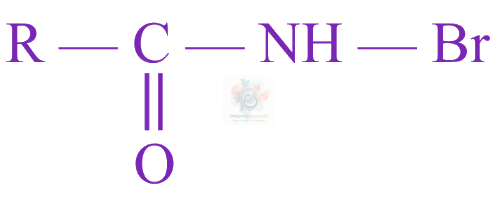
R−NH−Br
R−N=C=O
Sign in to track your attempts and accuracy.
Sign in to keep a private note on this question. Nothing you write is ever public.
The correct order of the rate of reaction of the following reactants with nucleophile by SN1 mechanism is: (Given : Structure I and II are rigid) 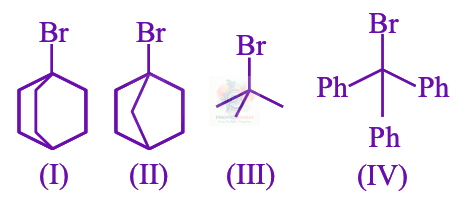
Identify the incorrect statements. 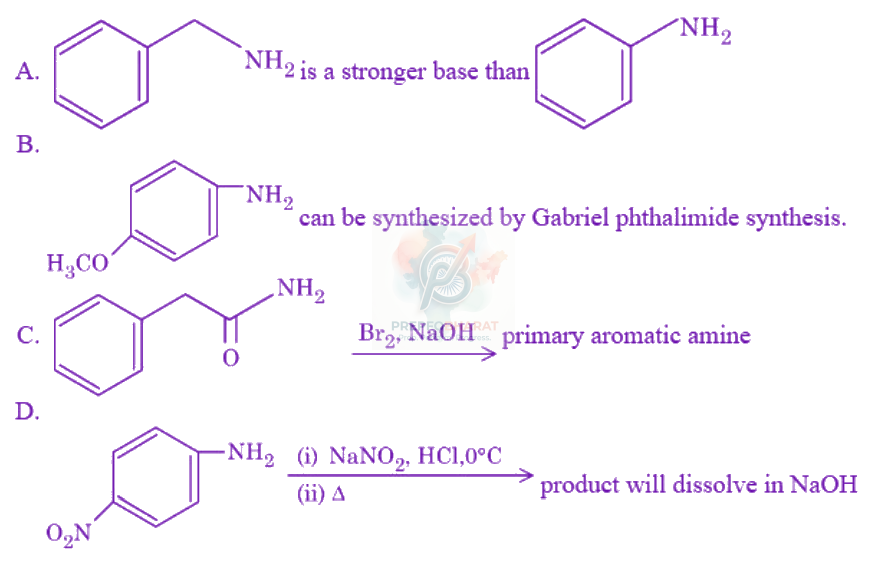 Choose the correct answer from the options given below:
For the following Friedel Craft's alkylation reaction, which of the statements are correct? 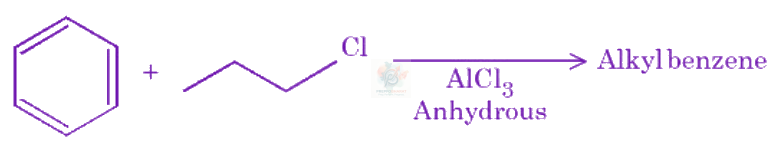 A. Major product is n-propyl benzene. B. iso-propyl carbocation intermediate is also generated. C. Multiple substitution is inevitable. D. Introducing electron-donating substituent on benzene will not produce any alkyl benzene. Choose the correct answer from the options given below:
Match the LIST-I with LIST-II <table class="pyq-table"><tbody><tr><th>List-I (Reaction)</th><th>List-II (Mechanism)</th></tr><tr><td>A. Williamson Synthesis</td><td>I. Electrophilic addition</td></tr><tr><td>B. Friedel Craft Reaction</td><td>II. Free radical substitution</td></tr><tr><td>C. Bromination of vinyl benzene</td><td>III. Nucleophilic substitution</td></tr><tr><td>D. Chlorination of toluene in light</td><td>IV. Electrophilic substitution</td></tr></tbody></table> Choose the correct answer from the options given below:
Consider the following reactions sequence 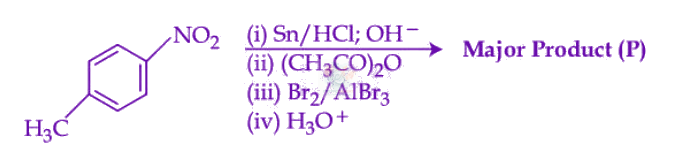 When the product (P) is subjected to Carius analysis using $AgNO_3$, $1.0$ g of the product (P) will produce _______ g of the precipitate of AgBr. (Nearest Integer) (Given: molar mass in g mol$^{-1}$ C : 12, H : 1, O : 16, N : 14, Br : 80, Ag : 108)
Work through every JEE Main Organic Chemistry PYQ, year by year.