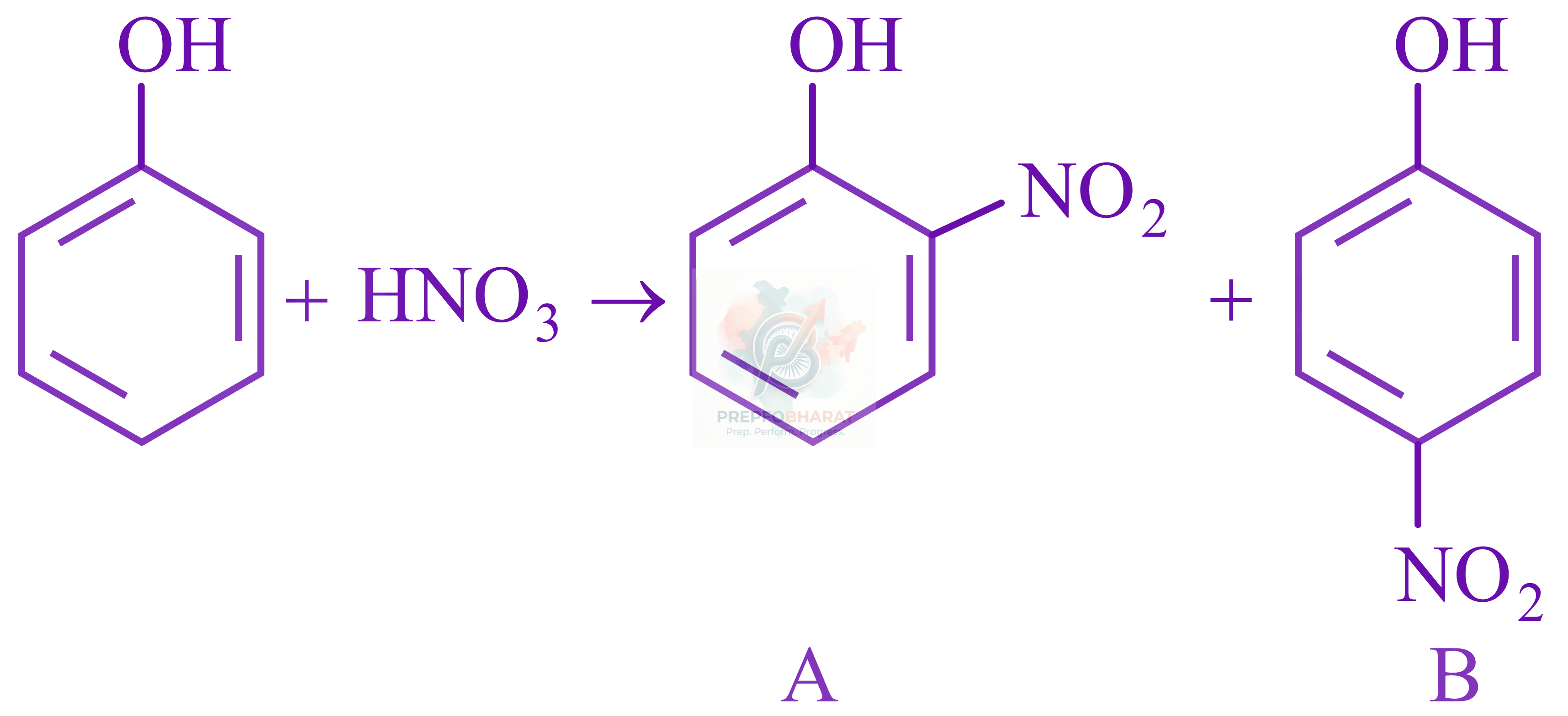
The compound A is steam volatile. It is due to the presence of intramolecular hydrogen bonding in the compound A. Hence, the above mixture can be separated by steam distillation.
JEE Main 2022 — Chemistry Organic Chemistry
Phenol on reaction with dilute nitric acid, gives two products. Which method will be most efficient for large scale separation?
Held on 25 Jun 2022 · Verified 6 Jul 2026.
Chromatographic separation
Steam distillation
Fractional Crystallisation
Sublimation
Sign in to track your attempts and accuracy.
Sign in to keep a private note on this question. Nothing you write is ever public.
The correct order of the rate of reaction of the following reactants with nucleophile by SN1 mechanism is: (Given : Structure I and II are rigid) 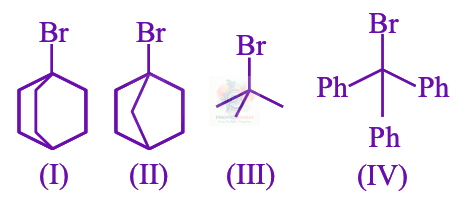
Identify the incorrect statements. 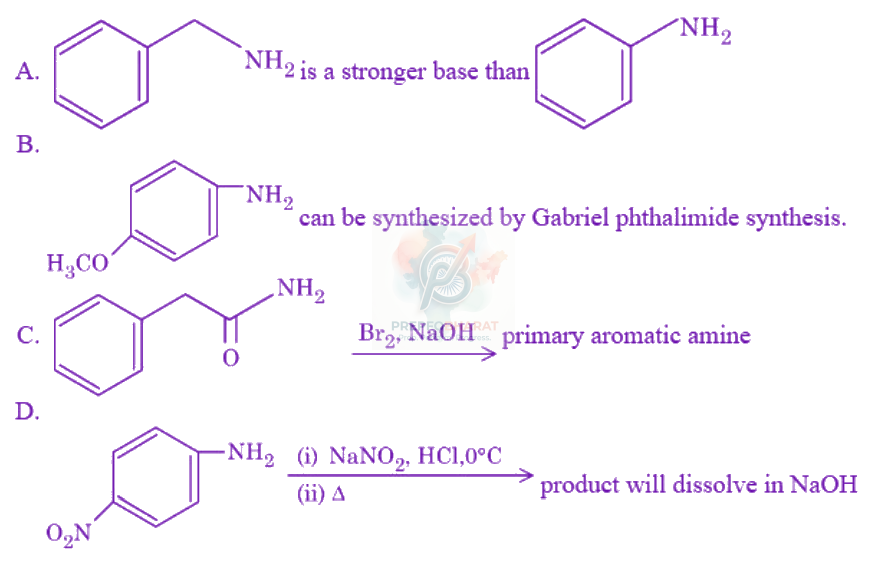 Choose the correct answer from the options given below:
For the following Friedel Craft's alkylation reaction, which of the statements are correct? 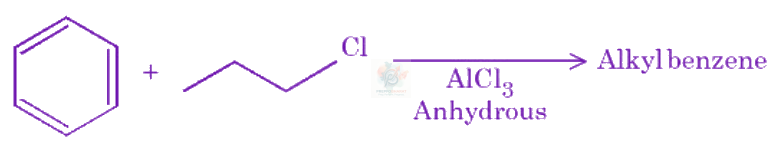 A. Major product is n-propyl benzene. B. iso-propyl carbocation intermediate is also generated. C. Multiple substitution is inevitable. D. Introducing electron-donating substituent on benzene will not produce any alkyl benzene. Choose the correct answer from the options given below:
Match the LIST-I with LIST-II <table class="pyq-table"><tbody><tr><th>List-I (Reaction)</th><th>List-II (Mechanism)</th></tr><tr><td>A. Williamson Synthesis</td><td>I. Electrophilic addition</td></tr><tr><td>B. Friedel Craft Reaction</td><td>II. Free radical substitution</td></tr><tr><td>C. Bromination of vinyl benzene</td><td>III. Nucleophilic substitution</td></tr><tr><td>D. Chlorination of toluene in light</td><td>IV. Electrophilic substitution</td></tr></tbody></table> Choose the correct answer from the options given below:
Consider the following reactions sequence 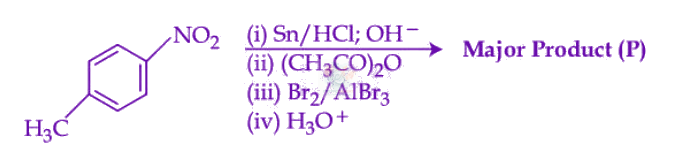 When the product (P) is subjected to Carius analysis using $AgNO_3$, $1.0$ g of the product (P) will produce _______ g of the precipitate of AgBr. (Nearest Integer) (Given: molar mass in g mol$^{-1}$ C : 12, H : 1, O : 16, N : 14, Br : 80, Ag : 108)
Work through every JEE Main Organic Chemistry PYQ, year by year.