JEE Main 2021 — Inorganic Chemistry
Chemistry Inorganic Chemistry questions from JEE Main 2021.
Other Years
161 Inorganic Chemistry Questions from 2021
The total number of unpaired electrons present in $\left[\mathrm{Co}\left(\mathrm{NH}_{3}\right)_{6}\right] \mathrm{Cl}_{2}$ and $\left[\mathrm{Co}\left(\mathrm{NH}_{3}\right)_{6}\right] \mathrm{Cl}_{3}$ is
The calculated magnetic moments (spin only value) for species ${[{\mathrm{FeCl}}_{4}]}^{2-},{[\mathrm{Co}{({C}_{2}{O}_{4})}_{3}]}^{3-}$ and ${\mathrm{MnO}}_{4}^{2-}$ respectively are:
Match List-I with List-II : <table class="pyq-table"><tbody><tr><td></td><td>List-I</td><td></td><td>List-II</td></tr><tr><td>a</td><td>$[\mathrm{Co}{({\mathrm{NH}}_{3})}_{6}][\mathrm{Cr}(\mathrm{CN}{)}_{6}]$</td><td>i</td><td>Linkage isomerism</td></tr><tr><td>b</td><td>$[\mathrm{Co}{({\mathrm{NH}}_{3})}_{3}{({\mathrm{NO}}_{2})}_{3}]$</td><td>ii</td><td>Solvate isomerism</td></tr><tr><td>c</td><td>$[\mathrm{Cr}{({H}_{2}O)}_{6}]{\mathrm{Cl}}_{3}$</td><td>iii</td><td>Co-ordination isomerism</td></tr><tr><td>d</td><td>$cis-{[{\mathrm{CrCl}}_{2}(\mathrm{ox}{)}_{2}]}^{3-}$</td><td>iv</td><td>Optical isomerism</td></tr></tbody></table>Choose the correct answer from the options given below:
The INCORRECT statement regarding the structure of ${C}_{60}$ is :
The set in which compounds have different nature is:
Amongst the following, the linear species is:
Identify the elements $X$ and $Y$ using the ionization energy values given below : $\begin{matrix} & \mathrm{Ionization}\mathrm{energy} & (\mathrm{kJ}/\mathrm{mol}) \\ & {1}^{\mathrm{st}} & {2}^{\mathrm{nd}} \\ X & 495 & 4563 \\ Y & 731 & 1450\end{matrix}$
$\mathrm{AX}$ is a covalent diatomic molecule where $A$ and $X$ are second row elements of periodic table. Based on Molecular orbital theory, the bond order of $\mathrm{AX}$ is $2.5.$ The total number of electrons in $\mathrm{AX}$ is_____. (Round off to the Nearest Integer).
The reaction of white phosphorus on boiling with alkali in inert atmosphere resulted in the formation of product $A.$ The reaction $1\mathrm{mol}$ of $A$ with excess of ${\mathrm{AgNO}}_{3}$ in aqueous medium gives ________ mole(s) of $\mathrm{Ag}.$ (Round off to the Nearest Integer).
Identify the element for which electronic configuration in $+3$ oxidation state is $[\mathrm{Ar}]3{d}^{5}:$
Consider the elements $\mathrm{Mg},$ $\mathrm{Al},S,P$ and $\mathrm{Si},$ the correct increasing order of their first ionisation enthalpy is:
The correct order of intensity of colors of the compounds is:
Given below are two statements: Statement $I$ : $o$-Nitrophenol is steam volatile due to intramolecular hydrogen bonding. Statement $\mathrm{II}$ : $o$-Nitrophenol has high melting due to hydrogen bonding. In the light of the above statements, choose the most appropriate answer from the options given below:
Which of the following are isostructural pairs? A. ${\mathrm{SO}}_{4}^{2-}$ and ${{\mathrm{CrO}}_{4}}^{2-}$ B. ${\mathrm{SiCl}}_{4}$ and ${\mathrm{TiCl}}_{4}$ C. ${\mathrm{NH}}_{3}$ and ${\mathrm{NO}}_{3}^{-}$ D. ${\mathrm{BCl}}_{3}$ and ${\mathrm{BrCl}}_{3}$
Given below are two statements:Statement I : ${\mathrm{CeO}}_{2}$ can be used for oxidation of aldehydes and ketones. Statement II : Aqueous solution of ${\mathrm{EuSO}}_{4}$ is a strong reducing agent. In the light of the above statements, choose the correct answer from the options given below:
Given below are two statements: One is labelled as Assertion $A$ and the other labelled as Reason $R.$ Assertion $A$ : Lithium halides are some what covalent in nature. Reason $R$ : Lithium possess high polarisation capability. In the light of the above statements, choose the most appropriate answer from the options given below:
The correct order of bond dissociation enthalpy of halogens is:
Acidic ferric chloride solution on treatment with excess of potassium ferrocyanide gives a Prussian blue coloured colloidal species. It is:
According to the valence bond theory the hybridization of central metal atom is ${\mathrm{dsp}}^{2}$ for which one of the following compounds?
$1$ mol of an octahedral metal complex with formula ${\mathrm{MCl}}_{3}\cdot 2L$ on reaction with excess of ${\mathrm{AgNO}}_{3}$ gives $1\mathrm{mol}$ of $\mathrm{AgCl}.$ The denticity of Ligand $L$ is___________ (Integer answer)
In which one of the following molecules strongest back donation of an electron pair from halide to boron is expected?
According to molecular orbital theory, the number of unpaired electron(s) in ${O}_{2}^{2-}$ is _________ .
Three moles of $\mathrm{AgCl}$ get precipitated when one mole of an octahedral co-ordination compound with empirical formula ${\mathrm{CrCl}}_{3}.3{\mathrm{NH}}_{3}.3{H}_{2}O$ reacts with excess of silver nitrate. The number of chloride ions satisfying the secondary valency of the metal ion is ______ .
The number of ionisable hydrogens present in the product obtained from a reaction of phosphorus trichloride and phosphonic acid is:
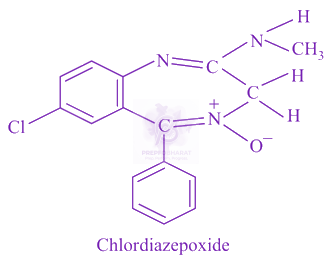 The class of drug to which chlordiazepoxide with above structure belongs is :
Spin only magnetic moment in $\mathrm{BM}$ of ${[\mathrm{Fe}{(\mathrm{CO})}_{4}({C}_{2}{O}_{4})]}^{+}$ is :
Given below are two statements: one is labelled as Assertion A and the other is labelled as Reason R : Assertion A : The $H-O-H$ bond angle in water molecule is $104.5^{\circ}$. Reason R : The lone pair $-$ lone pair repulsion of electrons is higher than the bond pair $-$ bond pair repulsion.
The Crystal Field Stabilization Energy (CFSE) and magnetic moment (spin-only) of an octahedral aqua complex of a metal ion $({M}^{Z+})$ are $-0.8{\Delta }_{0}$ and $3.87$ $\mathrm{BM}$, respectively. Identify $({M}^{Z+}):$
The correct shape and $I-I-I$ bond angles respectively in ${I}_{3}^{-}$ ion are:
${\mathrm{Al}}_{2}{O}_{3}$ was leached with alkali to get $X.$ The solution of $X$ on passing of gas $Y,$ forms $Z.$ $X,Y$ and $Z$ respectively are
The CORRECT order of first ionisation enthalpy is:
Given below are two statements : one is labelled as Assertion (A) and the other is labelled as Reason (R). Assertion (A) : Metallic character decreases and non-metallic character increases on moving from left to right in a period. Reason (R): It is due to increase in ionisation enthalpy and decrease in electron gain enthalpy, when one moves from left to right in a period. In the light of the above statements, choose the most appropriate answer from the options given below :
Among the following, the number of halide(s) which is/ are inert to hydrolysis is (A) ${\mathrm{BF}}_{3}$ (B) ${\mathrm{SiCl}}_{4}$ (C) ${\mathrm{PCl}}_{5}$ (D) ${\mathrm{SF}}_{6}$
The denticity of an organic ligand, biuret is :
The spin-only magnetic moment value of ${B}_{2}^{+}$ species is $\times {10}^{-2}\mathrm{BM}$ (Nearest integer) $[\text{ Given : }\sqrt{3}=1.73]$
The characteristics of elements $X,Y$ and $Z$ with atomic numbers, respectively, $33,53$ and $83$ are:
Which one of the following compounds of Group-$14$ elements is not known?
According to molecular orbital theory, the species among the following that does not exist is:
Match List-$I$ with List-$\mathrm{II}$. <table class="pyq-table"><tbody><tr><td></td><td>List-$I$ Electronic configuration of elements</td><td></td><td>List-$\mathrm{II}$ ${\Delta }_{i}H$ in $\mathrm{kJ}{\mathrm{mol}}^{-1}$</td></tr><tr><td>$(a)$</td><td>$1{s}^{2}2{s}^{2}$</td><td>$(p)$</td><td>$801$</td></tr><tr><td>$(b)$</td><td>$1{s}^{2}2{s}^{2}2{p}^{4}$</td><td>$(q)$</td><td>$899$</td></tr><tr><td>$(c)$</td><td>$1{s}^{2}2{s}^{2}2{p}^{3}$</td><td>$(r)$</td><td>$1314$</td></tr><tr><td>$(d)$</td><td>$1{s}^{2}2{s}^{2}2{p}^{1}$</td><td>$(s)$</td><td>$1402$</td></tr></tbody></table>Choose the most appropriate answer from the options given below:
Which one of the following is formed (mainly) when red phosphorus is heated in a sealed tube at $803K?$
Match List-I with List-II <table class="pyq-table"><tbody><tr><td></td><td>List - I (Elements)</td><td></td><td>List - II (Properties)</td></tr><tr><td>(a)</td><td>${\mathrm{SF}}_{4}$</td><td>$(i)$</td><td>${\mathrm{sp}}^{3}{d}^{2}$</td></tr><tr><td>(b)</td><td>${\mathrm{IF}}_{5}$</td><td>$(\mathrm{ii})$</td><td>${d}^{2}{\mathrm{sp}}^{3}$</td></tr><tr><td>(c)</td><td>${\mathrm{NO}}_{2}^{+}$</td><td>$(\mathrm{iii})$</td><td>${\mathrm{sp}}^{3}d$</td></tr><tr><td>(d)</td><td>${\mathrm{NH}}_{4}^{+}$</td><td>$(\mathrm{iv})$</td><td>${\mathrm{sp}}^{3}$</td></tr><tr><td></td><td></td><td>$(v)$</td><td>$\mathrm{sp}$</td></tr></tbody></table>Choose the correct answer from the options given below:
Chemical nature of the nitrogen oxide compound obtained from a reaction of concentrated nitric acid and ${P}_{4}{O}_{10}$ (in $4:1$ ratio) is:
The set that represents the pair of neutral oxides of nitrogen is:
Match List-I with List-II : <table class="pyq-table"><tbody><tr><td></td><td>List-I</td><td></td><td>List-II</td></tr><tr><td></td><td>Industrial process</td><td></td><td>Application</td></tr><tr><td>(a)</td><td>Haber's process</td><td>(i)</td><td>${\mathrm{HNO}}_{3}$ synthesis</td></tr><tr><td>(b)</td><td>Ostwald's process</td><td>(ii)</td><td>Aluminium extraction</td></tr><tr><td>(c)</td><td>Contact process</td><td>(iii)</td><td>${\mathrm{NH}}_{3}$ synthesis</td></tr><tr><td>(d)</td><td>Hall-Heroult process</td><td>(iv)</td><td>${H}_{2}{\mathrm{SO}}_{4}$ synthesis</td></tr></tbody></table> Choose the correct answer from the options given below:
The number of geometrical isomers found in the metal complexes $[{\mathrm{PtCl}}_{2}{({\mathrm{NH}}_{3})}_{2}],[\mathrm{Ni}(\mathrm{CO}{)}_{4}],[\mathrm{Ru}{({H}_{2}O)}_{3}{\mathrm{Cl}}_{3}]$ and ${[{\mathrm{CoCl}}_{2}{({\mathrm{NH}}_{3})}_{4}]}^{+}$ respectively, are:
Which one of the following correctly represents the order of stability of oxides, ${X}_{2}O;$ $(X=$ halogen $)?$
Which of the following is used as a catalyst in Contact process?
Identify the species having one $\pi$ -bond and maximum number of canonical forms from the following :
The number of optical isomers possible for ${[\mathrm{Cr}{({C}_{2}{O}_{4})}_{3}]}^{3-}$ is:
Given below are two statements: one is labelled as Assertion $A$ and the other is labelled as Reason $R$. Assertion $A:$ In $Tl{I}_{3},$ isomorphous to ${\mathrm{CsI}}_{3}$, the metal is present in $+1$ oxidation state. Reason $R:$ $Tl$ metal has fourteen $f$ electrons in its electronic configuration. In the light of the above statements, choose the most appropriate answer from the options given below:
${\mathrm{Fex}}_{2}$ and ${\mathrm{Fey}}_{3}$ are known when $x$ and $y$ are :
Number of $\mathrm{Cl}=O$ bonds in chlorous acid, chloric acid and perchloric acid respectively are:
Consider the sulphides $\mathrm{HgS},\mathrm{PbS},\mathrm{CuS},{\mathrm{Sb}}_{2}{S}_{3},{\mathrm{As}}_{2}{S}_{3}$ and $\mathrm{CdS}.$ Number of these sulphides soluble in $50%{\mathrm{HNO}}_{3}$ is ___________ .
The number of species below that have two lone pairs of electrons in their central atom is ___ (Round off to the Nearest integer) ${\mathrm{SF}}_{4},{\mathrm{BF}}_{4}^{-},{\mathrm{ClF}}_{3},{\mathrm{AsF}}_{3},{\mathrm{PCl}}_{5},{\mathrm{BrF}}_{5},{\mathrm{XeF}}_{4},{\mathrm{SF}}_{6}$
In the following the correct bond order sequence is:
Number of paramagnetic oxides among the following given oxides is $___________.$ ${\mathrm{Li}}_{2}O,\mathrm{CaO},{\mathrm{Na}}_{2}{O}_{2},{\mathrm{KO}}_{2},\mathrm{MgO}$ and ${K}_{2}O$
Statement I : Sodium hydride can be used as an oxidising agent. Statement II : The lone pair of electrons on nitrogen in pyridine makes it basic. Choose the CORRECT answer from the options given below :
The nature of oxides ${V}_{2}{O}_{3}$ and $\mathrm{CrO}$ is indexed as $'X'$ and $'Y'$ type respectively. The correct set of $X$ and $Y$ is:
Which of the following is a noble gas?
To an aqueous solution containing ions such as ${\mathrm{Al}}^{3+},{\mathrm{Zn}}^{2+},{\mathrm{Ca}}^{2+},{\mathrm{Fe}}^{3+},{\mathrm{Ni}}^{2+},{\mathrm{Ba}}^{2+}$ and ${\mathrm{Cu}}^{2+}$ was added $\mathrm{conc}.\mathrm{HCl}$, followed by ${H}_{2}S$. The total number of cations precipitated during this reaction is/are :
The common positive oxidation states for an element with atomic number $24,$ are:
The number of $4f$ electrons in the ground state electronic configuration of ${\mathrm{Gd}}^{2+}$ is [Atomic number of $\mathrm{Gd}=64]$
Indicate the complex/complex ion which did not show any geometrical isomerism :
A xenon compound $A$ upon partial hydrolysis gives ${\mathrm{XeO}}_{2}{F}_{2}$. The number of lone pair of electrons present in compound $A$ is ___ (Round off to the Nearest integer)
The electrode potential of ${M}^{2+}/M$ of $3$ d-series elements shows positive value for?
Given below are two statements: one is labelled as Assertion $A$ and the other is labelled as Reason $R$. Assertion $A$ : Dipole-dipole interactions are the only non-covalent interactions, resulting in hydrogen bond formation. Reason $R$ : Fluorine is the most electronegative element and hydrogen bonds in $\mathrm{HF}$ are symmetrical. In the light of the above statements, choose the most appropriate answer from the options given below:
Which one of the following is used to remove most of plutonium from spent nuclear fuel?
The hybridisations of the atomic orbitals of nitrogen in ${\mathrm{NO}}_{2}^{-},{\mathrm{NO}}_{2}^{+}$ and ${\mathrm{NH}}_{4}^{+}$ respectively are.
Which one of the following lanthanides exhibits $+2$ oxidation state with diamagnetic nature ? (Given $Z$ for $\mathrm{Nd}=60,\mathrm{Yb}=70,\mathrm{La}=57,\mathrm{Ce}=58)$
The difference between bond orders of $\mathrm{CO}$ and ${\mathrm{NO}}^{\oplus }$ is $\frac{x}{2}$ where $x=$ (Round off to the Nearest Integer)
The interaction energy of London forces between two particles is proportional to ${r}^{x}$, where $r$ is the distance between the particles. The value of $x$ is :
Match List$-I$ with List $-\mathrm{II}$ : <table class="pyq-table"><tbody><tr><td></td><td>List $-I$</td><td></td><td>List$-\mathrm{II}$</td></tr><tr><td>$(a)$</td><td>$\mathrm{NaOH}$</td><td>$(i)$</td><td>Acidic</td></tr><tr><td>$(b)$</td><td>$\mathrm{Be}(\mathrm{OH}{)}_{2}$</td><td>$(\mathrm{ii})$</td><td>Basic</td></tr><tr><td>$(c)$</td><td>$\mathrm{Ca}(\mathrm{OH}{)}_{2}$</td><td>$(\mathrm{iii})$</td><td>Amphoteric</td></tr><tr><td>$(d)$</td><td>$B(\mathrm{OH}{)}_{3}$</td><td></td><td></td></tr><tr><td>$(e)$</td><td>$\mathrm{Al}(\mathrm{OH}{)}_{3}$</td><td></td><td></td></tr></tbody></table>Choose the most appropriate answer from the options given below
In Carius method for estimation of halogens, $0.2g$ of an organic compound gave $0.188g$ of $\mathrm{AgBr}.$ The percentage of bromine in the compound is __________. (Nearest integer) [Atomic mass: $\mathrm{Ag}=108,\mathrm{Br}=80$]
In the ground state of atomic $\mathrm{Fe}(Z=26)$, the spin-only magnetic moment is $\times {10}^{-1}\mathrm{BM}$. (Round off to the Nearest Integer). [ Given $:\sqrt{3}=1.73,\sqrt{2}=1.41]$
Match List$-I$ with List$-\mathrm{II}$ <table class="pyq-table"><tbody><tr><td></td><td>List$-I$ (process)</td><td></td><td>List$-\mathrm{II}$ (catalyst)</td></tr><tr><td>(a)</td><td>Deacon's process</td><td>(i)</td><td>$\mathrm{ZSM}-5$</td></tr><tr><td>(b)</td><td>Contact process</td><td>(ii)</td><td>${\mathrm{CuCl}}_{2}$</td></tr><tr><td>(c)</td><td>Cracking of hydrocarbons</td><td>(iii)</td><td>$\mathrm{Ni}$</td></tr><tr><td>(d)</td><td>Hydrogenation of vegetable oils</td><td>(iv)</td><td>${V}_{2}{O}_{5}$</td></tr></tbody></table>Choose the most appropriate answer from the options given below-
Which of the following is Lindlar catalyst?
The incorrect statement about ${B}_{2}{H}_{6}$ is :
Given below are two statements: Statement $I:$ Colourless cupric metaborate is reduced to cuprous metaborate in a luminous flame. Statement $\mathrm{II}:$ Cuprous metaborate is obtained by heating boric anhydride and copper sulphate in a non-luminous flame. In the light of the above statements, choose the most appropriate answer from the options given below.
Number of bridging $\mathrm{CO}$ ligands in $[{\mathrm{Mn}}_{2}{(\mathrm{CO})}_{10}]$ is
The overall stability constant of the complex ion ${[\mathrm{Cu}{({\mathrm{NH}}_{3})}_{4}]}^{2+}$ is $2.1\times {10}^{13}.$ The overall dissociation constant is $y\times {10}^{-14}$. Then $y$ is (Nearest integer)
Which one of the following complexes is violet in colour?
The number of geometrical isomers possible in triamminetrinitrocobalt $(\mathrm{III})$ is $X$ and in trioxalatochromate $(\mathrm{III})$ is $Y.$ Then the value of $X+Y$ is $____.$
The set having ions which are coloured and paramagnetic both is -
Which one of the following metal complexes is most stable?
Which one of the following species responds to an external magnetic field?
Match List$-I$ with List$-\mathrm{II}$ <table class="pyq-table"><tbody><tr><td></td><td>List$-I$</td><td></td><td>List$-\mathrm{II}$</td></tr><tr><td>(a)</td><td>Chlorophyll</td><td>(i)</td><td>Ruthenium</td></tr><tr><td>(b)</td><td>Vitamin$-{B}_{12}$</td><td>(ii)</td><td>Platinum</td></tr><tr><td>(c)</td><td>Anticancer drug</td><td>(iii)</td><td>Cobalt</td></tr><tr><td>(d)</td><td>Grubbs catalyst</td><td>(iv)</td><td>Magnesium</td></tr></tbody></table>Choose the most appropriate answer from the options given below:
${[\mathrm{Ti}{({H}_{2}O)}_{6}]}^{3+}$ absorbs light of wavelength $498\mathrm{nm}$ during a $d-d$ transition. The octahedral splitting energy for the above complex is _______ $\times {10}^{-19}J$. (Round off to the Nearest Integer). $h=6.626\times {10}^{-34}\mathrm{Js};c=3\times {10}^{8}{\mathrm{ms}}^{-1}$.
Given below are two statements: Statement I : The identification of ${\mathrm{Ni}}^{2+}$ is carried out by dimethyl glyoxime in the presence of ${\mathrm{NH}}_{4}\mathrm{OH}$. Statement II :The dimethyl glyoxime is a bidentate neutral ligand. In the light of the above statements, choose the correct answer from the options given below:
The equivalents of ethylene diamine required to replace the neutral ligands from the coordination sphere of the trans-complex of ${\mathrm{CoCl}}_{3}.4{\mathrm{NH}}_{3}$ is _______ . (Round off to the Nearest Integer).
The incorrect statement is:
What is the spin-only magnetic moment value (B.M.) of a divalent metal ion with atomic number $25,$ in its aqueous solution?
Match List-I with List-II <table class="pyq-table"><tbody><tr><td></td><td>List-I</td><td></td><td>List-II</td></tr><tr><td></td><td>Test/Reagents/Observation(s)</td><td></td><td>Species detected</td></tr><tr><td>(a)</td><td>Lassaigne's Test</td><td>(i)</td><td>Carbon</td></tr><tr><td>(b)</td><td>Cu(II) oxide</td><td>(ii)</td><td>Sulphur</td></tr><tr><td>(c)</td><td>Silver nitrate</td><td>(iii)</td><td>$N,S,P$, and halogen</td></tr><tr><td>(d)</td><td>The sodium fusion extract gives black precipitate with acetic acid and lead acetate</td><td>(iv)</td><td>Halogen Specifically</td></tr></tbody></table>The correct match is :
$3$ moles of metal complex with formula $\mathrm{Co}(\mathrm{en}{)}_{2}{\mathrm{Cl}}_{3}$ gives $3$ moles of silver chloride on treatment with excess of silver nitrate. The secondary valency of $\mathrm{Co}$ in the complex is (Round off to the nearest integer)
The spin-only magnetic moment value for the complex ${[\mathrm{Co}(\mathrm{CN}{)}_{6}]}^{4-}$ is...... $\mathrm{BM}$. (nearest integer value) [At. no. of $\mathrm{Co}=27$]
What is the correct order of the following elements with respect to their density?
Match List-I with List-II <table class="pyq-table"><tbody><tr><td></td><td>List-I</td><td></td><td>List-II</td></tr><tr><td></td><td>Name of oxo acid</td><td></td><td>Oxidation state of '$P$</td></tr><tr><td>(a)</td><td>Hypophosphorous acid</td><td>(i)</td><td>$+5$</td></tr><tr><td>(b)</td><td>Orthophosphoric acid</td><td>(ii)</td><td>$+4$</td></tr><tr><td>(c)</td><td>Hypophosphoric acid</td><td>(iii)</td><td>$+3$</td></tr><tr><td>(d)</td><td>Orthophosphorous acid</td><td>(iv)</td><td>$+2$</td></tr><tr><td></td><td></td><td>(v)</td><td>$+1$</td></tr></tbody></table>Choose the correct answer from the options given below :
The number of species having non-pyramidal shape among the following is: $(A){\mathrm{SO}}_{3}$ $(B){\mathrm{NO}}_{3}^{-}$ $(C){\mathrm{PCl}}_{3}$ $(D){\mathrm{CO}}_{3}^{2-}$
The hybridization and magnetic nature of ${[\mathrm{Mn}{(\mathrm{CN})}_{6}]}^{4-}$ and ${[\mathrm{Fe}{(\mathrm{CN})}_{6}]}^{3-},$ respectively are :
The oxide without nitrogen-nitrogen bond is :
Arrange the following metal complex/ compounds in the increasing order of spin only magnetic moment. Presume all the three, high spin system. (Atomic numbers $\mathrm{Ce}=58,\mathrm{Gd}=64$ and $\mathrm{Eu}=63$.) (a) ${({\mathrm{NH}}_{4})}_{2}[\mathrm{Ce}{({\mathrm{NO}}_{3})}_{6}]$ (b) $\mathrm{Gd}{({\mathrm{NO}}_{3})}_{3}$ and (c) $\mathrm{Eu}{({\mathrm{NO}}_{3})}_{3}$
The major components in "Gun Metal" are:
Potassium permanganate on heating at $513K$ gives a product which is :
Which among the following species has unequal bond lengths?
Compound $A$ used as a strong oxidizing agent is amphoteric in nature. It is the part of lead storage batteries. Compound $A$ is:
Match List - I with List - II: <table class="pyq-table"><tbody><tr><td colspan="2" rowspan="1">List-I (Species)</td><td colspan="2" rowspan="1">List-II (Number of lone pairs of electrons on the central atom)</td></tr><tr><td>(a)</td><td>${\mathrm{XeF}}_{2}$</td><td>(i)</td><td>$0$</td></tr><tr><td>(b)</td><td>${\mathrm{XeO}}_{2}{F}_{2}$</td><td>(ii)</td><td>$1$</td></tr><tr><td>(c)</td><td>${\mathrm{XeO}}_{3}{F}_{2}$</td><td>(iii)</td><td>$2$</td></tr><tr><td>(d)</td><td>${\mathrm{XeF}}_{4}$</td><td>(iv)</td><td>$3$</td></tr></tbody></table>Choose the most appropriate answer from the options given below:
In the given chemical reaction, colors of the${\mathrm{Fe}}^{2+}$ and ${\mathrm{Fe}}^{3+}$ ions, are respectively : $5{\mathrm{Fe}}^{2+}+{\mathrm{MnO}}_{4}^{-}+8{H}^{+}\rightarrow {\mathrm{Mn}}^{2+}+4{H}_{2}O+5{\mathrm{Fe}}^{3+}$
In gaseous triethyl amine the $"-C-N-C-"$ bond angle is $____$degree.
The number of non-ionisable hydrogen atoms present in the final product obtained from the hydrolysis of ${\mathrm{PCl}}_{5}$ is :
A central atom in a molecule has two lone pairs of electrons and forms three single bonds. The shape of this molecule is
Given below are the statements about diborane (a) Diborane is prepared by the oxidation of ${\mathrm{NaBH}}_{4}$ with ${I}_{2}$ (b) Each boron atom is in ${\mathrm{sp}}^{2}$ hybridized state (c) Diborane has one bridged $3$ centre-$2$-electron bond (d) Diborane is a planar molecule The option with correct statement(s) is
Which one of the following lanthanoids does not form ${\mathrm{MO}}_{2}$? [$M$ is lanthanoid metal]
The ionic radius of ${\mathrm{Na}}^{+}$ ions is $1.02\overset{^{\circ}}{A}.$ The ionic radii (in $\overset{^{\circ}}{A}$) of ${\mathrm{Mg}}^{2+}$ and ${\mathrm{Al}}^{3+},$ respectively, are
The ionic radii of ${K}^{+},{\mathrm{Na}}^{+},{\mathrm{Al}}^{3+}$ and ${\mathrm{Mg}}^{2+}$ are in the order :
The correct set from the following in which both pairs are in correct order of melting point is:
Given below are two statements: Statement I: Potassium permanganate on heating at $573K$ forms potassium manganate. Statement II: Both potassium permanganate and potassium manganate are tetrahedral and paramagnetic in nature. In the light of the above statements, choose the most appropriate answer from the options given below:
On treating a compound with warm dil. ${H}_{2}{\mathrm{SO}}_{4}$, gas $X$ is evolved which turns ${K}_{2}{\mathrm{Cr}}_{2}{O}_{7}$ paper acidified with dil. ${H}_{2}{\mathrm{SO}}_{4}$ to a green compound $Y$. $X$ and $Y$ respectively are :
The product obtained from the electrolytic oxidation of acidified sulphate solutions, is :
The first ionization energy of magnesium is smaller, as compared to that of elements $X$ and $Y$, but higher than that of $Z$. The elements $X,Y$ and $Z$, respectively, are :
The total number of unpaired electrons present in the complex ${K}_{3}[\mathrm{Cr}(\text{oxalate}{)}_{3}]$ is______.
The major components of German Silver are :
The ionic radii of ${F}^{-}$ and ${O}^{2-}$ respectively are $1.33$ $A$ and $1.4A$, while the covalent radius of $N$ is $0.74A$ The correct statement for the ionic radius of ${N}^{3-}$ from the following is :
On complete reaction of ${\mathrm{FeCl}}_{3}$ with oxalic acid in aqueous solution containing $\mathrm{KOH}$, resulted in the formation of product $A$. The secondary valency of Fe in the product A is ______ . (Round off to the Nearest Integer).
The ${\mathrm{Eu}}^{2+}$ ion is a strong reducing agent in spite of its ground state electronic configuration (outermost) : [Atomic number of $\mathrm{Eu}=63$ ]
The number of lone pairs of electrons on the central $I$ atom in ${I}_{3}^{-}$ is 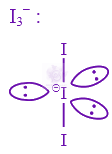
The number of halogen/(s) forming halic $(V)$ acid is __________ .
The correct order of following $3d$ metal oxides, according to their oxidation numbers is : (a) ${\mathrm{CrO}}_{3}$ (b) ${\mathrm{Fe}}_{2}{O}_{3}$ (c) ${\mathrm{MnO}}_{2}$ (d) ${V}_{2}{O}_{5}$ (e) ${\mathrm{Cu}}_{2}O$
Among the following allotropic forms of sulphur, the number of allotropic forms, which will show paramagnetism is _______. (A) $\alpha$-sulphur (B) $\beta$-sulphur (C) ${S}_{2}$-form
Which of the following has the highest lattice energy?
The compound/s which will show significant intermolecular $H$-bonding is/are : 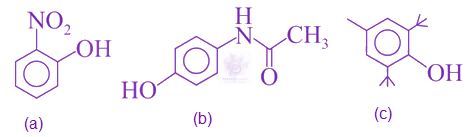
Spin only magnetic moment of an octahedral complex of ${\mathrm{Fe}}^{2+}$ in the presence of a strong field ligand in BM is:
In which of the following pairs, the outermost electronic configuration will be the same?
An aqueous solution of ${\mathrm{NiCl}}_{2}$ was heated with excess sodium cyanide in presence of strong oxidizing agent to form ${[\mathrm{Ni}(\mathrm{CN}{)}_{6}]}^{2-}.$ The total change in number of unpaired electrons on metal centre is ___________.
Given below are two statements:Statement I : $\alpha$ and $\beta$ forms of sulphur can change reversibly between themselves with slow heating or slow cooling. Statement II : At room temperature the stable crystalline form of sulphur is monoclinic sulphur. In the light of the above statements, choose the correct answer from the options given below:
Number of electrons present in $4f$ orbital of ${\mathrm{Ho}}^{3+}$ ion is ________ (Given Atomic No. of Ho =67)
Which one of the following when dissolved in water gives coloured solution in nitrogen atmosphere?
The correct order of electron gain enthalpy is:
The number of $S=O$ bonds present in sulphurous acid, peroxodisulphuric acid and pyrosulphuric acid, respectively are :
The number of stereo isomers possible for ${[\mathrm{Co}{(\mathrm{ox})}_{2}(\mathrm{Br})({\mathrm{NH}}_{3})]}^{2-}$ is __________. [$\mathrm{ox}=$ oxalate]
The spin only magnetic moment of a divalent ion in aqueous solution (atomic number $29$) is ___ $\mathrm{BM}$.
Match List-$I$ with List-$\mathrm{II}$. <table class="pyq-table"><tbody><tr><td colspan="2" rowspan="1">List-$I$</td><td colspan="2" rowspan="1">List-$\mathrm{II}$</td></tr><tr><td colspan="2" rowspan="1">(Molecule)</td><td colspan="2" rowspan="1">(Bond order)</td></tr><tr><td>(a)</td><td>${\mathrm{Ne}}_{2}$</td><td>(i)</td><td>$1$</td></tr><tr><td>(b)</td><td>${N}_{2}$</td><td>(ii)</td><td>$2$</td></tr><tr><td>(c)</td><td>${F}_{2}$</td><td>(iii)</td><td>$0$</td></tr><tr><td>(d)</td><td>${O}_{2}$</td><td>(iv)</td><td>$3$</td></tr></tbody></table>Choose the correct answer from the options given below:
The ratio of number of water molecules in Mohr's salt and potash alum is $\times {10}^{-1}.$ (Integer answer)
Arrange the following Cobalt complexes in the order of increasing Crystal Field Stabilization Energy (CFSE) value. Complexes: $\begin{matrix}\underset{A}{{[{\mathrm{CoF}}_{6}]}^{3-}}, & \underset{B}{{[\mathrm{Co}{({H}_{2}O)}_{6}]}^{2+}}, & \underset{C}{{[\mathrm{Co}{({\mathrm{NH}}_{3})}_{6}]}^{3+}}\text{ and }\underset{D}{{[\mathrm{Co}(\mathrm{en}{)}_{3}]}^{3+}} & \end{matrix}$ Choose the correct option :
Chalcogen group elements are :
The correct structures of trans $-[\mathrm{NiBr}({\mathrm{PPh}}_{3})22]$ and meridional $-[\mathrm{Co}{({\mathrm{NH}}_{3})}_{3}{({\mathrm{NO}}_{2})}_{3}]$ respectively, are:
The absolute value of the electron gain enthalpy of halogens satisfies:
${\mathrm{AB}}_{3}$ is an interhalogen T-shaped molecule. The number of lone pairs of electrons on $A$ is (Integer answer)
Which one of the following group-$15$ hydride is the strongest reducing agent ?
The bond order and magnetic behaviour of ${O}_{2}^{-}$ ion are, respectively :
The correct order of ionic radii for the ions, ${P}^{3-},{S}^{2-},{\mathrm{Ca}}^{2+},{K}^{+},{\mathrm{Cl}}^{-}$ is :
The total number of electrons in all bonding molecular orbitals of ${O}_{2}^{2-}$ is ......... (Round off to the nearest integer)
The incorrect statement among the following is:
The additon of dilute $\mathrm{NaOH}$ to ${\mathrm{Cr}}^{3+}$ salt solution will give :
The secondary valency and the number of hydrogen bonded water molecule(s) in ${\mathrm{CuSO}}_{4}\cdot 5{H}_{2}O$, respectively, are
In the structure of the dichromate ion, there is a :
Which pair of oxides is acidic in nature?
Which one of the following statements for D.I. Mendeleeff, is incorrect ?
In which of the following order the given complex ions are arranged correctly with respect to their decreasing spin only magnetic moment? (i) ${[{\mathrm{FeF}}_{6}]}^{3-}$ (ii) ${[\mathrm{Co}{({\mathrm{NH}}_{3})}_{6}]}^{3+}$ (iii) ${[{\mathrm{NiCl}}_{4}]}^{2-}$ (iv) ${[\mathrm{Cu}{({\mathrm{NH}}_{3})}_{4}]}^{2+}$
The sum of oxidation states of two silver ions in $[\mathrm{Ag}{({\mathrm{NH}}_{3})}_{2}][\mathrm{Ag}(\mathrm{CN}{)}_{2}]$ complex is _____ .
Given below are two statement : one is labelled as Assertion A and the other is labelled as Reason R : Assertion A : Size of ${\mathrm{Bk}}^{3+}$ ion is less than ${\mathrm{Np}}^{3+}$ ion. Reason R : The above is a consequence of the lanthanide contraction. In the light of the above statements, choose the correct answer from the options given below :
Given below are two statements : Statement I: ${[\mathrm{Mn}(\mathrm{CN}{)}_{6}]}^{3-},{[\mathrm{Fe}(\mathrm{CN}{)}_{6}]}^{3-}$ and ${[\mathrm{Co}{({C}_{2}{O}_{4})}_{3}]}^{3-}$ are ${d}^{2}{\mathrm{sp}}^{3}$ hybridised. Statement II : ${[{\mathrm{MnCl}}_{6}]}^{3-}$ and ${[{\mathrm{FeF}}_{6}]}^{3-}$ are paramagnetic and have $4$ and $5$ unpaired electrons, respectively. In the light of the above statements, choose the correct answer from the options given below:
The type of hybridisation and magnetic property of the complex ${[{\mathrm{MnCl}}_{6}]}^{3-},$ respectively, are: