For 40 g amount 40 g half -life ⟶20 s20 g⟶20 s10 g For 160 g amount 160 g⟶10 s80 g⟶10 s40 g40 g⟶10 s20 g⟶10 s10 g So, after 40 sA1 and A2 remains same.
A mixture consists of two radioactive materials A_1 and A_2 with half lives of 20 ~s and 10 ~s respectively. Initially the mixture has 40 ~g of A_1…
NEET UG 2012 — Physics Modern Physics
2012mcqmedium
A mixture consists of two radioactive materials A1 and A2 with half lives of 20 s and 10 s respectively. Initially the mixture has 40 g of A1 and 160 g of A2. The amount of the two in the mixture will become equal after
Official previous-year question
Held on 30 Apr 2012 · Verified 9 Jul 2026.
Options
- A
60 s
- B
80 s
- C
20 s
- D
40 s
Did you get this right?
Sign in to track your attempts and accuracy.
Your note
Sign in to keep a private note on this question. Nothing you write is ever public.
NEET UG Modern Physics in other years
More NEET UG Modern Physics questions
A photon and an electron (mass $m$ ) have the same energy $E$. The ratio ( $\lambda_{\text {photon }} / \lambda_{\text {electron }}$ ) of their de Broglie wavelengths is: (c is the speed of light)
2025medium
The output $(\mathrm{Y})$ of the given logic implementation is similar to the output of an/a _____ gate. 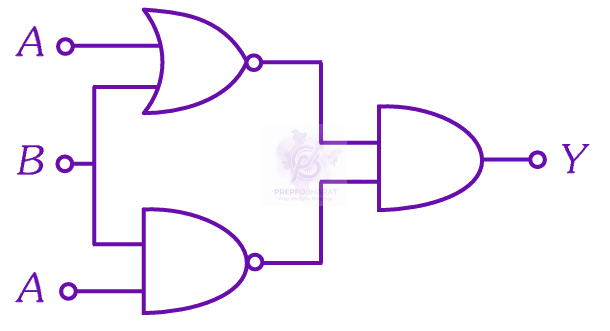
2025medium
The maximum kinetic energy of photoelectrons from a surface with work function φ = 2 eV when light of λ = 4000 Å falls on it is (hc = 12400 eV·Å):
2025easy
A full wave rectifier circuit with diodes $\left(D_1\right)$ and $\left(D_2\right)$ is shown in the figure. If input supply voltage $V_{\text {in }}=220 \sin (100 \pi t)$ volt, then at $t=15 \mathrm{msec}$ 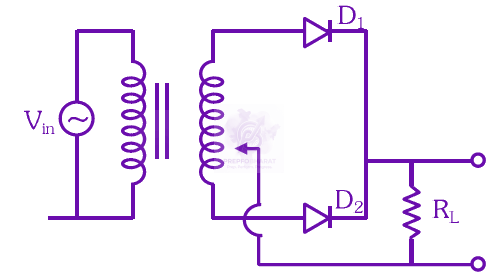
2025medium
A particle of mass $m$ is moving around the origin with a constant force $F$ pulling it towards the origin. If Bohr model is used to describe its motion, the radius $r$ of the $n^{\text {th }}$ orbit and the particle's speed $v$ in the orbit depend on $n$ as
2025medium
Other Physics topics for NEET UG
Keep practicing Modern Physics
Work through every NEET UG Modern Physics PYQ, year by year.