Resistance of a wire is given by R=AρL, where, ρ is conductivity, L is length of wire and A is cross-sectional area of wire.
For a single wire, A and ρ are constant.
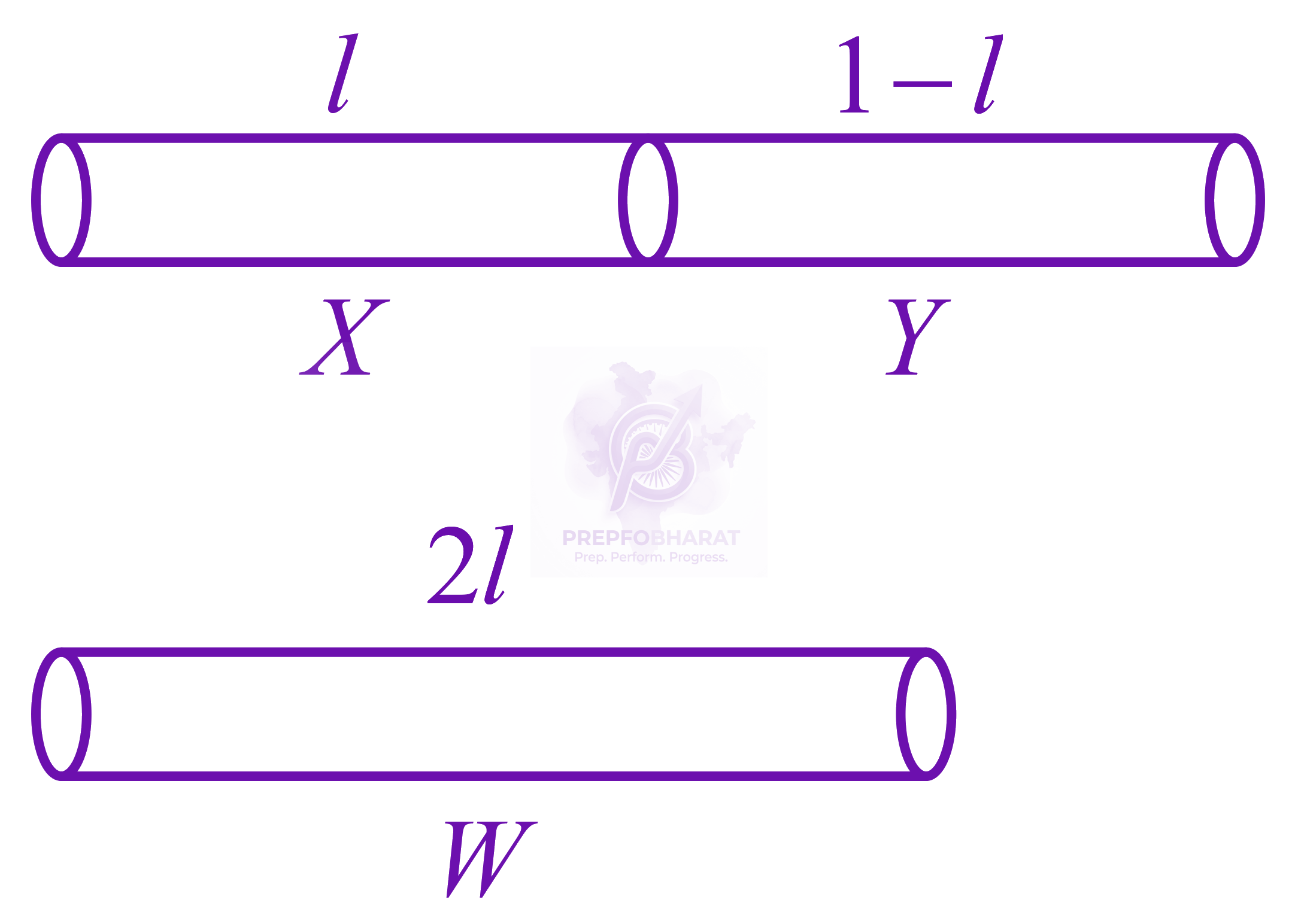
Thus, for parts X and Y, resistance, RYRX=lYlX.
When wire is stretched to double of its length, then resistance becomes four times, thus, RW=4RX=2RY.
Hence, the ratio is RYRX=21.
So, lYlX=21