 .
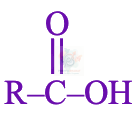
.Statement I: The dipole moment of alkyl cyanides (R−CN) is indeed greater than alkyl isocyanides (R−NC) because the C≡N bond is more polar than the N+≡C− bond where formal charges oppose the electronegativity difference. However, the acidic hydrolysis of R−NC produces a primary amine (R−NH2) and formic acid (HCOOH), not a carboxylic acid (R−COOH). Thus, Statement I is false.
Statement II: R−CN on acidic hydrolysis gives R−COOH. Treatment with SOCl2 gives R−COCl. Addition of NH3 gives R−CONH2 (compound x). Treatment of R−CONH2 with NaOCl/NaOH (Hofmann Bromamide Degradation equivalent) gives R−NH2. R−NH2 on treatment with CHCl3/KOH/Δ (Carbylamine reaction) produces R−NC. Thus, Statement II is true.
Therefore, Statement I is false but Statement II is true.