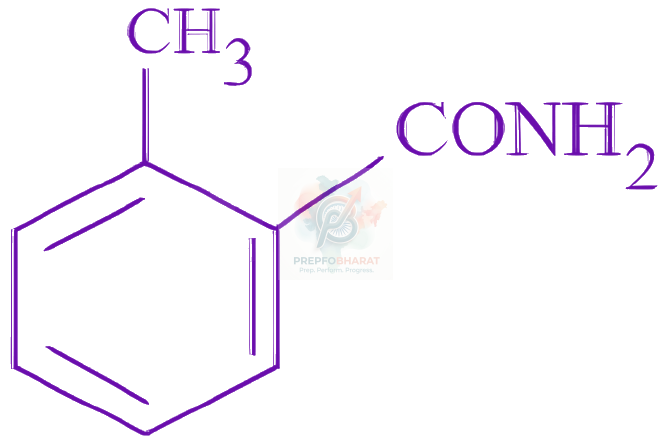
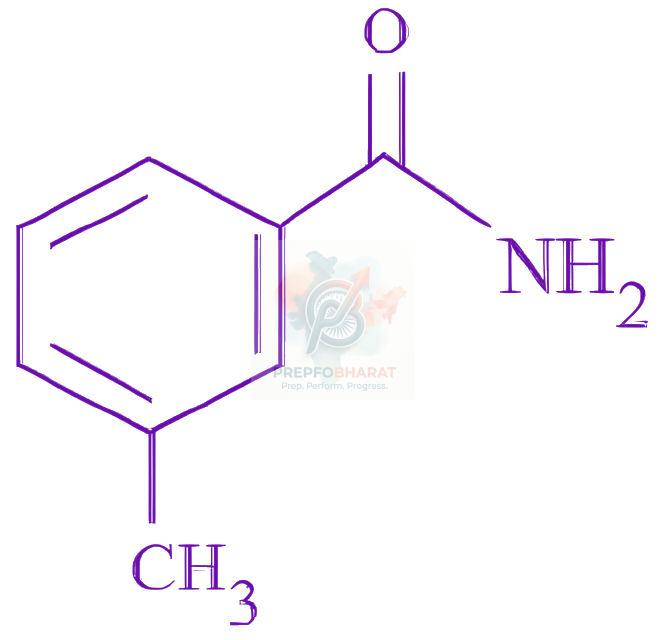
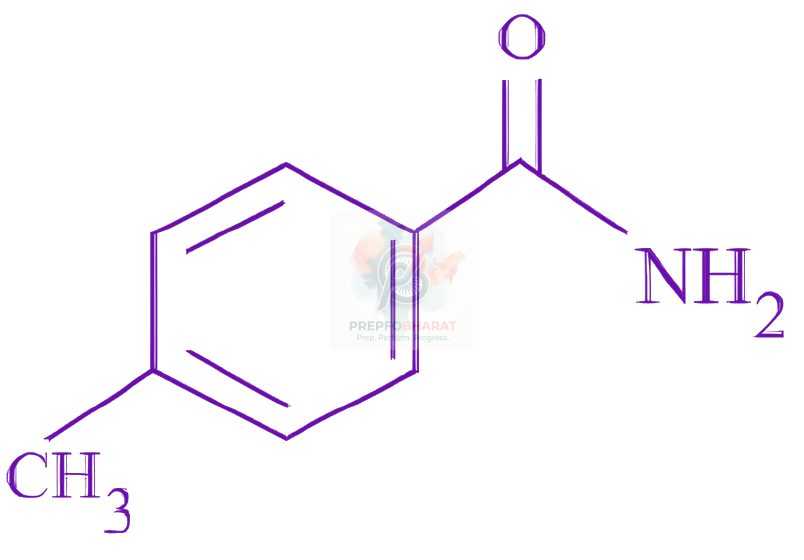
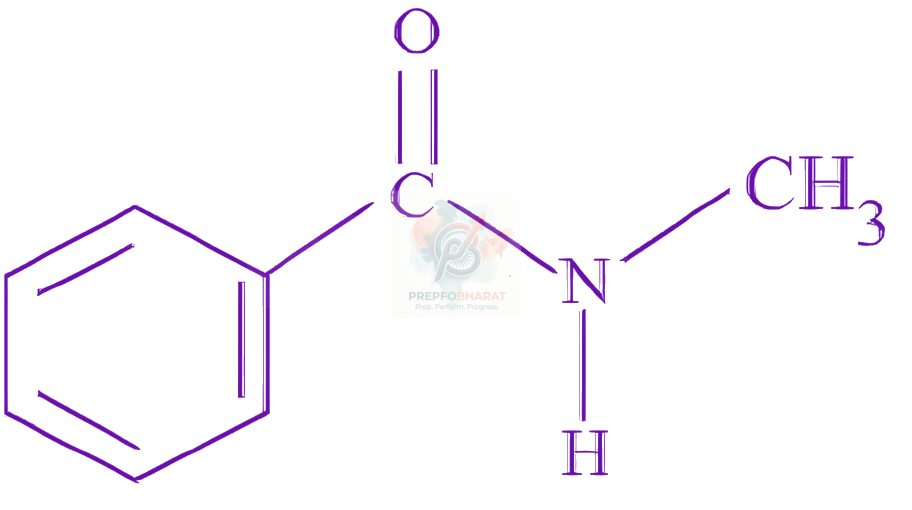
Compound A undergoes bromination with aqueous Br₂/HO⁻ to form B, which is soluble in dilute acid, indicating an amino group is present.
B undergoes diazotization with NaNO₂/HCl at 0-5°C to form diazonium compound C.
The diazonium compound is then treated with CaCN/NaOH to form nitrile compound D.
Hydrolysis of D produces carboxylic acid E.
When A is treated with acidified KMnO₄, it produces F containing two different types of hydrogen atoms.
This reaction sequence is characteristic of anthranilic acid (2-aminobenzoic acid), where the amino group directs bromination to the para position, and subsequent reactions proceed through the diazonium intermediate.
The structure shown in option (3), which is 2-aminobenzoic acid, fits all these transformations.