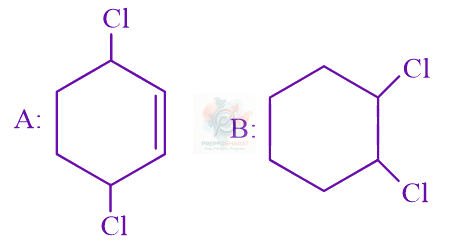
The allylic position is a carbon position present adjacent to the carbon-carbon double bonds. The allylic carbon is attached to a carbon atom that forms a double bond with a different carbon atom. A substitution could be a reaction during which a group in an organic molecule is replaced with another group.
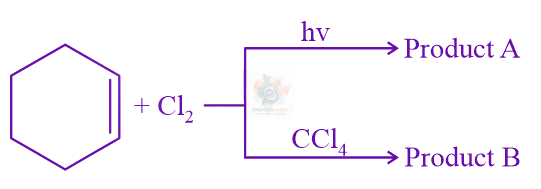
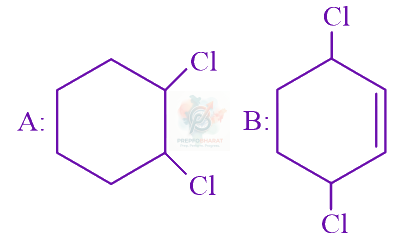
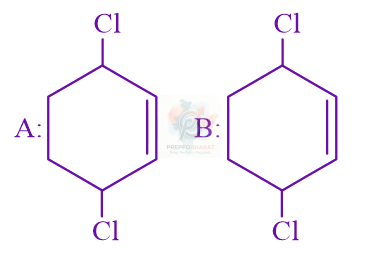
When the halogen concentration is low enough, alkenes containing allylic hydrogen undergo substitution at the allylic position rather than addition at the double bond. The product is an allylic halide (halogen on carbon next to double bond carbons), which is acquired through a radical chain mechanism.
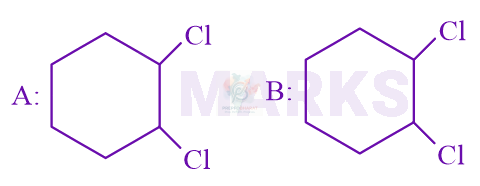
When cyclohexene reacts with Chlorine in the presence of CCl4, the electrophilic addition reaction takes place at double bond, which results in a dichloro product, here it is 1,2−dicholorocyclohexane.
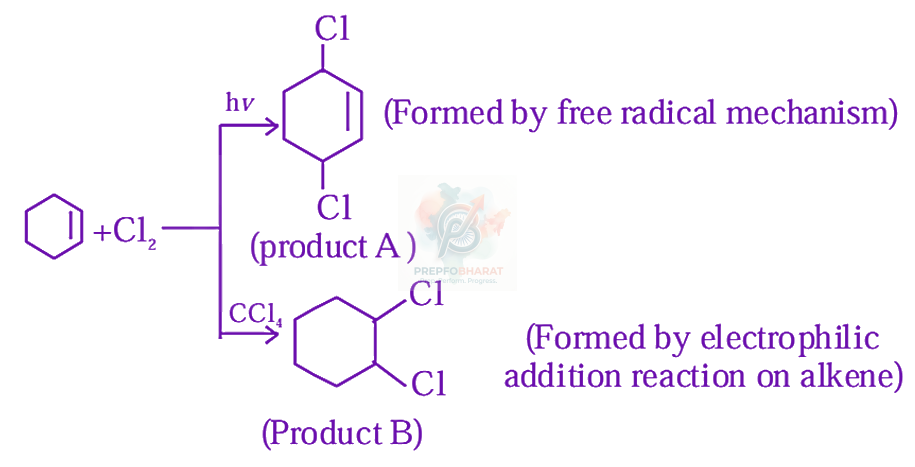
Hence, the correct answer is D.