JEE Main 2005 — Organic Chemistry
Chemistry Organic Chemistry questions from JEE Main 2005.
Other Years
18 Organic Chemistry Questions from 2005
The best reagent to convert pent -3- en-2-ol into pent -3-en-2-one is
The reaction 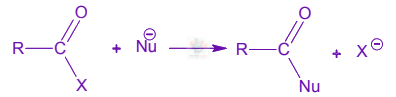 is fastest when X is
The decreasing order of nucleophilicity among the nucleophiles 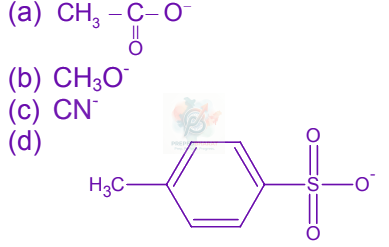
Reaction of cyclohexanone with dimethylamine in the presence of catalytic amount of an acid forms a compound if water during the reaction is continuously removed. The compound formed is generally known as
2 methylbutane on reacting with bromine in the presence of sunlight gives mainly
Elimination of bromine from 2-bromobutane results in the formation of-
Due to the presence of an unpaired electron, free radicals are:
Reaction of one molecule of $\mathrm{HBr}$ with one molecule of 1,3 -butadiene at $40^{\circ} \mathrm{C}$ gives predominantly
Among the following acids which has the lowest $\mathrm{pK}_{\mathrm{a}}$ value
Which one of the following methods is neither meant for the synthesis nor for separation of amines?
Amongst the following the most basic compound is
In both DNA and RNA, heterocyclic base and phosphate ester linkages are at-
Of the five isomeric hexanes, the isomer which can give two monochlorinated compounds is
Which types of isomerism is shown by 2,3-dichlorobutane?
Tertiary alkyl halides are practically inert to substitution by $\mathrm{S}_{\mathrm{N}}{ }^2$ mechanism because of
Acid catalyzed hydration of alkenes except ethene leads to the formation of
Alkyl halides react with dialkyl copper reagents to give
p-cresol reacts with chloroform in alkaline medium to give the compound A which adds hydrogen cyanide to form, the compound B. The latter on acidic hydrolysis gives chiral carboxylic acid. The structure of the carboxylic acid is