Escherichia coli and Agrobacterium tumefaciens are the microbes found to be very useful in genetic engineering. E. coli is a motile, gram negative, rod shaped bacterium which is a normal inhabitant of human colon. It is most extensively used in bacterial genetics and molecular biology. Agrobacterium tumefaciens is a soil bacterium. It has Ti plasmid (Tumour inducing plasmid) and it can be used for the transfer of a desired gene in dicot plants. Related Theory Using Agrobacterium vectors, nematode specific genes are introduced into host plants. The introduction of DNA produces both sense and antisense RNA in host cells. These two RNAs being complementary form a double stranded RNA (dsRNA) that initiates the RNAs and silence the specific mRNA of the nematode. As a result of this, the parasite cannot survive in the transgenic host expressing specific interfering RNA.
Two microbes found to be very useful in genetic engineering are:
NEET UG 2006 — Zoology Biotechnology - Principles and Processes
Two microbes found to be very useful in genetic engineering are:
Held on 30 Apr 2006 · Verified 9 Jul 2026.
Options
- A
crown gall bacterium and Caenorhabditis elegans
- B
Escherichia coli and Agrobacterium tumefaciens
- C
Vibrio cholerae and a tailed bacteriophage
- D
Diplococcus sp. and Pseudomonas sp.
Did you get this right?
Sign in to track your attempts and accuracy.
Your note
Sign in to keep a private note on this question. Nothing you write is ever public.
NEET UG Biotechnology - Principles and Processes in other years
More NEET UG Biotechnology - Principles and Processes questions
Which of the following enzyme(s) are NOT essential for gene cloning? A. Restriction enzymes B. DNA ligase C. DNA mutase D. DNA recombinase E. DNA polymerase Choose the correct answer from the options given below:
The blue and white selectable markers have been developed which differentiate recombinant colonies from non-recombinant colonies on the basis of their ability to produce colour in the presence of a chromogenic substrate. Given below are two statements about this method: Statement I : The blue coloured colonies have DNA insert in the plasmid and they are identified as recombinant colonies. Statement II : The colonies without blue colour have DNA insert in the plasmid and are identified as recombinant colonies. In the light of the above statements, choose the most appropriate answer from the options given below:
Identify the part of a bio-reactor which is used as a foam braker from the given figure. 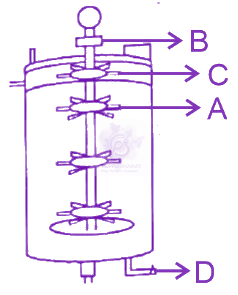
Given below are two statements : Statement I: The DNA fragments extracted from gel electrophoresis can be used in construction of recombinant DNA. Statement II : Smaller size DNA fragments are observed near anode while larger fragments are found near the wells in an agarose gel. In the light of the above statements, choose the most appropriate answer from the options given below :
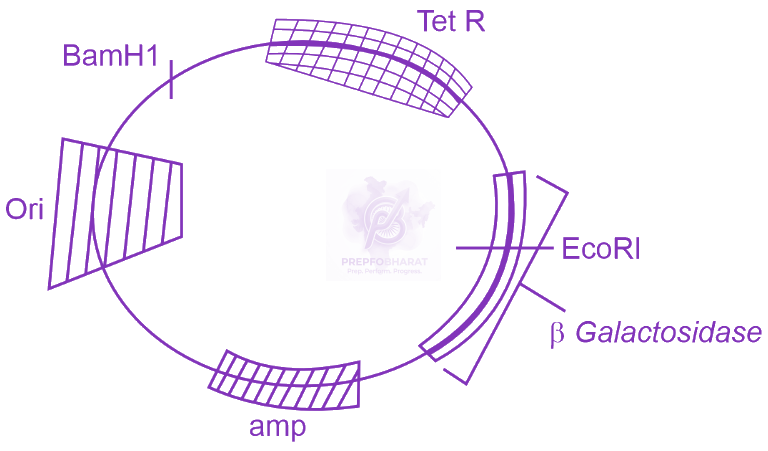 In the above represented plasmid, an alien piece of DNA is inserted at EcoRI site. Which of the following strategies will be chosen to select the recombinant colonies?
Other Zoology topics for NEET UG
Keep practicing Biotechnology - Principles and Processes
Work through every NEET UG Biotechnology - Principles and Processes PYQ, year by year.