Nitro group (−NO2) is an electron withdrawing group. It removes electron density from aromatic nucleus. Thus, the reactivity of nitrobenzene towards electrophilic aromatic substitution reaction is less. Amine group (−NH2) is an electron releasing group. They increase the electron density on benzene ring. Thus, aniline is more reactive towards electrophilic aromatic substituion reaction than benzene. Hence, the correct order of reactivity towards the electrophilic substitution of the compounds is. aniline (I)> benzene (II) > nitrobenzene (III).
The correct order of reactivity towards the electrophillic substitution of the compounds aniline (I), benzene (II) and nitrobenzene (III) is:
NEET UG 2003 — Chemistry Organic Chemistry
2003mcqmedium
The correct order of reactivity towards the electrophillic substitution of the compounds aniline (I), benzene (II) and nitrobenzene (III) is:
Official previous-year question
Held on 30 Apr 2003 · Verified 9 Jul 2026.
Options
- A
III > II > I
- B
II > III > I
- C
I < II > III
- D
I > II > III
Did you get this right?
Sign in to track your attempts and accuracy.
Your note
Sign in to keep a private note on this question. Nothing you write is ever public.
NEET UG Organic Chemistry in other years
More NEET UG Organic Chemistry questions
Which of the following is a reducing sugar?
2026easy
Markovnikov's rule is applicable to:
2026easy
Name the class of enzyme that usually catalyze the following reaction : $\mathrm{S}-\mathrm{G}+\mathrm{S}^{\#} \rightarrow \mathrm{~S}+\mathrm{S}^{\#}-\mathrm{G}$ Where, $G \rightarrow$ a group other than hydrogen $S \rightarrow$ a substrate $\mathrm{S}^{\#} \rightarrow$ another substrate
2025medium
Identify the suitable reagent for the following conversion 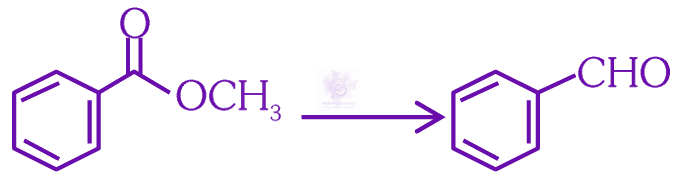
2025medium
Given below are two statements : one is labelled as Assertion (A) and the other is labelled as Reason (R). Assertion (A) : undergoes $\mathrm{S}_{\mathrm{N}} 2$ reaction faster than Reason (R) : Iodine is a better leaving group because of its large size. In the light of the above statements, choose the correct answer from the options given below :
2025easy
Other Chemistry topics for NEET UG
Keep practicing Organic Chemistry
Work through every NEET UG Organic Chemistry PYQ, year by year.