NEET UG 2023 — Organic Chemistry
Chemistry Organic Chemistry questions from NEET UG 2023.
Other Years
30 Organic Chemistry Questions from 2023
Which is not a protein?
Weight (g) of two moles of the organic compound, which is obtained by heating sodium ethanoate with sodium hydroxide in presence of calcium oxide is :
Reagents which can be used to convert alcohols to carboxylic acids, are (A) $\mathrm{CrO}_3-\mathrm{H}_2 \mathrm{SO}_4$ (B) $\mathrm{K}_2 \mathrm{Cr}_2 \mathrm{O}_7+\mathrm{H}_2 \mathrm{SO}_4$ (C) $\mathrm{KMnO}_4+\mathrm{KOH} / \mathrm{H}_3 \mathrm{O}^{+}$ (D) $\mathrm{Cu}, 573 \mathrm{~K}$ (E) $\mathrm{CrO}_3,\left(\mathrm{CH}_3 \mathrm{CO}\right)_2 \mathrm{O}$ Choose the most appropriate answer from the options given below.
Cheilosis occurs due to deficiency of
The correct order for the rate of $\alpha, \beta$-dehydrohalogenation for the following compounds is 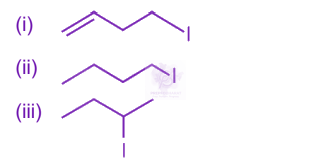
Consider the given reaction: $\mathrm{CH}_3 \mathrm{COCH}_3 \stackrel{\text { dil Ba}(\mathrm{OH})_2}{\longrightarrow}$ "X" The functional groups present in compound " $\mathrm{X}$ " are
In Lassaigne's extract of organic compound both nitrogen and sulphur are present, which gives blood-red colour with ${\mathrm{Fe}}^{3+}$ due to the formation of
Which of the following reactions will NOT give primary amine as the product?
(i) 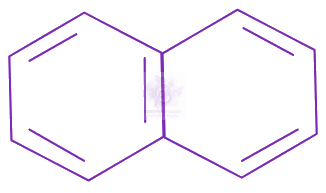 (ii) 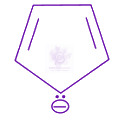 (iii) 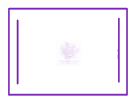 (iv) 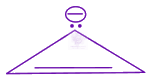 (v) 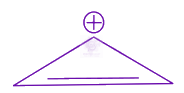 (vi) 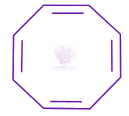 (vii) 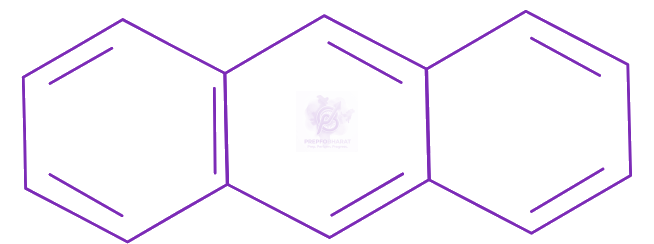 The number of compounds/species which obey Huckel's rule is _____
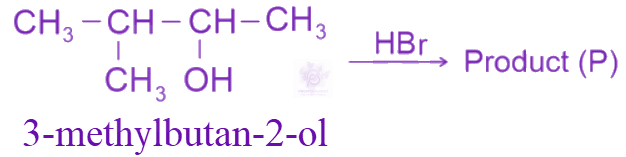
Identify the product in the following reaction. 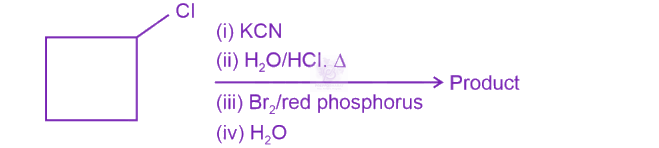
Match List-I with List-II. \(\begin{array}{|c|l|c|l|} \hline & \text { List-I } & & \text { List-II } \\ \hline & \text { (Mixtures/Sample) } & & \text { (Technique used for purification) } \\ \hline(A) & \text { Glycerol from spent lye } & \text { (I) } & \text { Steam distillation } \\ \hline(B) & \text { Chloroform + Aniline } & \text { (II) } & \text { Fractional distillation } \\ \hline \text { (C) } & \text { Fractions of crude oil } & \text { (III) } & \text { Distillation under reduced pressure } \\ \hline \text { (D) } & \text { Aniline + Water } & \text { (IV) } & \text { Distillation } \\ \hline \end{array}\) Choose the correct answer from the options given below:
The given compound 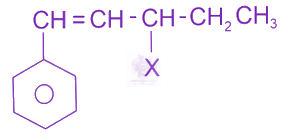 is an example of
The following conversion is known as 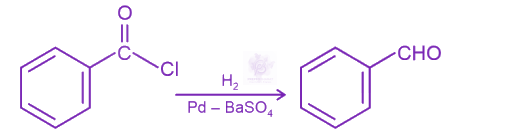
Complete the following reaction : 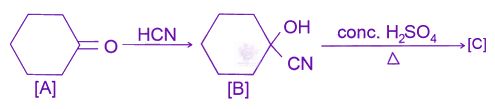
Given below are two statements: Statement I: In an organic compound, when inductive and electromeric effects operate in opposite directions, the inductive effect predominates. Statement II: Hyperconjugation is observed in o-xylene. In the light of the above statements, choose the correct answer from the options given below
Given below are two statements : Statement I: A unit formed by the attachment of a base to ${1}^{'}$ position of sugar is known as nucleoside Statement II: When nucleoside is linked to phosphorous acid at ${5}^{'}$-position of sugar moiety, we get nucleotide. In the light of the above statements, choose the correct answer from the options given below:
Identify the product in the following reaction 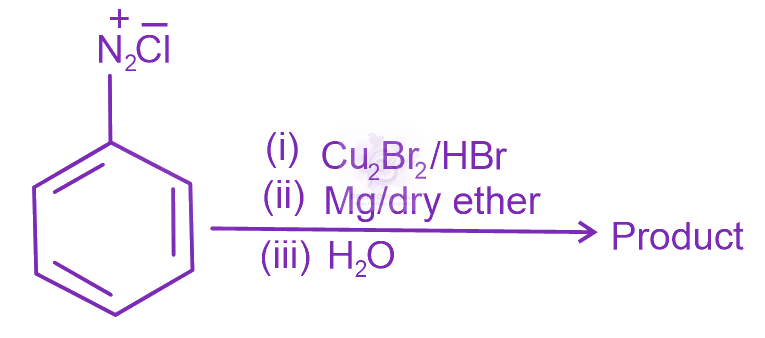
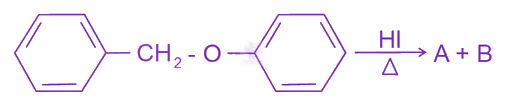 Identify A and B
Which is not an electrophile?
Choose the correct sequence of reagents in the conversion of 4-nitrotoluene to 2 -bromotoluene.
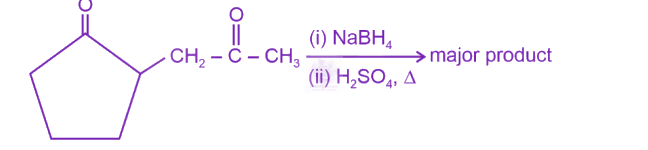
Which amongst the following will be most readily dehydrated under acidic conditions?
Identify ' $X$ ' in the following reaction. 
Identify the final product [D] obtained in the following sequence of reactions. ${\mathrm{CH}}_{3}\mathrm{CHO}\rightarrow _{{H}_{3}{O}^{+}}^{i){\mathrm{LiAlH}}_{4}}[A]\rightarrow _{\Delta }^{{H}_{2}{\mathrm{SO}}_{4}}[B]\overset{\mathrm{HBr}}{\rightarrow }[C]\rightarrow _{\mathrm{Na}/\mathrm{Dry}\mathrm{ether}}^{{C}_{6}{H}_{5}\mathrm{Br}}[D]$
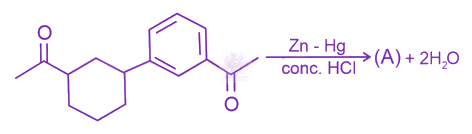
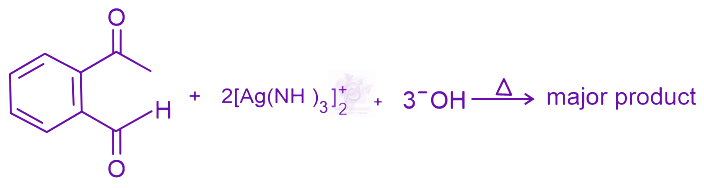
Which amongst the following reaction of alkyl halides produces isonitrile as a major products? (A) $\mathrm{R}-\mathrm{X}+\mathrm{HCN} \rightarrow$ (B) $\mathrm{R}-\mathrm{X}+\mathrm{AgCN} \rightarrow$ (C) $\mathrm{R}-\mathrm{X}+\mathrm{KCN} \rightarrow$ (D) $\mathrm{R}-\mathrm{X}+\mathrm{NaCN} \underset{\mathrm{H}_2 \mathrm{O}}{\mathrm{C}_2 \mathrm{H}_5 \mathrm{OH}}$ Choose the most appropriate answer from the options given below
$\mathrm{R}-\mathrm{COOH} \frac{\text { (i) "X" }}{\text { (ii) } \mathrm{H}_2 \mathrm{O} / \mathrm{HCl}} \mathrm{R}-\mathrm{CH}_2 \mathrm{OH}$ $\mathrm{R}-\mathrm{CH}=\mathrm{CH}_2 \frac{\text { (i) " X" }}{\text { (ii) } \mathrm{H}_2 \mathrm{O}, \mathrm{NaOH}, \mathrm{H}_2 \mathrm{O}_2} \mathrm{R}-\mathrm{CH}_2-\mathrm{CH}_2-\mathrm{OH}$ Identify ' $X$ ' in above reactions.
Which amongst the following compounds/species is least basic?
The major product formed in the following conversion is