Thorns of Bougainvillea and tendrils of Cucurbita are homologous organs. These are modified branches and are axillary in position. It means axillary branches in Bougainvillea are modified into thorns for protection from burrowing animals and in cucurbita into tendrils for climbing. The analogous organs have almost similar appearance and perform the same function but these develop in totally different groups and are totally different in their basic structure and developmental origin. The phyllode of Ruscus or cladode of Asparagus are analogous to leaves of other plants. The vestigial or rudimentary organs are useless remnants of structures or organs, which might have been large and functional in ancestors, eg, cutin covered stomata on the stem of cacti plants.
Thorn of Bougainvillea and tendril of Cucurbita are examples of
NEET UG 2008 — Zoology Evolution
Thorn of Bougainvillea and tendril of Cucurbita are examples of
Held on 30 Apr 2008 · Verified 9 Jul 2026.
Options
- A
analogous organs
- B
homologous organs
- C
vestigial organs
- D
retrogressive evolution
Did you get this right?
Sign in to track your attempts and accuracy.
Your note
Sign in to keep a private note on this question. Nothing you write is ever public.
NEET UG Evolution in other years
More NEET UG Evolution questions
Sweet potato and potato represent a certain type of evolution. Select the correct combination of terms to explain the evolution.
Match List I with List II: 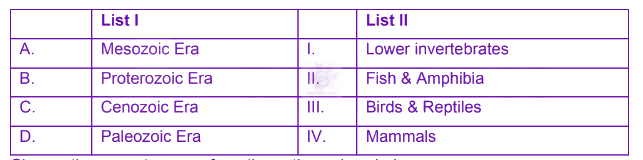 Choose the correct answer from the options given below :
Which one of the following factors will not affect the Hardy-Weinberg equilibrium?
Given below are some stages of human evolution. Arrange them in correct sequence. (Past to Recent) A. Homo habilis B. Homo sapiens C. Homo neanderthalensis D. Homo erectus Choose the correct sequence of human evolution from the options given below:
The flippers of the Penguins and Dolphins are the example of the
Other Zoology topics for NEET UG
Keep practicing Evolution
Work through every NEET UG Evolution PYQ, year by year.