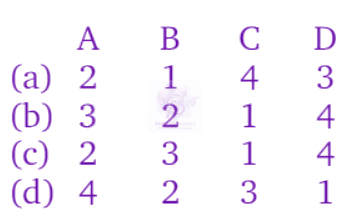
(A) 1∘ amines give a bad smelling compound, called carbylamine, with alcoholic KOH and CHCl3. The reaction is called carbylamine reaction. CH3CH2CH2CH2NH2⟶CHCl3+ alc KOHCH3(CH2)3NC bad smelling (B) Terminal alkynes like CH3C≡CH give white precipitate with ammoniacal AgNO3. CH3C≡CH+AgNO3+NH4OH⟶CH3C≡CAg white ppt (C) Ester (CH3CH2COOCH3) undergoes alkaline hydrolysis. CH3CH2COOCH3+NaOH⟶CH3CH2COONa+CH3OH (D) 2∘ alcohols (the alcohols that have CH3CHOH - group) give cloudiness with Lucas reagent (anhy ZnCl2+ conc HCl ) within 5 minutes.
Match the compounds given in List I with their characteristic reactions given in List II. Select the correct option. NEET 2010 Chemistry, Amines —…
NEET UG 2010 — Chemistry Organic Chemistry
2010mcqmedium
Match the compounds given in List I with their characteristic reactions given in List II. Select the correct option. 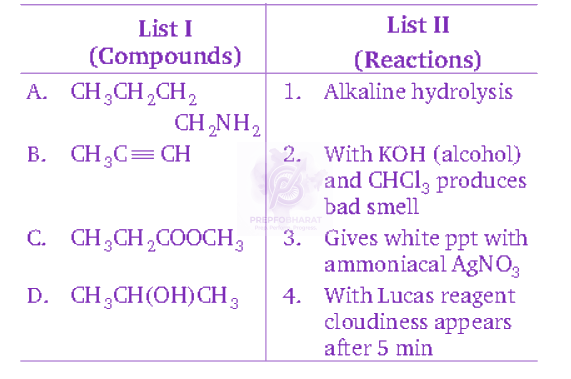
Official previous-year question
Held on 30 Apr 2010 · Verified 9 Jul 2026.
Options
- A
(a)
- B
(b)
- C
(c)
- D
(d)
Did you get this right?
Sign in to track your attempts and accuracy.
Your note
Sign in to keep a private note on this question. Nothing you write is ever public.
NEET UG Organic Chemistry in other years
More NEET UG Organic Chemistry questions
Which of the following is a reducing sugar?
2026easy
Markovnikov's rule is applicable to:
2026easy
Name the class of enzyme that usually catalyze the following reaction : $\mathrm{S}-\mathrm{G}+\mathrm{S}^{\#} \rightarrow \mathrm{~S}+\mathrm{S}^{\#}-\mathrm{G}$ Where, $G \rightarrow$ a group other than hydrogen $S \rightarrow$ a substrate $\mathrm{S}^{\#} \rightarrow$ another substrate
2025medium
Identify the suitable reagent for the following conversion 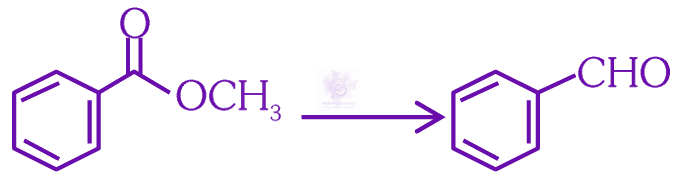
2025medium
Given below are two statements : one is labelled as Assertion (A) and the other is labelled as Reason (R). Assertion (A) :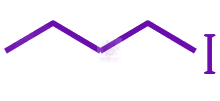 undergoes $\mathrm{S}_{\mathrm{N}} 2$ reaction faster than Reason (R) : Iodine is a better leaving group because of its large size. In the light of the above statements, choose the correct answer from the options given below :
2025easy
Other Chemistry topics for NEET UG
Keep practicing Organic Chemistry
Work through every NEET UG Organic Chemistry PYQ, year by year.