NEET UG 2008 — Organic Chemistry
Chemistry Organic Chemistry questions from NEET UG 2008.
Other Years
26 Organic Chemistry Questions from 2008
Which one of the following is an amine hormone?
Acetophenone when reacted with a base, $\mathrm{C}_2 \mathrm{H}_5 \mathrm{ONa}$, yields a stable compound which has the structure?
$$ \text { In a } \mathrm{S}_{\mathrm{N}} 2 \text { substitution reaction of the type } $$ $$ \mathrm{R}-\mathrm{Br}+\mathrm{Cl}^{-} \stackrel{\mathrm{OMF}}{\longrightarrow} \mathrm{R}-\mathrm{Cl}+\mathrm{Br}^{-} $$ Which one of the following has the highest relative rate?
The correct order of increasing bond angles in the following triatomic species is
How many moles of lead (II) chloride will be formed from a reaction between $6.5 \mathrm{~g}$ of $\mathrm{PbO}$ and $3.2 \mathrm{~g}$ of $\mathrm{HCl}$ ?
In DNA, the complimentary bases are
The stability of carbanions in the following (1) $\mathrm{RC} \equiv \stackrel{\ominus}{\mathrm{C}}$ (2)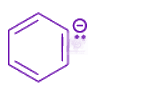 (3)\(\mathrm{R}_2 \mathrm{C}=\stackrel{\ominus}{\mathrm{C}}\mathrm{H}\) (4) $\mathrm{R}_3 \mathrm{C}-\stackrel{\ominus}{\mathrm{C}} \mathrm{H}_2$ is in the order of
How many stereoisomers does the molecules have? $\mathrm{CH}_3 \mathrm{CH}=\mathrm{CHCH}_2 \mathrm{CHBrCH}_3$
Standard free energies of formation (in $\mathrm{kJ} / \mathrm{mol}$ ) at $298 \mathrm{~K}$ are $-237.2,-394.4$ and -8.2 for $\mathrm{H}_2 \mathrm{O}(l) \mathrm{CO}_2(g)$ and pentane $(g)$, respectively. The value of $E_{\text {cell }}^0$ for the pentane-oxygen fuel cell is
The relative reactivities of acyl compounds towards nucleophilic substitution are in the order of
Which one of the following statements is not true?
The values of \(K_{p_1}\) and \(K_{p_2}\) for the reactions \(X \rightleftharpoons Y+Z\) ...(i) and \(A \rightleftharpoons 2 B\) ...(ii) are in ratio of \(9: 1\). If degree of dissociation of \(X\) and \(A\) be equal, then total pressure at equilibrium (i) and (ii) are in the ratio
The dissociation equilibrium of a gas $A B_2$ can be represented as $2 A B_2(g) \rightleftharpoons 2 A B(g)+B_2(g)$ The degree of dissociation is ' $x$ ' and is small compared to 1. The expression relating the degree of dissociation $(x)$ with equilibrium constant $K_P$ and total pressure $p$ is
In a $S_{\mathrm{N}} 2$ substitution reaction of the type $\mathrm{R}-\mathrm{Br}+\mathrm{Cl}^{-} \stackrel{\mathrm{DMF}}{\longrightarrow} \mathrm{R}-\mathrm{Cl}+\mathrm{Br}^{-}$, which one of the following has the highest relative rate?
Equal volumes of three acid solutions of $\mathrm{pH} 3,4$ and 5 are mixed in a vessel. What will be the $\mathrm{H}^{+}$ ion concentration in the mixture?
In a reaction of aniline a coloured product $C$ was obtained. 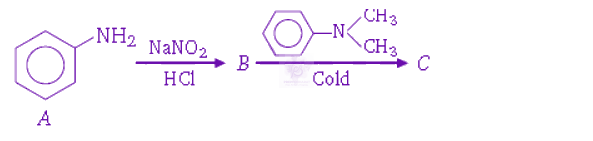 $\ ext {The structure of } C \text { would be}$
A strong base can abstract an $\alpha$-hydrogen from
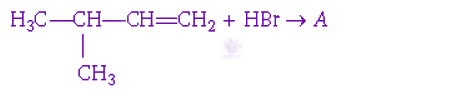 $A$ (Predominantly) is
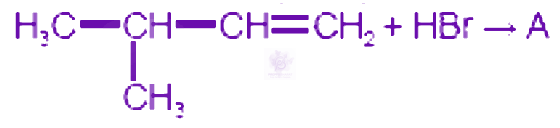 A (predominantly) is
Base strength of a. $\mathrm{H}_3 \mathrm{CC°H}_2$ b. $\mathrm{H}_2 \mathrm{C}=\mathrm{CH}$ c. $\mathrm{H}-\mathrm{C}=\mathrm{C}^{\circ}$ is in the order of
$$ \text { In a reaction of ani line a coloured product } \mathrm{C} \text { was obtained. } $$ 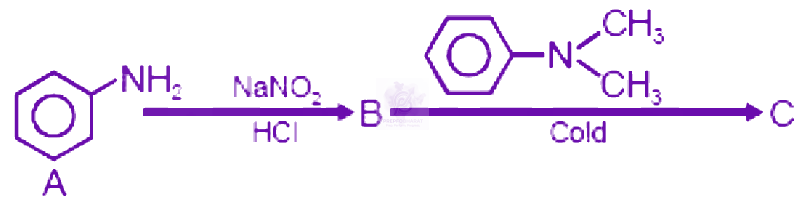 $$ \text { The structure of } \mathrm{C} \text { would be } $$
Which one of the following is most reactive towards electrophilic attack?
Which one the following is most reactive towards electrophilic attack?
For the gas phase reaction, $\mathrm{PCl}_5(g) \rightleftharpoons \mathrm{PCl}_3(g)+\mathrm{Cl}_2(g)$ which of the following conditions are correct?
A strong base an abstract an $\alpha$-hydrogen from
The stability of carbanions in the following 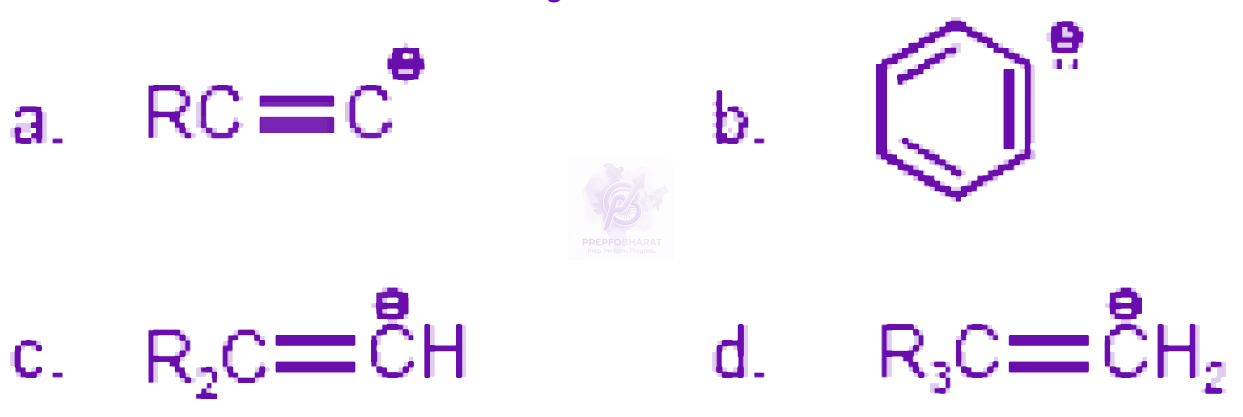 is in the order of