Mechanics PYQ — Page 12
JEE Main Physics — Mechanics previous year questions with solutions.
All Mechanics Questions (2069)
In a measurement, it is asked to find modulus of elasticity per unit torque applied on the system. The measured quantity has dimension of $\left[M^a L^b T^c\right]$. If $b=-3$, the value of $c$ is ________
Acceleration due to gravity on the surface of earth is ' $g$ '. If the diameter of earth is reduced to one third of its original value and mass remains unchanged, then the acceleration due to gravity on the surface of the earth is $\ldots\ldots$ g.
The displacement x versus time graph is shown below. 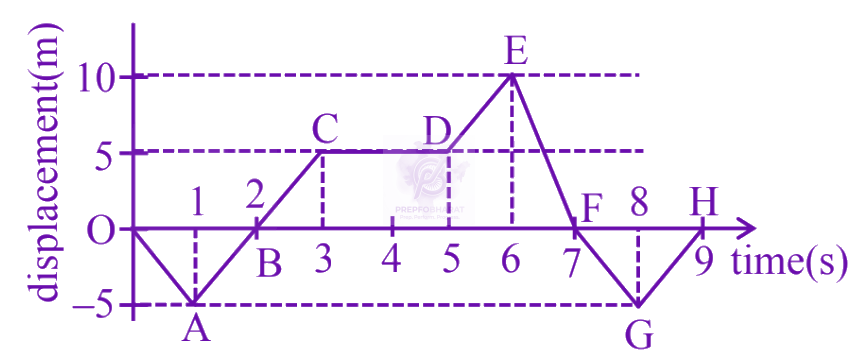 (A) The average velocity during 0 to 3 s is $10 \mathrm{~m} / \mathrm{s}$ (B) The average velocity during 3 to 5 s is $0 \mathrm{~m} / \mathrm{s}$ (C) The instantaneous velocity at $\mathrm{t}=2 \mathrm{~s}$ is $5 \mathrm{~m} / \mathrm{s}$ (D) The average velocity during 5 to 7 s and instantaneous velocity at $\mathrm{t}=6.5 \mathrm{~s}$ are equal (E) The average velocity from $t=0$ to $t=9 \mathrm{~s}$ is zero Choose the correct answer from the options given below:
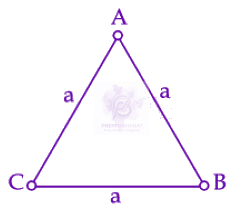 Three equal masses $m$ are kept at vertices (A, B, C) of an equilateral triangle of side a in free space. At $t=0$, they are given an initial velocity $\vec{V}_A=V_0 \overrightarrow{A C}, \vec{V}_B=V_0 \overrightarrow{B A}$ and $\vec{V}_C=V_0 \overrightarrow{C B}$. Here, $\overrightarrow{A C}, \overrightarrow{C B}$ and $\overrightarrow{B A}$ are unit vectors along the edges of the triangle. If the three masses interact gravitationally, then the magnitude of the net angular momentum of the system at the point of collision is :
A rod of length 5 L is bent right angle keeping one side length as 2 L. 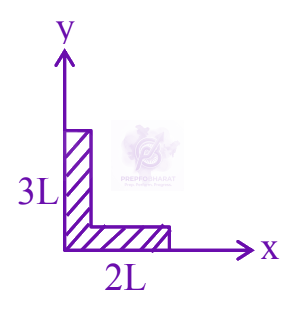 The position of the centre of mass of the system: (Consider $\mathrm{L}=10 \mathrm{~cm}$)
A person travelling on a straight line moves with a uniform velocity $\mathrm{v}_1$ for a distance x and with a uniform velocity $\mathrm{v}_2$ for the next $\frac{3}{2} \mathrm{x}$ distance. The average velocity in this motion is $\frac{50}{7} \mathrm{~m} / \mathrm{s}$. If $\mathrm{v}_1$ is $5 \mathrm{~m} / \mathrm{s}$ then $\mathrm{v}_2=$ _________ $\mathrm{m} / \mathrm{s}$.
A block of mass 2 kg is attached to one end of a massless spring whose other end is fixed at a wall. The spring-mass system moves on a frictionless horizontal table. The spring's natural length is 2 m and spring constant is $200 \mathrm{~N} / \mathrm{m}$. The block is pushed such that the length of the spring becomes 1 m and then released. At distance $\mathrm{x} \mathrm{m}(\mathrm{x} \lt 2)$ from the wall. the speed of the block will be :
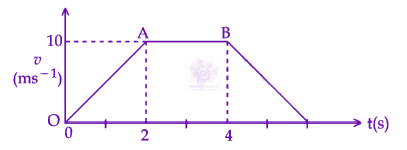
The motion of an airplane is represented by velocity-time graph as shown below. The distance covered by airplane in the first 30.5 second is _______ km . 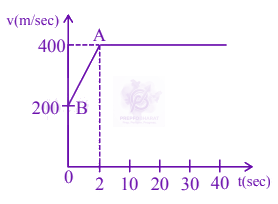
If $B$ is magnetic field and $\mu_0$ is permeability of free space, then the dimensions of $\left(B / \mu_0\right)$ is
Consider following statements: A. Surface tension arises due to extra energy of the molecules at the interior as compared to the molecules at the surface, of a liquid. B. As the temperature of liquid rises, the coefficient of viscosity increases. C. As the temperature of gas increases, the coefficient of viscosity increases D. The onset of turbulence is determined by Reynold's number. E. In a steady flow two stream lines never intersect. Choose the correct answer from the options given below:
A square Lamina OABC of length 10 cm is pivoted at 'O'. Forces act at Lamina as shown in figure. If Lamina remains stationary, then the magnitude of F is : 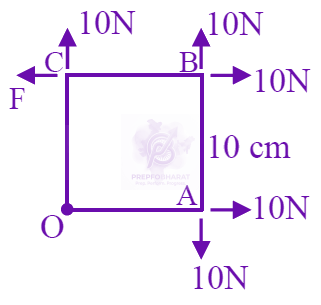
The electric flux is $\phi=\alpha \sigma+\beta \lambda$ where $\lambda$ and $\sigma$ are linear and surface charge density, respectively. $\left(\frac{\alpha}{\beta}\right)$ represents
The pair of physical quantities not having same dimensions is :
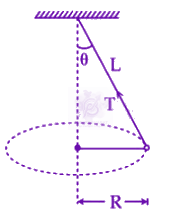 A string of length $L$ is fixed at one end and carries a mass of $M$ at the other end. The mass makes $\left(\frac{3}{\pi}\right)$ rotations per second about the vertical axis passing through end of the string as shown. The tension in the string is $\ldots\ldots$ ML.
Which one of the following is the correct dimensional formula for the capacitance in F ? $\mathrm{M}, \mathrm{L}, \mathrm{T}$ and C stand for unit of mass, length, time and charge,
A cylindrical rod of length 1 m and radius 4 cm is mounted vertically. It is subjected to a shear force of $10^5 \mathrm{~N}$ at the top. Considering infinitesimally small displacement in the upper edge, the angular displacement $\theta$ of the rod axis from its original position would be : (shear moduli, $\left.\mathrm{G}=10^{10} \mathrm{~N} / \mathrm{m}^2\right)$
The moment of inertia of a solid disc rotating along its diameter is 2.5 times higher than the moment of inertia of a ring rotating in similar way. The moment of inertia of a solid sphere which has same radius as the disc and rotating in similar way, is $n$ times higher than the moment of inertia of the given ring. Here, $\mathrm{n}=$_________ Consider all the bodies have equal masses.
Three identical spheres of mass m , are placed at the vertices of an equilateral triangle of length a. When released, they interact only through gravitational force and collide after a time $\mathrm{T}=4$ seconds. If the sides of the triangle are increased to length 2 a and also the masses of the spheres are made 2 m , then they will collide after _____ seconds.
If $\overrightarrow{\mathrm{L}}$ and $\overrightarrow{\mathrm{P}}$ represent the angular momentum and linear momentum respectively of a particle of mass ' m ' having position vector $\overrightarrow{\mathrm{r}}=\mathrm{a}(\hat{\mathrm{i}} \cos \omega \mathrm{t}+\hat{\mathrm{j}} \sin \omega \mathrm{t})$. The direction of force is
A body of mass 100 g is moving in circular path of radius 2 m on vertical plane as shown in figure. The velocity of the body at point $A$ is $10 \mathrm{~m} / \mathrm{s}$. The ratio of its kinetic energies at point $B$ and $C$ is : 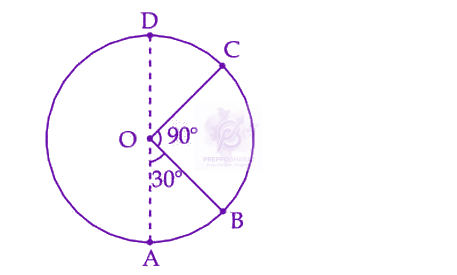 (Take acceleration due to gravity as $10 \mathrm{~m} / \mathrm{s}^2$ )
The amount of work done to break a big water drop of radius ' $R$ ' into 27 small drops of equal radius is 10 J . The work done required to break the same big drop into 64 small drops of equal radius will be
The volume contraction of a solid copper cube of edge length 10 cm , when subjected to a hydraulic pressure of $7 \times 10^6 \mathrm{~Pa}$, would be ____ $\mathrm{mm}^3$. (Given bulk modulus of copper $=1.4 \times 10^{11} \mathrm{~N} \mathrm{~m}^{-2}$ )
A particle moves along the $x$-axis and has its displacement $x$ varying with time $t$ according to the equation $\mathrm{x}=\mathrm{c}_0\left(\mathrm{t}^2-2\right)+\mathrm{c}(\mathrm{t}-2)^2$ where $c_0$ and $c$ are constants of appropriate dimensions. Then, which of the following statements is correct?
The velocity-time graph of an object moving along a straight line is shown in figure. What is the distance covered by the object between $t=0$ to $t=4 \mathrm{~s}$ ?