As we move from low altitude to high altitude, the air starts getting thinner and thinner. The partial pressure of oxygen starts decreasing with increasing altitude. Now, since the partial pressure of oxygen is less in our lungs, the binding of oxygen to haemoglobin in RBCs also decreases. As a result, there is decreased oxygen supply to the tissues thereby starving them of oxygen. This situation leads to the release of the hormone erythropoietin from the kidneys, which stimulates the bone marrow to increase the production of RBCs. Related Theory Oxygen is carried in the blood in two forms: (i) dissolved in plasma and RBC water (about 2% of the total) and (ii) reversibly bound to haemoglobin (about 98% of the total). The haemoglobin molecule has four binding sites for oxygen molecules: the iron atoms in the four heme groups. Thus, each Hb tetramer can bind four oxygen molecules.
People living at sea level have around 5 million RBC per cubic millimeter of their blood whereas those living at an altitude to 5400 metres have…
NEET UG 2006 — Zoology Organisms and Populations
People living at sea level have around 5 million RBC per cubic millimeter of their blood whereas those living at an altitude to 5400 metres have around 8 million. This is because at high altitude:
Held on 30 Apr 2006 · Verified 9 Jul 2026.
Options
- A
people eat more nutritive food. therefore more RBCs are formed
- B
people get pollution-free air to breathe and more oxygen is available
- C
atmospheric O2 level is less and hence more RBCs are needed to absorb the required amount of O2 to survive.
- D
there is more UV radiation which enhances RBC production
Did you get this right?
Sign in to track your attempts and accuracy.
Your note
Sign in to keep a private note on this question. Nothing you write is ever public.
NEET UG Organisms and Populations in other years
More NEET UG Organisms and Populations questions
Epiphytes that are growing on a mango branch is an example of which of the following?
Given below are two statements : Statement I : Fig fruit is a non-vegetarian fruit as it has enclosed fig wasps in it. Statement II : Fig wasp and fig tree exhibit mutual relationship as fig wasp completes its life cycle in fig fruit and fig fruit gets pollinated by fig wasp. In the light of the above statements, choose the most appropriate answer from the options given below :
Which one of the following equations represents the Verhulst-Pearl Logistic Growth of population?
Who is known as the father of Ecology in India?
What do 'a' and 'b' represent in the following population growth curve? 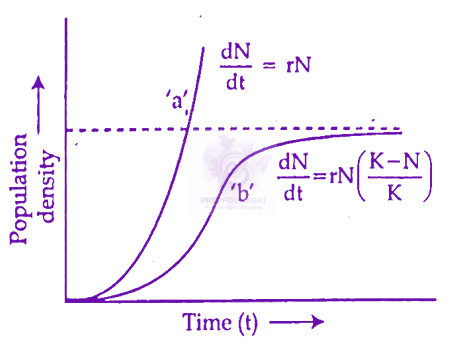
Other Zoology topics for NEET UG
Keep practicing Organisms and Populations
Work through every NEET UG Organisms and Populations PYQ, year by year.