EMBRYOLOGICAL evidence: Embryological support for evolution was also proposed by Ernst Haeckel based upon the observation of certain features during the embryonic stage common to all vertebrates that are absent in adults. For example, the embryos of all vertebrates including humans develop a row of vestigial gill slits behind the head, but it is a functional organ only in fish and not found in any other adult vertebrate. According to Ernst Hackel, ontogeny (development of the embryo) is the recapitulation of phylogeny (the ancestral sequence). This view is summarized by his biogenetic law: Ontogeny recapitulates phylogeny. This proposal was disapproved of a careful study performed by Karl Ernst von Baer. He noted that embryos never pass through the adult stages of other animals.
Embryological support for evolution was disapproved by
NEET UG 2020 — Zoology Evolution
Embryological support for evolution was disapproved by
Held on 30 Apr 2020 · Verified 9 Jul 2026.
Options
- A
Alfred Wallace
- B
Charles Darwin
- C
Oparin
- D
Karl Ernst von Baer
Did you get this right?
Sign in to track your attempts and accuracy.
Your note
Sign in to keep a private note on this question. Nothing you write is ever public.
NEET UG Evolution in other years
More NEET UG Evolution questions
Sweet potato and potato represent a certain type of evolution. Select the correct combination of terms to explain the evolution.
Match List I with List II: 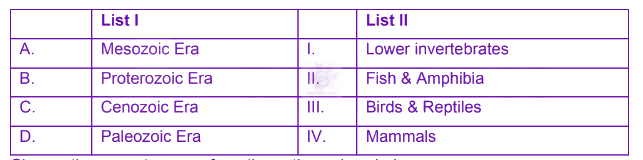 Choose the correct answer from the options given below :
Which one of the following factors will not affect the Hardy-Weinberg equilibrium?
Given below are some stages of human evolution. Arrange them in correct sequence. (Past to Recent) A. Homo habilis B. Homo sapiens C. Homo neanderthalensis D. Homo erectus Choose the correct sequence of human evolution from the options given below:
The flippers of the Penguins and Dolphins are the example of the
Other Zoology topics for NEET UG
Keep practicing Evolution
Work through every NEET UG Evolution PYQ, year by year.