Ferromagnetism > Paramagnetism Statement-I is true Cr+2=3 d4 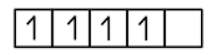 4 unpaired electrons Nd+3=4f3
 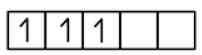 3 unpaired electrons Statement-II is false.
Given below are two statements : Statement I : Ferromagnetism is considered as an extreme form of paramagnetism. Statement II : The number of…
NEET UG 2025 — Chemistry Inorganic Chemistry
2025mcqmedium
Given below are two statements : Statement I : Ferromagnetism is considered as an extreme form of paramagnetism. Statement II : The number of unpaired electrons in a Cr2+ ion (Z=24) is the same as that of a Nd3+ ion (Z=60). In the light of the above statements, choose the correct answer from the options given below :
Official previous-year question
Held on 30 Apr 2025 · Verified 9 Jul 2026.
Options
- A
Both Statements I and Statement II are true
- B
Both Statement I and Statements II are false
- C
Statement I is true but Statement II is false
- D
Statement I is false bt Statements II is true
Did you get this right?
Sign in to track your attempts and accuracy.
Your note
Sign in to keep a private note on this question. Nothing you write is ever public.
NEET UG Inorganic Chemistry in other years
More NEET UG Inorganic Chemistry questions
Which of the following is the most electronegative element?
2026easy
Which of the following are paramagnetic? A. $\left[\mathrm{NiCl}_4\right]^{2-}$ B. $\mathrm{Ni}(\mathrm{CO})_4$ C. $\left[\mathrm{Ni}(\mathrm{CN})_4\right]^{2-}$ D. $\left[\mathrm{Ni}\left(\mathrm{H}_2 \mathrm{O}\right)_6\right]^{2+}$ E. $\mathrm{Ni}\left(\mathrm{PPh}_3\right)_4$ Choose the correct answer from the options given below :
2025medium
Which of the following statements are true? A. Unlike Ga that has a very high melting point, Cs has a very low melting point. B. On Pauling scale, the electronegativity values of N and Cl are not the same. C. $\mathrm{Ar}, \mathrm{K}^{+}, \mathrm{Cl}^{-}, \mathrm{Ca}^{2+}$, and $\mathrm{S}^{2-}$ are all isoelectronic species. D. The correct order of the first ionization enthalpies of $\mathrm{Na}, \mathrm{Mg}, \mathrm{Al}$, and Si is $\mathrm{Si}\gt\mathrm{Al}\gt\mathrm{Mg}\gt\mathrm{Na}$. E. The atomic radius of Cs is greater than that of Li and Rb . Choose the correct answer from the options given below
2025medium
Given below are two statements: Statement I : Like nitrogen that can form ammonia, arsenic can form arsine. Statement II : Antimony cannot form antimony pentoxide. In the light of the above statements, choose the most appropriate answer from the options given below:
2025easy
The correct order of the wavelength of light absorbed by the following complexes is, A. $\left[\mathrm{Co}\left(\mathrm{NH}_3\right)_6\right]^{3+}$ B. $\left[\mathrm{Co}(\mathrm{CN})_6\right]^{3-}$ C. $\left[\mathrm{Cu}\left(\mathrm{H}_2 \mathrm{O}\right)_4\right]^{2+}$ D. $\left[\mathrm{Ti}\left(\mathrm{H}_2 \mathrm{O}\right)_6\right]^{3+}$ Choose the correct answer from the options given below:
2025medium
Other Chemistry topics for NEET UG
Keep practicing Inorganic Chemistry
Work through every NEET UG Inorganic Chemistry PYQ, year by year.