Carboxyhaemoglobin (COHb) is a stable complex of carbon monoxide that forms in red blood cells when carbon monoxide is inhaled. COHb is also useful in monitoring the treatment of carbon monoxide poisoning. Carbaminohaemoglobin is a compound of haemoglobin and carbon dioxide, and is one of the forms in which carbon dioxide exists in the blood. Related Theory Acute carbon monoxide (CO) poisoning has a number of characteristics at autopsy. A high concentration of carboxyhaemoglobin (COHb) is detected in the blood. The most striking appearance of the body is the cherry-pink of the right atrium of the heart and act natural cardiac pacemaker from which the heart beat originates. If this system is damaged, it may send non-coordinated impulses to the heart chambers resulting in symptoms like irregular heart rate, tiredness, dizziness and loss of consciousness. As the pacemaker cells create this rhythmical impulse therefore an artificial pacemaker is implanted at the site of SA node to mimic the actions of the node and conducting system and helps to regulate heartbeat. Related Theory The electrical impulse travels from the sinus node to the atrioventricular node (AV node). There, impulses are slowed down for a very short period, then continue down the conduction path way via the bundle of His into the ventricles. (Ref. to Fig. 28.3) 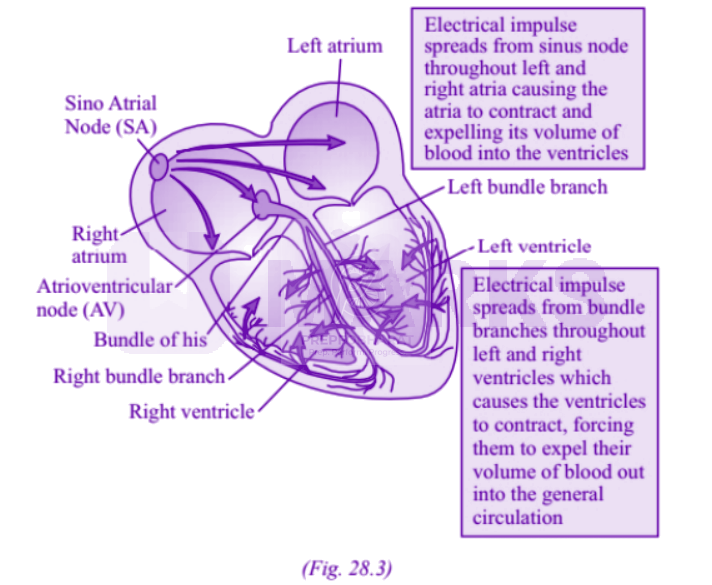
colour of post-mortem lividity (skin colour after 12 hrs of death).