JEE Main 2025 — Probability & Statistics
Mathematics Probability & Statistics questions from JEE Main 2025.
Other Years
32 Probability & Statistics Questions from 2025
The probability, of forming a 12 persons committee from 4 engineers, 2 doctors and 10 professors containing at least 3 engineers and at least 1 doctor, is:
Let $\mathrm{A}=\left[\mathrm{a}_{i j}\right]$ be a $2 \times 2$ matrix such that $\mathrm{a}_{i j} \in\{0,1\}$ for all $i$ and $j$. Let the random variable X denote the possible values of the determinant of the matrix $A$. Then, the variance of $X$ is :
A box contains 10 pens of which 3 are defective. A sample of 2 pens is drawn at random and let $X$ denote the number of defective pens. Then the variance of X is
A board has 16 squares as shown in the figure: 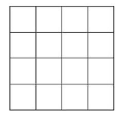 Out of these 16 squares, two squares are chosen at random. The probability that they have no side in common is :
Three defective oranges are accidently mixed with seven good ones and on looking at them, it is not possible to differentiate between them. Two oranges are drawn at random from the lot. If $x$ denote the number of defective oranges, then the variance of $x$ is
Let a random variable X take values $0,1,2,3$ with $\mathrm{P}(\mathrm{X}=0)=\mathrm{P}(\mathrm{X}=1)=\mathrm{p}, \mathrm{P}(\mathrm{X}=2)=\mathrm{P}(\mathrm{X}=3)$ and $\mathrm{E}\left(\mathrm{X}^2\right)=2 \mathrm{E}(\mathrm{X})$. Then the value of $8 \mathrm{p}-1$ is :
$A$ and $B$ alternately throw a pair of dice. $A$ wins if he throws a sum of 5 before $B$ throws a sum of 8 , and $B$ wins if he throws a sum of 8 before $A$ throws a sum of 5 . The probability, that $A$ wins if A makes the first throw, is
Bag 1 contains 4 white balls and 5 black balls, and Bag 2 contains $n$ white balls and 3 black balls. One ball is drawn randomly from Bag 1 and transferred to Bag 2. A ball is then drawn randomly from Bag 2. If the probability, that the ball drawn is white, is $29 / 45$, then $n$ is equal to :
All five letter words are made using all the letters $\mathrm{A}, \mathrm{B}, \mathrm{C}, \mathrm{D}, \mathrm{E}$ and arranged as in an English dictionary with serial numbers. Let the word at serial number $n$ be denoted by $W_n$. Let the probability $\mathrm{P}\left(\mathrm{W}_{\mathrm{n}}\right)$ of choosing the word $\mathrm{W}_{\mathrm{n}}$ satisfy $\mathrm{P}\left(\mathrm{W}_{\mathrm{n}}\right)=2 \mathrm{P}\left(\mathrm{W}_{\mathrm{n}-1}\right), \mathrm{n} \gt 1$. If $\mathrm{P}(\mathrm{CDBEA})=\frac{2^\alpha}{2^\beta-1}, \alpha, \beta \in \mathbb{N}$, then $\alpha+\beta$ is equal to : _______
Two balls are selected at random one by one without replacement from a bag containing 4 white and 6 black balls. If the probability that the first selected ball is black, given that the second selected ball is also black, is $\frac{m}{n}$, where $\operatorname{gcd}(m, n)=1$, then $m+n$ is equal to :
A coin is tossed three times. Let $X$ denote the number of times a tail follows a head. If $\mu$ and $\sigma^2$ denote the mean and variance of $X$, then the value of $64\left(\mu+\sigma^2\right)$ is :
Let $A=\left[a_{i j}\right]$ be a square matrix of order 2 with entries either 0 or 1 . Let $E$ be the event that $A$ is an invertible matrix. Then the probability $\mathrm{P}(\mathrm{E})$ is :
If $A$ and $B$ are two events such that $P(A \cap B)=0.1$, and $P(A \mid B)$ and $P(B \mid A)$ are the roots of the equation $12 x^2-7 x+1=0$, then the value of $\frac{\mathrm{P}(\overline{\mathrm{A}} \cup \overline{\mathrm{B}})}{\mathrm{P}(\overline{\mathrm{A}} \cap \overline{\mathrm{B}})}$ is :
A bag contains 19 unbiased coins and one coin with head on both sides. One coin drawn at random is tossed and head turns up. If the probability that the drawn coin was unbiased, is $\frac{\mathrm{m}}{\mathrm{n}}, \operatorname{gcd}(\mathrm{m}, \mathrm{n})=1$, then $\mathrm{n}^2-\mathrm{m}^2$ is equal to :
If the mean and the variance of $6,4, a, 8, b, 12,10$, 13 are 9 and 9.25 respectively, then $a+b+a b$ is equal to :
The variance of the numbers $8,21,34,47, \ldots, 320$ is
Marks obtains by all the students of class 12 are presented in a freqency distribution with classes of equal width. Let the median of this grouped data be 14 with median class interval 12-18 and median class frequency 12 . If the number of students whose marks are less than 12 is 18 , then the total number of students is
Three coins are tossed simultaneously. The probability of getting exactly two heads is:
If $A$ and $B$ are two events such that $P(A)=0.7$, $\mathrm{P}(\mathrm{B})=0.4$ and $\mathrm{P}(\mathrm{A} \cap \overline{\mathrm{B}})=0.5$, where $\overline{\mathrm{B}}$ denotes the complement of $B$, then $P(B \mid(A \cup \bar{B}))$ is equal:-
A card from a pack of 52 cards is lost. From the remaining 51 cards, $n$ cards are drawn and are found to be spades. If the probability of the lost card to be a spade is $\frac{11}{50}$, the n is equal to
Bag $B_1$ contains 6 white and 4 blue balls, Bag $B_2$ contains 4 white and 6 blue balls, and Bag $B_3$ contains 5 white and 5 blue balls. One of the bags is selected at random and a ball is drawn from it. If the ball is white, then the probability, that the ball is drawn from Bag $B_2$, is :
The mean and standard deviation of 100 observations are 40 and 5.1 , respectively, By mistake one observation is taken as 50 instead of 40. If the correct mean and the correct standard deviation are $\mu$ and $\sigma$ respectively, then $10(\mu+\sigma)$ is equal to
Two number $\mathrm{k}_1$ and $\mathrm{k}_2$ are randomly chosen from the set of natural numbers. Then, the probability that the value of $\mathrm{i}^{\mathrm{k}_1}+\mathrm{i}^{\mathrm{k}_2},(\mathrm{i}=\sqrt{-1})$ is non-zero, equals
Three distinct numbers are selected randomly from the set $\{1,2,3, \ldots \ldots, 40\}$. If the probability, that the selected numbers are in an increasing G.P. is $\frac{m}{n}$, $\operatorname{gcd}(m, n)=1$, then $m+n$ is equal to _____.
Let S be the set of all the words that can be formed by arranging all the letters of the word GARDEN. From the set S, one word is selected at random. The probability that the selected word will NOT have vowels in alphabetical order is :
For a statistical data $\mathrm{x}_1, \mathrm{x}_2, \ldots, \mathrm{x}_{10}$ of 10 values, a student obtained the mean as 5.5 and $\sum_{i=1}^{10} x_i^2=371$. He later found that he had noted two values in the data incorrectly as 4 and 5 , instead of the correct values 6 and 8 , respectively. The variance of the corrected data is
One die has two faces marked 1 , two faces marked 2 , one face marked 3 and one face marked 4 . Another die has one face marked 1 , two faces marked 2 , two faces marked 3 and one face marked 4. The probability of getting the sum of numbers to be 4 or 5 , when both the dice are thrown together, is
Let the mean and the standard deviation of the observation $2,3,3,4,5,7$, a, b be 4 and $\sqrt{2}$ respectively. Then the mean deviation about the mode of these observations is :
Let the Mean and Variance of five observations $x_1=1, x_2=3, x_3=a, x_4=7$ and $x_5=b, a \gt b$, be 5 and 10 respectively. Then the Variance of the observations $n+x_n, n=1,2, \ldots \ldots . .5$ is
If the probability that the random variable X takes the value $x$ is given by $P(X=x)=k(x+1) 3^{-x}$, $\mathrm{x}=0,1,2,3 \ldots \ldots$, where k is a constant, then $\mathrm{P}(\mathrm{X} \geq 3)$ is equal to
Given three indentical bags each containing 10 balls, whose colours are as follows : $\begin{array}{cccc} & \text{Red} & \text{Blue} & \text{Green} \\ \text{Bag I} & 3 & 2 & 5 \\ \text{Bag II} & 4 & 3 & 3 \\ \text{Bag III} & 5 & 1 & 4\end{array}$ A person chooses a bag at random and takes out a ball. If the ball is Red, the probability that it is from bag I is p and if the balls is Green, the probability that it is from bag III is q , then the value of $\left(\frac{1}{\mathrm{p}}+\frac{1}{\mathrm{q}}\right)$ is :
Let \(x_1, x_2, \ldots, x_{10}\) be ten observations such that \(\sum_{i=1}^{10}\left(x_i-2\right)=30, \sum_{i=1}^{10}\left(x_i-\beta\right)^2=98, \beta\gt2\), and their variance is \(\frac{4}{5}\). If \(\mu\) and \(\sigma^2\) are respectively the mean and the variance of \(2\left(x_1-1\right)+4 \beta\), \(2\left(x_2-1\right)+4 \beta, \ldots ., 2\left(x_{10}-1\right)+4 \beta\), then \(\frac{\beta \mu}{\sigma^2}\) is equal to :