Probability & Statistics PYQ — Page 9
JEE Main Mathematics — Probability & Statistics previous year questions with solutions.
All Probability & Statistics Questions (389)
Let $n$ be an odd natural number such that the variance of $1,2,3,4,\ldots ,n$ is $14.$ Then $n$ is equal to ________.
The mean of first n natural numbers is:
When a certain biased die is rolled, a particular face occurs with probability $\frac{1}{6}-x$ and its opposite face occurs with probability $\frac{1}{6}+x.$ All other faces occur with probability $\frac{1}{6}.$ Note that opposite faces sum to $7$ in any die. If $0<x<\frac{1}{6},$ and the probability of obtaining total sum $=7,$ when such a die is rolled twice, is $\frac{13}{96},$ then the value of $x$ is
Let there be three independent events ${E}_{1},{E}_{2}$ and ${E}_{3}.$ The probability that only ${E}_{1}$ occurs is $\alpha$ only ${E}_{2}$ occurs is $\beta$ and only ${E}_{3}$ occurs is $\gamma .$ Let $p''$ denote the probability of none of events occurs that satisfies the equations $(\alpha -2\beta )p=\alpha \beta$ and $(\beta -3\gamma )p=2\beta \gamma .$ All the given probabilities are assumed to lie in the interval $(0,1).$ Then, $\frac{\text{ Probability of occurrence of }{E}_{1}}{\text{ Probability of occurrence of }{E}_{3}}$ is equal to ________.
If the mean and variance of the following data: $6,10,7,13,a,12,b,12$ are $9$ and $\frac{37}{4}$ respectively, then ${(a-b)}^{2}$ is equal to:
Let the mean and variance of four numbers $3,7,x$ and $y(x>y)$ be $5$ and $10$ respectively. Then the mean of four numbers $3+2x,7+2y,x+y$ and $x-y$ is ______.
Let $A$ denote the event that a $6$-digit integer formed by $0,1,2,3,4,5,6$ without repetitions, be divisible by $3$ . Then probability of event $A$ is equal to :
If the mean and variance of six observations $7,10,11,15,a,b$ are $10$ and $\frac{20}{3},$ respectively, then the value of $|a-b|$ is equal to:
Let $9$ distinct balls be distributed among $4$ boxes, ${B}_{1},{B}_{2},{B}_{3}$ and ${B}_{4}$. If the probability that ${B}_{3}$ contains exactly $3$ balls is $k{(\frac{3}{4})}^{9}$ then $k$ lies in the set :
If the variance of $10$ natural numbers $1,1,1,\ldots ,1,k$ is less than $10,$ then the maximum possible value of $k$ is ___________.
Four dice are thrown simultaneously and the numbers shown on these dice are recorded in $2\times 2$ matrices. The probability that such formed matrices have all different entries and are non-singular, is:
The probability that two randomly selected subsets of the set ${1,2,3,4,5}$ have exactly two elements in their intersection, is:
When a missile is fired from a ship, the probability that it is intercepted is $\frac{1}{3}$ and the probability that the missile hits the target, given that it is not intercepted, is $\frac{3}{4}.$ If three missiles are fired independently from the ship, then the probability that all three hit the target, is:
The mean of $6$ distinct observations is $6.5$ and their variance is $10.25.$ If $4$ out of $6$ observations are $2,4,5$ and $7,$ then the remaining two observations are:
An ordinary dice is rolled for a certain number of times. If the probability of getting an odd number $2$ times is equal to the probability of getting an even number $3$ times, then the probability of getting an odd number for odd number of times is:
The first of the two samples in a group has $100$ items with mean $15$ and standard deviation $3.$ If the whole group has $250$ items with mean $15.6$ and standard deviation $\sqrt{13.44},$ then the standard deviation of the second sample is:
The probability distribution of random variable $X$ is given by: <table class="pyq-table"><tbody><tr><td>$X$</td><td>$1$</td><td>$2$</td><td>$3$</td><td>$4$</td><td>$5$</td></tr><tr><td>$P(X)$</td><td>$K$</td><td>$2K$</td><td>$2K$</td><td>$3K$</td><td>$K$</td></tr></tbody></table>Let $p=P(1<X<4\mid X<3)$. If $5p=\lambda K$, then $\lambda$ is equal to
Two squares are chosen at random on a chessboard (see figure). The probability that they have a side in common is : 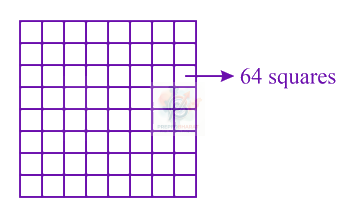
Let ${B}_{i}(i=1,2,3)$ be three independent events in a sample space. The probability that only ${B}_{1}$ occur is $\alpha ,$ only ${B}_{2}$ occurs is $\beta$ and only ${B}_{3}$ occurs is $\gamma .$ Let $p$ be the probability that none of the events ${B}_{i}$ occurs and these $4$ probabilities satisfy the equations $(\alpha -2\beta )p=\alpha \beta$ and $(\beta -3\gamma )p=2\beta \gamma$ (All the probabilities are assumed to lie in the interval $(0,1))$ Then $\frac{P({B}_{1})}{P({B}_{3})}$ is equal to______.
An online exam is attempted by $50$ candidates out of which $20$ are boys. The average marks obtained by boys is $12$ with a variance $2.$ The variance of marks obtained by $30$ girls is also $2.$ The average marks of all $50$ candidates is $15.$ If $\mu$ is the average marks of girls and ${\sigma }^{2}$ is the variance of marks of $50$ candidates, then $\mu +{\sigma }^{2}$ is equal to
Let $A$ and $B$ be independent events such that $P(A)=p,P(B)=2p$. The largest value of $p$, for which $P$ (exactly one of $A,B$ occurs)$=\frac{5}{9}$, is:
Let in a series of $2n$ observations, half of them are equal to $a$ and remaining half are equal to $-a$. Also by adding a constant $b$ in each of these observations, the mean and standard deviation of new set become $5$ and $20$, respectively. Then the value of ${a}^{2}+{b}^{2}$ is equal to :
The probability that a randomly selected $2-$digit number belongs to the set ${n\in N:({2}^{n}-2)$ is a multiple of $3}$ is equal to
The mean and variance of $7$ observations are $8$ and $16$ respetively. If two observations are $6$ and $8,$ then the variance of the remaining $5$ observations is :