Inorganic Chemistry PYQ — Page 53
JEE Main Chemistry — Inorganic Chemistry previous year questions with solutions.
All Inorganic Chemistry Questions (1476)
The number and type of bonds in ${C}_{2}^{2-}$ ion in ${\mathrm{CaC}}_{2}$ are:
Which of the following molecules has two sigma $(\sigma)$ and two pi $(\pi)$ bonds?
Similarity in chemical properties of the atoms of elements in a group of the Periodic table is most closely related to:
Which of these statements is not true ?
Nickel $\text{(Z} \text{=} \text{28)}$ combines with a uninegative monodentate ligand to form a diamagnetic complex ${ [ { \text{NiL}}_{\text{4}} ]}^{ \text{2}-} .$ The hybridisation involved and the number of unpaired electrons present in the complex are respectively:
Which one of the following exhibits the large number of oxidation states?
Copper becomes green when exposed to moist air for a long period. This is due to:
In allene $\left(\mathrm{C}_3 \mathrm{H}_4\right)$, the type(s) of hybridization of the carbon atoms is (are) :
Which one of the following complexes will most likely absorb visible light? (At nos. $\mathrm{Sc}=21, \mathrm{Ti}=22, \mathrm{~V}=23, \mathrm{Zn}=30$ )
A compound of vanadium chloride has spin only magnetic moment of $1.73$ BM. Its formula is
Which of the following is not formed when H$_{2}$S reacts with acidic K$_{2}$Cr$_{2}$O$_{7}$ solution ?
Among the following oxoacids, the correct decreasing order of acid strength is :
Which one of the following does not have a pyramidal shape?
Example of a three-dimensional silicate is :
The gas evolved on heating ${\mathrm{CaF}}_{2}$ and ${\mathrm{SiO}}_{2}$ with concentrated ${H}_{2}{\mathrm{SO}}_{4}$, on hydrolysis gives a white gelatinous precipitate. The precipitate is:
Shapes of certain interhalogen compounds are stated below. Which one of them is not correctly stated?
Amongst the following, identify the species with an atom in $+6$ oxidation state.
Which one of the following has largest ionic radius ?
Which of the following has unpaired electron(s)?
An octahedral complex of Co$^{3}$$^{+}$ is diamagnetic. The hybridisation involved in the formation of the complex is :
Which of the following arrangements represents the increasing order (smallest to largest) of ionic radii of the given species $\mathrm{O}^{2-}, \mathrm{S}^{2-}, \mathrm{N}^{3-}, \mathrm{P}^{3-}$ ?
The equation which is balanced and represents the correct product(s) is
Which of the following name formula combinations is not correct?
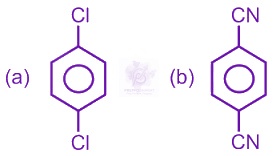
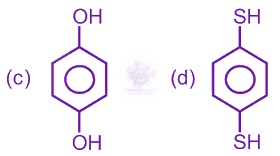
For which of the following molecule significant $\mu \neq 0$ ?