Inorganic Chemistry PYQ — Page 39
JEE Main Chemistry — Inorganic Chemistry previous year questions with solutions.
All Inorganic Chemistry Questions (1476)
The compound/s which will show significant intermolecular $H$-bonding is/are : 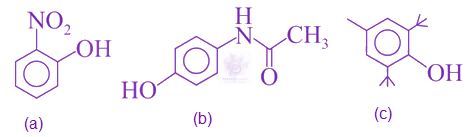
Spin only magnetic moment of an octahedral complex of ${\mathrm{Fe}}^{2+}$ in the presence of a strong field ligand in BM is:
In which of the following pairs, the outermost electronic configuration will be the same?
An aqueous solution of ${\mathrm{NiCl}}_{2}$ was heated with excess sodium cyanide in presence of strong oxidizing agent to form ${[\mathrm{Ni}(\mathrm{CN}{)}_{6}]}^{2-}.$ The total change in number of unpaired electrons on metal centre is ___________.
Given below are two statements:Statement I : $\alpha$ and $\beta$ forms of sulphur can change reversibly between themselves with slow heating or slow cooling. Statement II : At room temperature the stable crystalline form of sulphur is monoclinic sulphur. In the light of the above statements, choose the correct answer from the options given below:
Number of electrons present in $4f$ orbital of ${\mathrm{Ho}}^{3+}$ ion is ________ (Given Atomic No. of Ho =67)
Which one of the following when dissolved in water gives coloured solution in nitrogen atmosphere?
The correct order of electron gain enthalpy is:
The number of $S=O$ bonds present in sulphurous acid, peroxodisulphuric acid and pyrosulphuric acid, respectively are :
The number of stereo isomers possible for ${[\mathrm{Co}{(\mathrm{ox})}_{2}(\mathrm{Br})({\mathrm{NH}}_{3})]}^{2-}$ is __________. [$\mathrm{ox}=$ oxalate]
The spin only magnetic moment of a divalent ion in aqueous solution (atomic number $29$) is ___ $\mathrm{BM}$.
Match List-$I$ with List-$\mathrm{II}$. <table class="pyq-table"><tbody><tr><td colspan="2" rowspan="1">List-$I$</td><td colspan="2" rowspan="1">List-$\mathrm{II}$</td></tr><tr><td colspan="2" rowspan="1">(Molecule)</td><td colspan="2" rowspan="1">(Bond order)</td></tr><tr><td>(a)</td><td>${\mathrm{Ne}}_{2}$</td><td>(i)</td><td>$1$</td></tr><tr><td>(b)</td><td>${N}_{2}$</td><td>(ii)</td><td>$2$</td></tr><tr><td>(c)</td><td>${F}_{2}$</td><td>(iii)</td><td>$0$</td></tr><tr><td>(d)</td><td>${O}_{2}$</td><td>(iv)</td><td>$3$</td></tr></tbody></table>Choose the correct answer from the options given below:
The ratio of number of water molecules in Mohr's salt and potash alum is $\times {10}^{-1}.$ (Integer answer)
Arrange the following Cobalt complexes in the order of increasing Crystal Field Stabilization Energy (CFSE) value. Complexes: $\begin{matrix}\underset{A}{{[{\mathrm{CoF}}_{6}]}^{3-}}, & \underset{B}{{[\mathrm{Co}{({H}_{2}O)}_{6}]}^{2+}}, & \underset{C}{{[\mathrm{Co}{({\mathrm{NH}}_{3})}_{6}]}^{3+}}\text{ and }\underset{D}{{[\mathrm{Co}(\mathrm{en}{)}_{3}]}^{3+}} & \end{matrix}$ Choose the correct option :
Chalcogen group elements are :
The correct structures of trans $-[\mathrm{NiBr}({\mathrm{PPh}}_{3})22]$ and meridional $-[\mathrm{Co}{({\mathrm{NH}}_{3})}_{3}{({\mathrm{NO}}_{2})}_{3}]$ respectively, are:
The absolute value of the electron gain enthalpy of halogens satisfies:
${\mathrm{AB}}_{3}$ is an interhalogen T-shaped molecule. The number of lone pairs of electrons on $A$ is (Integer answer)
Which one of the following group-$15$ hydride is the strongest reducing agent ?
The bond order and magnetic behaviour of ${O}_{2}^{-}$ ion are, respectively :
The correct order of ionic radii for the ions, ${P}^{3-},{S}^{2-},{\mathrm{Ca}}^{2+},{K}^{+},{\mathrm{Cl}}^{-}$ is :
The total number of electrons in all bonding molecular orbitals of ${O}_{2}^{2-}$ is ......... (Round off to the nearest integer)
The incorrect statement among the following is:
The additon of dilute $\mathrm{NaOH}$ to ${\mathrm{Cr}}^{3+}$ salt solution will give :