Correct Option
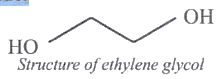
Ethylene glycol (C₂H₆O₂) is widely employed as an anti-freeze agent in automobile engines. It is a diol, meaning it contains two hydroxyl (-OH) groups. When mixed with water, ethylene glycol effectively lowers the freezing point and simultaneously raises the boiling point of the coolant solution. This property is crucial for maintaining engine temperature stability across a broad range of environmental conditions, preventing the coolant from freezing in cold climates and boiling over in hot conditions. Its effectiveness and stability make it the preferred choice for permanent anti-freeze formulations in vehicle radiators.
Incorrect Options
Propyl alcohol, ethanol, and methanol are all alcohols that can depress the freezing point of water. However, they are generally not used as primary anti-freeze agents in automobile engines for several reasons:
- Methanol is highly volatile and toxic, posing safety risks and requiring frequent replenishment due to evaporation. Its lower boiling point also makes it less suitable for engine cooling systems operating at elevated temperatures.
- Ethanol and propyl alcohol, while less toxic than methanol, are also more volatile and less effective in lowering the freezing point compared to ethylene glycol. Their performance across the required temperature range for engine coolants is inferior, and they may degrade other components of the cooling system over time.