Organic Chemistry PYQ — Page 11
NEET UG Chemistry — Organic Chemistry previous year questions with solutions.
All Organic Chemistry Questions (474)
In an ${S}_{N}1$ reaction on chiral centres, there is:
2,3-Dimethyl-2-butene can be prepared by heating which of the following compounds with a strong acid?
Which of the following statements is not correct for a nucleophile?
Given, 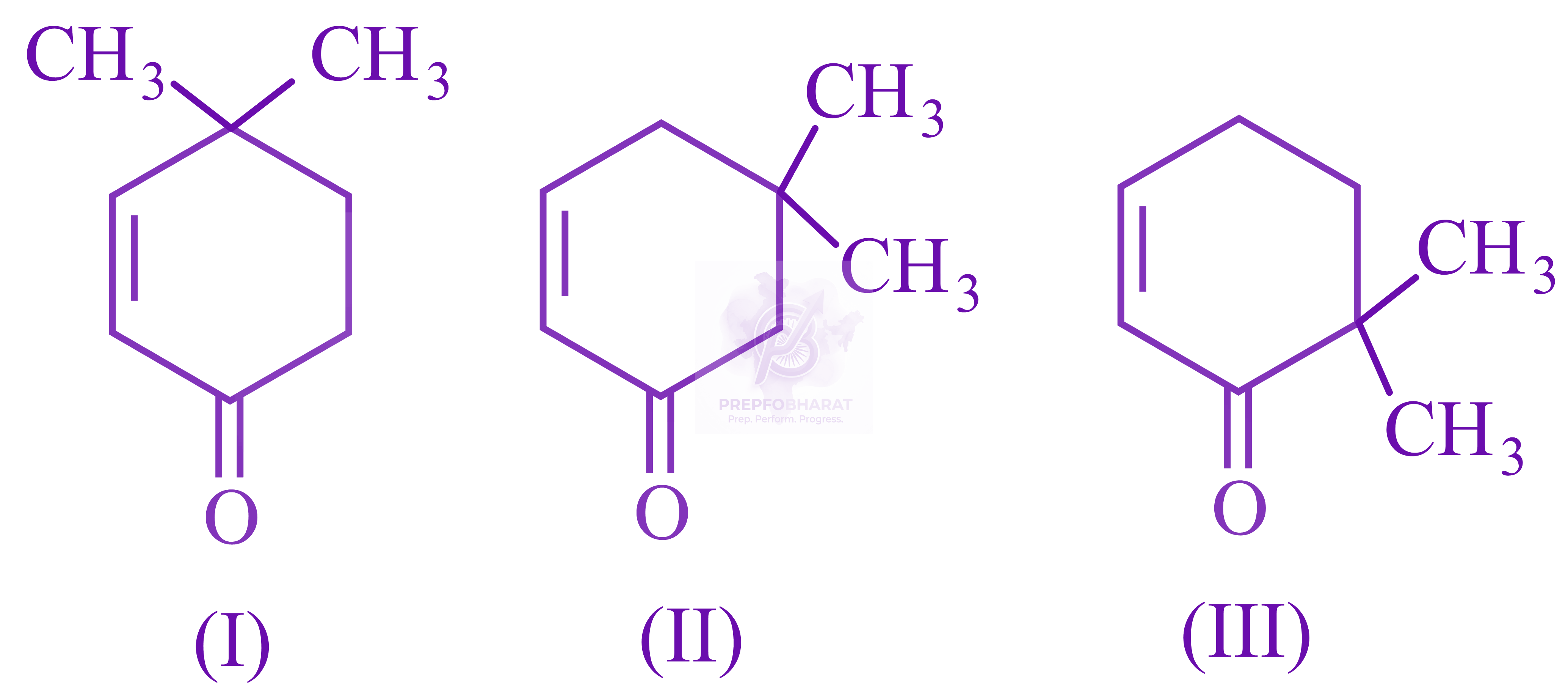 Which of the given compounds can exhibit tautomerism?
Method by which Aniline cannot be prepared is:
An organic compound 'X' having molecular formula ${C}_{5}{H}_{10}O$ yields phenyl hydrazone and gives negative response to the iodoform test and Tollen's test. It produces n-pentane on reduction. 'X' could be:
Treatment of cyclopentanone 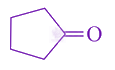 with methyl lithium gives which of the following species?
In the reaction with $\mathrm{HCl}$, an alkene reacts following the Markovnikov's rule to give the product $1-$chloro$-1-$methylcyclohexane. The possible reaction of the alkene is
Which of the following is the most correct electron displacement for a nucleophile reaction to take place?
A single compound of the structure 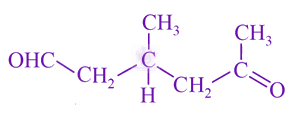 is obtainable from ozonolysis of which of the following cyclic compounds?
Which of the following will not be soluble in sodium hydrogen carbonate?
Which of the following will be most stable diazonium salt $R{N}_{2}^{+}{X}^{-}$ ?
Which product is formed when the following compound is treated with ${Br}_{2}$ in the presence of $FeB{r}_{3}$? 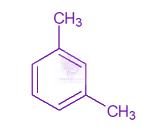
Among the following sets of reactions, which one produces anisole?
$D(+)$ glucose reacts with hydroxyl amine and yield an oxime. The structure of the oxime would be:
Identify $Z$ in the sequence of reactions: 
In the Kjedahl's method for estimation of nitrogen present in soil sample, ammonia evolved from $0.75g$ of sample neutralized $10ml$ of $1M {H}_{2}{SO}_{4}$ The percentage of nitrogen in the soil is:
In the following reaction, the product $(A)$ 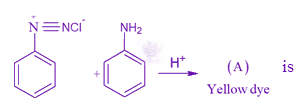
Which of the following compounds will undergo racemisation when solution of $KOH$ hydrolyses? (i) 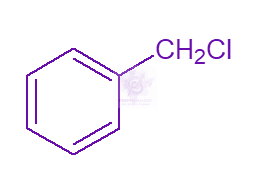 (ii) $C{H}_{3}C{H}_{2}C{H}_{2}Cl$ (iii) 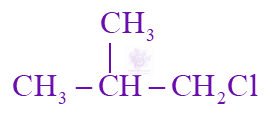 (iv) 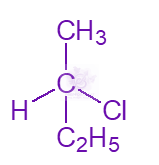
Which one is most reactive towards Nucleophilic addition reaction?
Which of the following chemical system is non aromatic?
Homolytic fission of the following alkanes forms free radicals $\mathrm{CH}_3-\mathrm{CH}_3$, $\mathrm{CH}_3-\mathrm{CH}_2-\mathrm{CH}_3,\left(\mathrm{CH}_3\right)_2 \mathrm{CH}-\mathrm{CH}_3$, $\mathrm{CH}_3-\mathrm{CH}_2-\mathrm{CH}\left(\mathrm{CH}_3\right)_2$. Increasing orders of stability of the radicals is:
Some reaction of amines are given. Which one is not correct?
In DNA the linkages between different nitrogenous bases are: