Organic Chemistry PYQ — Page 20
NEET UG Chemistry — Organic Chemistry previous year questions with solutions.
All Organic Chemistry Questions (474)
The final product ' $\mathrm{c}$ ', obtained in this reaction would be 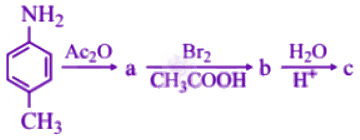
Which of the following pairs of compounds are enantiomers?
In this reaction: $\begin{aligned} \mathrm{CH}_3 \mathrm{CHO}+\mathrm{HCN} & \rightarrow \mathrm{CH}_3 \mathrm{CH}(\mathrm{OH}) \mathrm{CN} \\ \stackrel{\mathrm{H} . \mathrm{OH}}{\longrightarrow} & \mathrm{CH}_3 \mathrm{CH}(\mathrm{OH}) \mathrm{COOH} \end{aligned}$ an symmetric centre is generated. The acid obtained would be:
Chargaff's rule states that in an organism
Monomer of 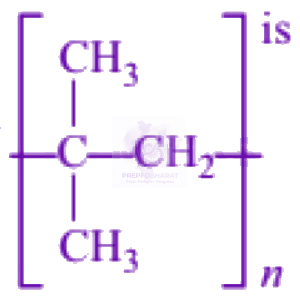
Which of the following statement(s) is incorrect?
Enzymes are made up of:
Geometrical isomers differ in:
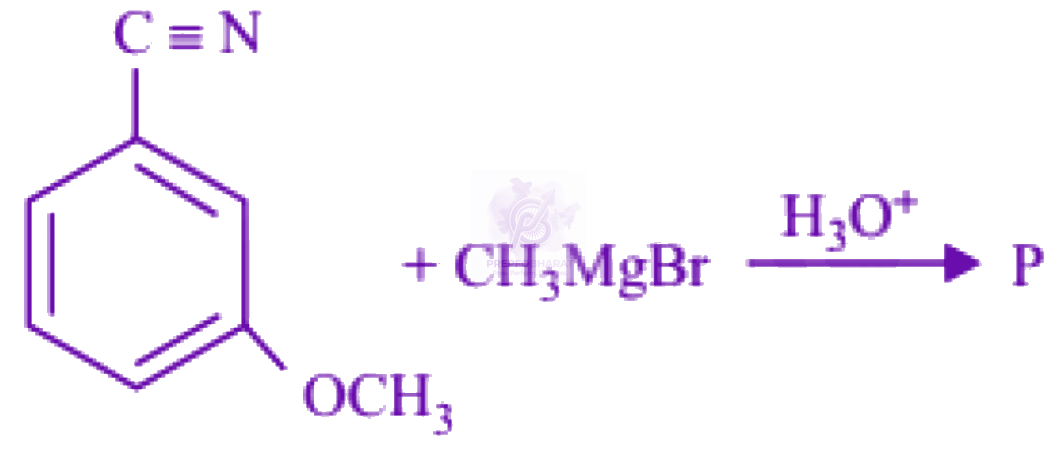
In the following reaction product ' $\mathrm{P}$ ' is: 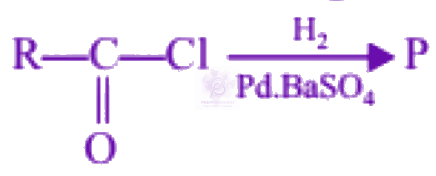
IUPAC name of the following is $\mathrm{CH}_2=$ $\mathrm{CH}-\mathrm{CH}_2-\mathrm{CH}_2-\mathrm{C} \equiv \mathrm{CH}$ :
Cellulose is a polymer of:
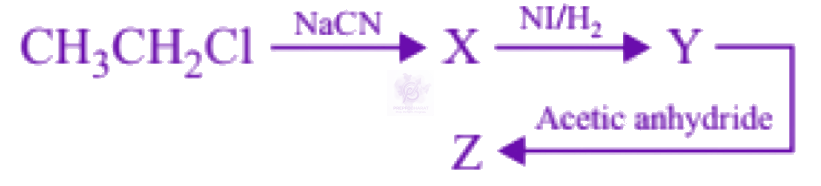 $\mathrm{Z}$ in the above reaction sequence is:
When phenol is treated with $\mathrm{CHCl}_3$ and $\mathrm{NaOH}$, the product formed is:
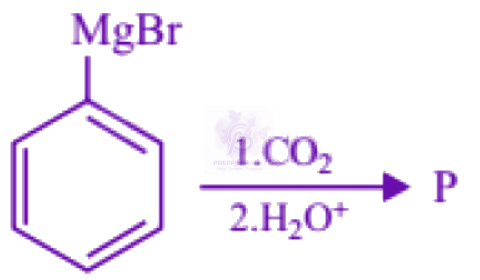 In the above reaction product ' $\mathrm{P}$ ' is:
When $\mathrm{CH}_3 \mathrm{CH}_2 \mathrm{CHCl}_2$ is treated with $\mathrm{NaNH}_2$, the product formed is:
$n$-Propyl alcohol and isopropyl alcohol can be chemically distinguished by which reagent?