Morphology of Flowering Plants PYQ — Page 3
NEET UG Botany — Morphology of Flowering Plants previous year questions with solutions.
All Morphology of Flowering Plants Questions (133)
Free-central placentation is found in
Tricarpellary, syncarpous gynoecium is found in flowers of
The standard petal of the papilionaceous corolla is also called:
Cotyledon of maize grain is called:
Is the floral formula of: 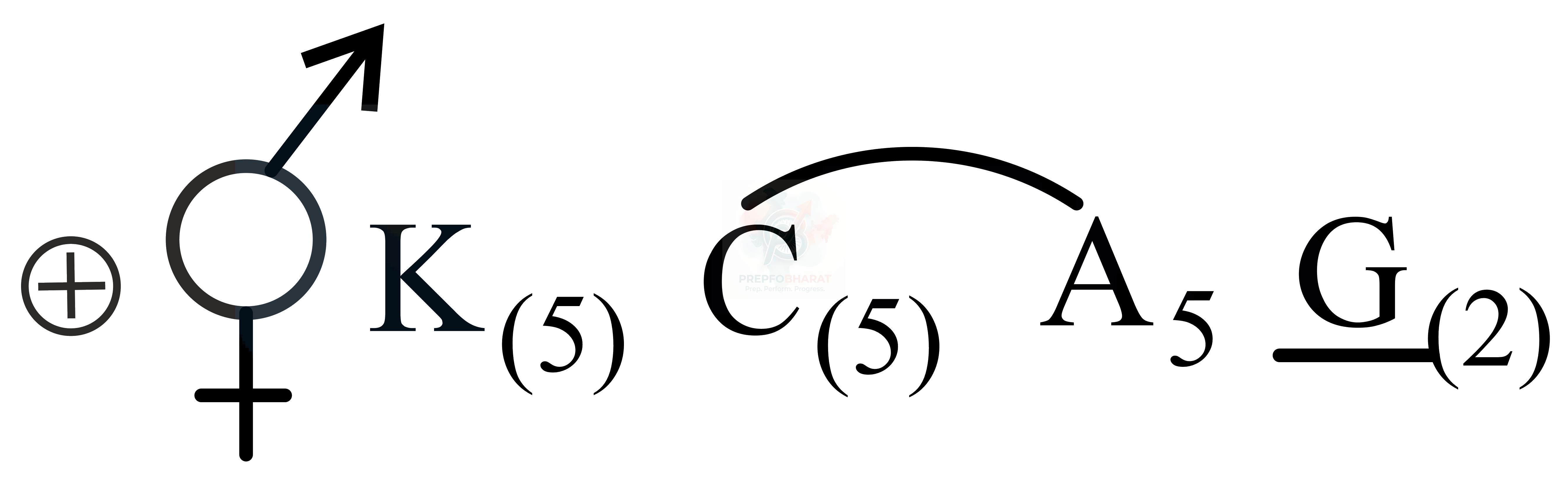
Keel is the characteristic feature of flower of:
Among the members of the list given below, how many plants have superior ovaries? China rose, mustard, brinjal, potato, guava, cucumber, onion and tulip.
Perigynous flowers are found in:
Free central placentation is not present in:
Which of the following flowers is unisexual?
The hilum is a scar on the:
Leaves become modified into spines in:
A large persistent cotyledon in the embryo of the wheat grain is called:
When the margins of sepals or petals overlap one another without any particular direction, the condition is termed as:
An aggregate fruit is one which developed from
Placenta and pericarp are both edible portions in:
Non-albuminous seed is produced in:
Which one of the following statements is correct?
An example of edible underground stem is:
Seed coat is not thin, membranous in
In China rose the flowers are
Among flowers of Calotropis, tulip, Sesbania, Asparagus, Colchicum, sweet pea, Petunia, Indigofera, mustard, soybean, tobacco and groundnut, how many plants have corolla with valvate aestivation?
Among bitter gourd, mustard, brinjal, pumpkin, China rose, lupin, cucumber, sunnhemp, gram, guava, bean, chilli, plum, Petunia, tomato, rose, Withania, potato, onion, aloe and tulip, how many plants have hypogynous flower?
Perisperm differs from endosperm in