Organic Chemistry PYQ — Page 65
JEE Main Chemistry — Organic Chemistry previous year questions with solutions.
All Organic Chemistry Questions (1783)
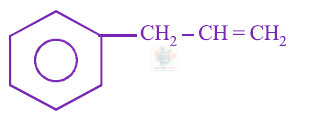 on mercuration-demercuration produces the major product:
The reagent needed for converting 
The major product obtained in the photo catalysed bromination of 2-methylbutane is:
In the hydroboration - oxidation reaction of propene with diborane, ${H}_{2}{O}_{2}$ and $\mathrm{NaOH},$ the organic compound formed is:
The correct IUPAC name of the following compound 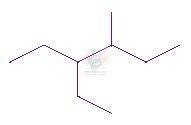 is :
In the presence of peroxide, $\mathrm{HCl}$ and $\mathrm{HI}$ do not give anti-Markownikoff's addition of alkenes because:
The gas liberated by the electrolysis of Dipotassium succinate solution is:
Which one of the following acids does not exhibit optical isomerism?
What is the product "C" after following reactions - 
The major product of the reaction is 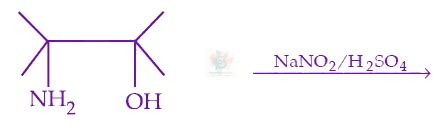
For the estimation of nitrogen, $1.4g$ of an organic compound was digested by the Kjeldahl method and the evolved ammonia was absorbed in $60\mathrm{ml}$ of $\frac{ \text{M} }{ 1 0 }$ sulphuric acid. The unreacted acid required $20\mathrm{ml}$ of $\frac{ \text{M} }{ 1 0 }$ sodium hydroxide for complete neutralization. The percentage of nitrogen in the compound is
In a nucleophilic substitution reaction : $\text{R} - \text{Br} + {\text{Cl}}^{-} \overset{\text{DMF}}{\longrightarrow } \text{R} - \text{Cl} + {\text{Br}}^{-}$ , which one of the following undergoes complete inversion of configuration ?
Phthalic acid reacts with resorcinol in the presence of concentrated $\mathrm{H}_2 \mathrm{SO}_4$ to give:
In which of the following pairs $\text{A}$ is more stable than $\text{B?}$
Which one of the following bases is not present in DNA ?
Considering the basic strength of amines in an aqueous solution, which one has the smallest ${\mathrm{pK}}_{b}$ value?
Which one of the following reactions will not result in the formation of carbon-carbon bond ?
The correct statement for the molecule ${\text{CsI}}_{3}$, is :
Allyl phenyl ether can be prepared by heating :
Conversion of benzene diazonium chloride to chlorobenzene is an example of which of the following reactions?
An organic compound $\mathrm{A}, \mathrm{C}_5 \mathrm{H}_8 \mathrm{O}$; reacts with $\mathrm{H}_2 \mathrm{O}, \mathrm{NH}_3$ and $\mathrm{CH}_3 \mathrm{COOH}$ as described below: 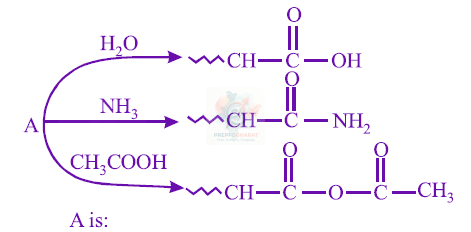
Chlorobenzne reacts with trichloro acetaldehyde in the presence of $\mathrm{H}_2 \mathrm{SO}_4$. 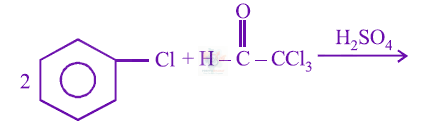 The major product formed is:
For the compounds CH$_{3}$Cl, CH$_{3}$Br, CH$_{3}$I and CH$_{3}$F, the correct order of increasing C-halogen bond length is :
Which of the following compounds will not be soluble in sodium bicarbonate?