Inorganic Chemistry PYQ — Page 50
JEE Main Chemistry — Inorganic Chemistry previous year questions with solutions.
All Inorganic Chemistry Questions (1476)
Which of the following best describes the diagram of molecular orbital? 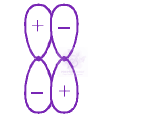
In graphite and diamond, the percentage of p-characters of the hybrid orbitals in hybridization respectively, are
The correct sequence of decreasing number of $\pi$ -bonds in the structure of ${H}_{2}S{O}_{3}, {H}_{2}S{O}_{4}$ and ${H}_{2}{S}_{2}{O}_{7}$ is:
The electronic configuration with the highest ionization enthalpy is:
Among the following compounds, the compound which shows the highest dipole-moment is 
The number of $S=O$ and $S-\mathrm{OH}$ bonds present in peroxodisulphuric acid and pyrosulphuric acid respectively are:
The number of $P-\mathrm{OH}$ bonds and the oxidation state of phosphorus atom in pyrophosphoric acid $({H}_{4}{P}_{2}{O}_{7})$, respectively are:
Which of the following reactions is an example of a redox reaction?
Which one of the following is an oxide?
On treatment of $100\mathrm{mL}$ of $0.1M$ solution of ${\mathrm{CoCl}}_{3}.6{H}_{2}O$ with excess ${\mathrm{AgNO}}_{3};1.2\times {10}^{22}$ ions are precipitated. The complex is:
Which of the following species is not paramagnetic?
$[{\mathrm{Co}}_{2}{(\mathrm{CO})}_{8}]$ displays
The products obtained when chlorine gas reacts with cold and dilute aqueous $\mathrm{NaOH}$ are
In the following reactions, $\mathrm{ZnO}$ is respectively acting as a/an, (i) $\mathrm{ZnO}+{\mathrm{Na}}_{2}O\rightarrow {\mathrm{Na}}_{2}{\mathrm{ZnO}}_{2}$ (ii) $\mathrm{ZnO}+{\mathrm{CO}}_{2}\rightarrow {\mathrm{ZnCO}}_{3}$
The increasing order of the boiling points for the following compounds is: $(I)$${C}_{2}{H}_{5}\mathrm{OH}$ $(\mathrm{II})$${C}_{2}{H}_{5}\mathrm{Cl}$ $(\mathrm{III})$${C}_{2}{H}_{5}{\mathrm{CH}}_{3}$ $(\mathrm{IV})$ ${C}_{2}{H}_{5}{\mathrm{OCH}}_{3}$
${\mathrm{XeF}}_{6}$ on partial hydrolysis with water, produces a compound $X.$ The same compound $X$ is formed when ${\mathrm{XeF}}_{6}$ reacts with silica. The compound $X$ is:
A solution containing a period$-\mathrm{IV}$ cation gives a precipitate on passing ${H}_{2}S.$ A solution of this precipitate in dil. $\mathrm{HCl}$produces a white precipitate with $\mathrm{NaOH}$ solution and bluish-white precipitate with basic potassium ferrocyanide. The cation is
The sodium salt of an organic acid $X$ produces effervescence with concentrated ${H}_{2}{\mathrm{SO}}_{4}$. $X$ reacts with the acidified aqueous ${\mathrm{CaCl}}_{2}$ solution to give a white precipitate which decolourises acidic solution of ${\mathrm{KMnO}}_{4}$. $X$ is
The group having triangular planar structure is:
Which of the following is paramagnetic?
${\mathrm{sp}}^{3}{d}^{2}$ hybridization is not displayed by
Which of the following atoms has the highest first ionization energy?
Find the metallic and ferromagnetic substance.
Match the items in Column $I$ with its main use listed in Column$\mathrm{II}$: <table class="pyq-table"><tbody><tr><td></td><td>Column$I$</td><td></td><td>Column$\mathrm{II}$</td></tr><tr><td>$A$</td><td>Silica gel</td><td>$i.$</td><td>Transistor</td></tr><tr><td>$B$</td><td>Silicon</td><td>$\mathrm{ii}.$</td><td>Ion-exchanger</td></tr><tr><td>$C$</td><td>Silicone</td><td>$\mathrm{iii}.$</td><td>Drying agent</td></tr><tr><td>$D$</td><td>Silicate</td><td>$\mathrm{iv}.$</td><td>Sealant</td></tr></tbody></table>