Inorganic Chemistry PYQ — Page 18
JEE Main Chemistry — Inorganic Chemistry previous year questions with solutions.
All Inorganic Chemistry Questions (1476)
While preparing crystals of Mohr's salt, dil \(\mathrm{H}_2 \mathrm{SO}_4\) is added to a mixture of ferrous sulphate and ammonium sulphate, before dissolving this mixture in water, dil \(\mathrm{H}_2 \mathrm{SO}_4\) is added here to :
Evaluate the following statements related to group 14 elements for their correctness. (A) Covalent radius decreases down the group from \(\mathrm{C}\) to \(\mathrm{Pb}\) in a regular manner. (B) Electronegativity decreases from \(\mathrm{C}\) to \(\mathrm{Pb}\) down the group gradually. (C) Maximum covalance of \(\mathrm{C}\) is 4 whereas other elements can expand their covalance due to presence of d orbitals. (D) Heavier elements do not form \(\mathrm{p} \pi-\mathrm{p} \pi\) bonds. (E) Carbon can exhibit negative oxidation states. Choose the correct answer from the options given below :
${[\mathrm{Co}{({\mathrm{NH}}_{3})}_{6}]}^{3+}$ and ${[{\mathrm{CoF}}_{6}]}^{3-}$ are respectively known as:
A transition metal ' \(\mathrm{M}\) ' among \(\mathrm{Sc}, \mathrm{Ti}, \mathrm{V}, \mathrm{Cr}, \mathrm{Mn}\) and \(\mathrm{Fe}\) has the highest second ionisation enthalpy. The spin-only magnetic moment value of \(\mathrm{M}^{+}\)ion is _______. \(\mathrm{BM}\) (Near integer) (Given atomic number \(\mathrm{Sc}: 21, \mathrm{Ti}: 22, \mathrm{~V}: 23, \mathrm{Cr}: 24, \mathrm{Mn}: 25, \mathrm{Fe}: 26\))
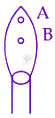 In a borax bead test under hot condition, a metal salt (one from the given) is heated at point B of the flame, resulted in green colour salt bead. The spin-only magnetic moment value of the salt is _______ BM (Nearest integer) [Given atomic number of \(\mathrm{Cu}=29, \mathrm{Ni}=28, \mathrm{Mn}=25, \mathrm{Fe}=26\)]
Given below are two statements : one is labelled as Assertion A and the other is labelled as Reason R: Assertion A: The first ionisation enthalpy decreases across a period. Reason R: The increasing nuclear charge outweighs the shielding across the period. In the light of the above statements, choose the most appropriate from the options given below:
Given below are two statements: Statement (I) : Oxygen being the first member of group $16$ exhibits only$–2$ oxidation state. Statement (II) : Down the group $16$ stability of $+4$ oxidation state decreases and $+6$ oxidation state increases. In the light of the above statements, choose the most appropriate answer from the options given below:
Given below are two statements : Statement I: Group $13$ trivalent halides get easily hydrolysed by water due to their covalent nature. Statement II: ${\mathrm{AlCl}}_{3}$ upon hydrolysis in acidified aqueous solution forms octahedral ${[\mathrm{Al}{({H}_{2}O)}_{6}]}^{3+}$ ion. In the light of the above statements, choose the correct answer from the options given below :
A diatomic molecule has a dipole moment of $1.2D$. If the bond distance is $1\overset{o}{A}$, then fractional charge on each atom is _____ $\times {10}^{-1}$ esu. (Given $1D={10}^{-18}\mathrm{esu}\mathrm{cm}$)
Given below are two statements : Statement I : \(\quad \mathrm{PF}_5\) and \(\mathrm{BrF}_5\) both exhibit \(\mathrm{sp}^3 \mathrm{~d}\) hybridisation. Statement II : Both \(\mathrm{SF}_6\) and \(\left[\mathrm{Co}\left(\mathrm{NH}_3\right)_6\right]^{3+}\) exhibit \(\mathrm{sp}^3 \mathrm{~d}^2\) hybridisation. In the light of the above statements, choose the correct answer from the options given below :
Match List - I with List - II. <table class="pyq-table"><tbody><tr><td colspan="2" rowspan="1">List - I Compound</td><td colspan="2" rowspan="1">List-II Use</td></tr><tr><td>(A)</td><td>Carbon tetrachloride</td><td>(I)</td><td>Paint remover</td></tr><tr><td>(B)</td><td>Methylene chloride</td><td>(II)</td><td>Refrigerators and air conditioners</td></tr><tr><td>(C)</td><td>DDT</td><td>(III)</td><td>Fire extinguisher</td></tr><tr><td>(D)</td><td>Freons</td><td>(IV)</td><td>Non Biodegradable insecticide</td></tr></tbody></table>Choose the correct answer from the options given below:
Number of elements from the following that CANNOT form compounds with valencies which match with their respective group valencies is ______. B, C, N, S, O, F, P, Al, Si
Lowest Oxidation number of an atom in a compound ${A}_{2}B$ is $-2.$ The number of an electron in its valence shell is
Match List I with List II <table class="pyq-table"><tbody><tr><td></td><td>LIST – I (Complex ion)</td><td></td><td>LIST – II (Electronic Configuration</td></tr><tr><td>A.</td><td>${[Cr{({H}_{2}O)}_{6}]}^{3+}$</td><td>I.</td><td>${t}_{2g}^{2}{e}_{g}^{0}$</td></tr><tr><td>B.</td><td>${[Fe{({H}_{2}O)}_{6}]}^{3+}$</td><td>II.</td><td>${t}_{2g}^{3}{e}_{g}^{0}$</td></tr><tr><td>C.</td><td>${[Ni{({H}_{2}O)}_{6}]}^{2+}$</td><td>III.</td><td>${t}_{2g}^{3}{e}_{g}^{2}$</td></tr><tr><td>D.</td><td>${[V{({H}_{2}O)}_{6}]}^{3+}$</td><td>IV.</td><td>${t}_{2g}^{6}{e}_{g}^{2}$</td></tr></tbody></table>Choose the correct answer from the options given below :
Number of oxygen atoms present in chemical formula of fuming sulphuric acid is ______.
Choose the correct statements from the following A. All group $16$ elements form oxides of general formula $E{O}_{2}$ and $E{O}_{3}$ where $E=S,Se,Te$ and $Po$. Both the types of oxides are acidic in nature. B. $Te{O}_{2}$ is an oxidising agent while $S{O}_{2}$ is reducing in nature. C. The reducing property decreases from ${H}_{2}S$ to ${H}_{2}Te$ down the group. D. The ozone molecule contains five lone pairs of electrons. Choose the correct answer from the options given below:
Which of the following complex is homoleptic?
The number of white coloured salts among the following is ....... $(A){\mathrm{SrSO}}_{4}(B)\mathrm{Mg}({\mathrm{NH}}_{4}){\mathrm{PO}}_{4}(C){\mathrm{BaCrO}}_{4}$ $(D)\mathrm{Mn}(\mathrm{OH}{)}_{2}(E){\mathrm{PbSO}}_{4}(F){\mathrm{PbCrO}}_{4}$ $(G)\mathrm{AgBr}(H){\mathrm{PbI}}_{2}(I){\mathrm{CaC}}_{2}{O}_{4}$ $(J)[\mathrm{Fe}(\mathrm{OH}{)}_{2}({\mathrm{CH}}_{3}\mathrm{COO})]$
The number of species from the following in which the central atom uses ${\mathrm{sp}}^{3}$ hybrid orbitals in its bonding is _________. ${\mathrm{NH}}_{3},{\mathrm{SO}}_{2},{\mathrm{SiO}}_{2},{\mathrm{BeCl}}_{2},{\mathrm{CO}}_{2},{H}_{2}O,{\mathrm{CH}}_{4},{\mathrm{BF}}_{3}$
Arrange the bonds in order of increasing ionic character in the molecules. $\mathrm{LiF},{K}_{2}O,{N}_{2},{\mathrm{SO}}_{2}$ and ${\mathrm{ClF}}_{3}.$
The fusion of chromite ore with sodium carbonate in the presence of air leads to the formation of products \(\mathrm{A}\) and \(\mathrm{B}\) along with the evolution of \(\mathrm{CO}_2\). The sum of spin-only magnetic moment values of \(A\) and \(B\) is ______ B.M. (Nearest integer) [Given atomic number : \(\mathrm{C}: 6, \mathrm{Na}: 11, \mathrm{O}: 8, \mathrm{Fe}: 26, \mathrm{Cr}: 24\)]
An amine \((\mathrm{X})\) is prepared by ammonolysis of benzyl chloride. On adding p-toluenesulphonyl chloride to it the solution remains clear. Molar mass of the amine (X) formed is ______ \(\mathrm{g} \mathrm{mol}^{-1}\). (Given molar mass in \(\mathrm{gmol}^{-1} \mathrm{C}: 12, \mathrm{H}: 1, \mathrm{O}: 16, \mathrm{~N}: 14\))
Number of ambidentate ligands among the following is ______ \(\mathrm{NO}_2^{-}, \mathrm{SCN}^{-}, \mathrm{C}_2 \mathrm{O}_4^{2-}, \mathrm{NH}_3, \mathrm{CN}^{-}, \mathrm{SO}_4^{2-}, \mathrm{H}_2 \mathrm{O}\).
Given below are two statements: Statement-I: Since fluorine is more electronegative than nitrogen, the net dipole moment of ${\mathrm{NF}}_{3}$ is greater than ${\mathrm{NH}}_{3}$. Statement-II: In ${\mathrm{NH}}_{3}$, the orbital dipole due to lone pair and the dipole moment of $\mathrm{NH}$ bonds are in opposite direction, but in ${\mathrm{NF}}_{3}$ the orbital dipole due to lone pair and dipole moments of N-F bonds are in same direction. In the light of the above statements. Choose the most appropriate from the options given below.