Correct Option
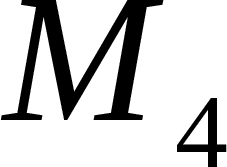
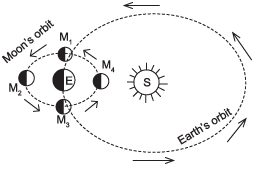
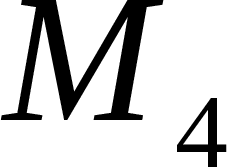
Position M₄ in the diagram illustrates the full moon phase, where the Sun, Earth, and Moon are aligned in a straight line. This celestial configuration is known as syzygy. During syzygy, the gravitational forces of both the Sun and the Moon combine to exert a cumulative pull on Earth's oceans. This synergistic effect leads to the formation of spring tides, which are characterized by the highest high tides and the lowest low tides, resulting in the maximum tidal range and height. Position M₄, representing the full moon, is one of two periods in the lunar cycle when spring tides occur.
Incorrect Options
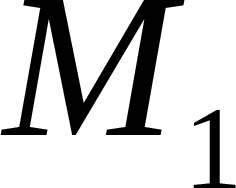
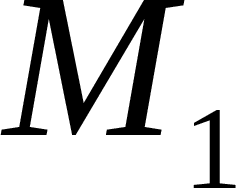
Position M₁ also represents a syzygy condition (new moon phase), where the Sun, Moon, and Earth are aligned. Similar to M₄, this alignment results in spring tides and maximum tidal height due to the combined gravitational pull of the Sun and Moon. However, the question asks to identify the position from the given options that shows maximum tidal height, and option (d) corresponds to M₄.
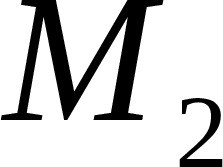
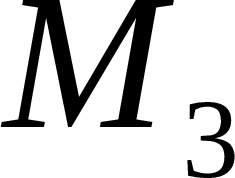
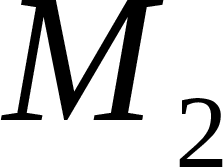
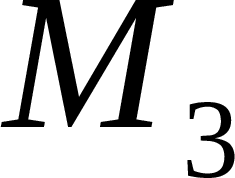
Positions M₂ and M₃ represent the first quarter and third quarter moon phases, respectively. In these phases, the Moon is positioned at a right angle (90 degrees) relative to the Earth-Sun line. This perpendicular alignment causes the gravitational pull of the Sun and the Moon to partially counteract each other. Consequently, the tidal forces are minimized, leading to neap tides. Neap tides are characterized by lower high tides and higher low tides, resulting in the minimum tidal range and height during the lunar cycle.