Organic Chemistry PYQ — Page 71
JEE Main Chemistry — Organic Chemistry previous year questions with solutions.
All Organic Chemistry Questions (1783)
Phenol, when it first reacts with concentrated sulphuric acid and then with concentrated nitric acid, gives
The absolute configuration of 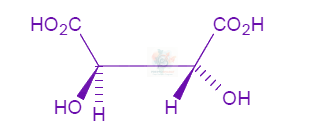 is
In the following sequence of reactions, the alkene affords the compound ' $B$ ' $\mathrm{CH}_3 \mathrm{CH}=\mathrm{CHCH}_3 \stackrel{\mathrm{O}_3}{\longrightarrow} \mathrm{A} \stackrel{\mathrm{H}_2 \mathrm{O}}{\mathrm{Zn}} \mathrm{B}$. The compound $\mathrm{B}$ is
The treatment of $\mathrm{CH}_3 \mathrm{MgX}$ with $\mathrm{CH}_3 \mathrm{C} \equiv \mathrm{C}-\mathrm{H}$ produces
$\alpha-D-(+)$-glucose and $\beta-D-(+)-g l u c o s e ~ a r e$
Toluene is nitrated and the resulting product is reduced with tin and hydrochloric acid. The product so obtained is diazotised and then heated with cuprous bromide. The reaction mixture so formed contains
Which of the following molecules is expected to rotate the plane of plane polarized light?
In the following sequence of reactions,  the compound ' $\mathrm{D}$ ' is
The IUPAC name of 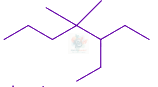 is
The reaction of toluene with $\mathrm{Cl}_2$ in presence of $\mathrm{FeCl}_3$ gives predominantly
Which one of the following conformation of cyclohexane is chiral?
Presence of a nitro group in a benzene ring
The secondary structure of a protein refers to
The compound formed as a result of oxidation of ethyl benzene by $\mathrm{KMnO}_4$ is
In the chemical reaction, $\mathrm{CH}_3 \mathrm{CH}_2 \mathrm{NH}_2-\mathrm{CHCl}_3+3 \mathrm{KOH} \longrightarrow(\mathrm{A})+(\mathrm{B})+3 \mathrm{H}_2 \mathrm{O}$, the compound $\mathrm{(A)}$ and $\mathrm{(B)}$ are respectively
Which one of the following is the strongest base in aqueous solution?
Which of the following is the correct order of decreasing $\mathrm{SN}^2$ reactivity?
Which of the following reactions will yield $2, 2-$dibromopropane?
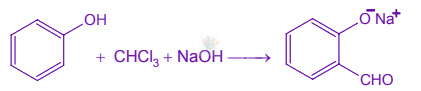 The electrophile involved in the above reaction is
The increasing order of the rate of $\mathrm{HCN}$ addition to compounds $\mathrm{A}-\mathrm{D}$ is (A) $\mathrm{HCHO}$ (B) $\mathrm{CH}_3 \mathrm{COCH}_3$ (C) $\mathrm{PhCOCH}_3$ (D) PhCOPh
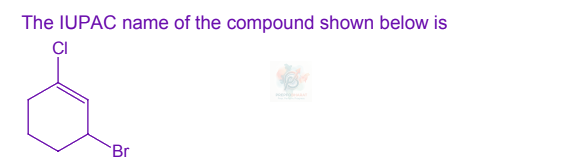
$\mathrm{HBr}$ reacts with $\mathrm{CH}_2=\mathrm{CH}-\mathrm{OCH}_3$ under anhydrous conditions at room temperature to give
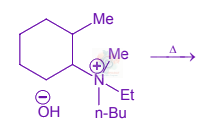 The alkene formed as a major product in the above elimination reaction is
Fluorobenzene $\left(\mathrm{C}_6 \mathrm{H}_5 \mathrm{~F}\right)$ can be synthesized in the laboratory