Correct Option (C)
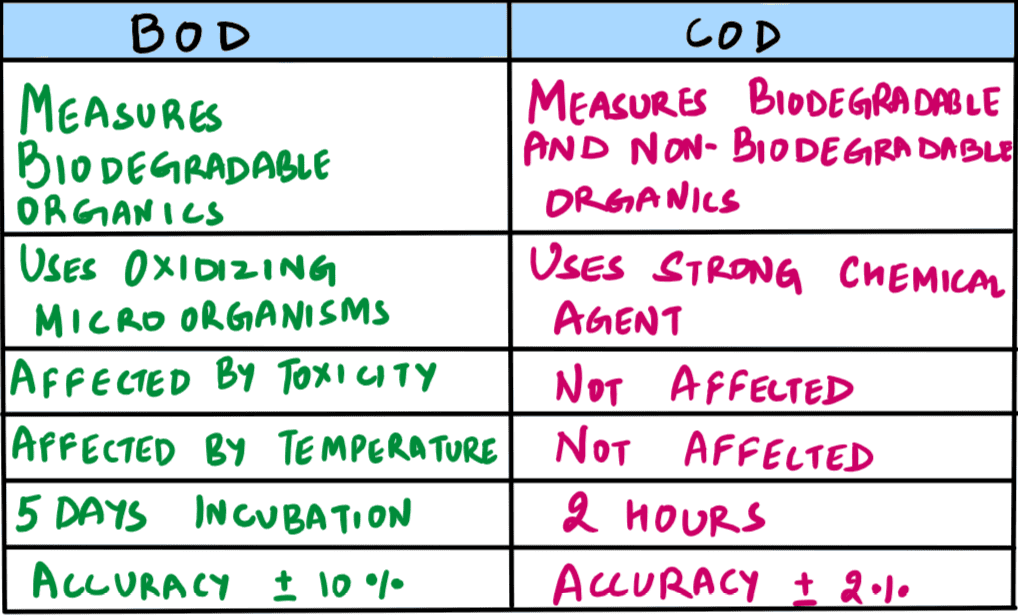
Biological Oxygen Demand (BOD) serves as a standard criterion for pollution assay in aquatic ecosystems. It quantifies the amount of dissolved oxygen consumed by aerobic microorganisms during the decomposition of organic matter present in a water sample over a specified period, typically five days at 20°C (BOD₅). A higher BOD value indicates a greater concentration of biodegradable organic pollutants, signifying a lower water quality and potential environmental stress on aquatic life due to oxygen depletion.
Incorrect Options:
A) Measuring oxygen levels in the blood: Oxygen levels in blood are assessed through parameters such as partial pressure of oxygen (PO₂) and oxygen saturation (SaO₂), typically measured via arterial blood gas analysis or pulse oximetry. BOD is unrelated to physiological oxygen transport in living organisms.
B) Computing oxygen levels in forest ecosystems: Oxygen levels in terrestrial ecosystems like forests are primarily influenced by photosynthesis, respiration, and atmospheric exchange. These are measured through direct atmospheric gas analysis or plant physiological studies, not by BOD, which is specific to aquatic environments and organic decomposition.
D) Assessing oxygen levels in high altitude regions: Oxygen levels at high altitudes are determined by atmospheric pressure and the partial pressure of oxygen in the air. This is a physical atmospheric characteristic, not an ecological or pollution indicator measured by BOD. BOD is irrelevant to atmospheric oxygen assessment.