Correct Option (1)
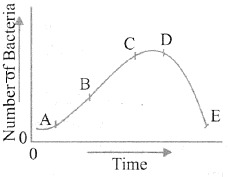
Region A corresponds to the incubation phase of the infection. The incubation period is defined as the interval between the initial exposure to an infectious agent and the appearance of the first symptoms. During this phase, the pathogen enters the host and begins to multiply, but the pathogen load is not yet sufficient to trigger overt clinical manifestations. The passage indicates that the person was exposed to contaminated water and "a few days later, he developed fever and loose motions," implying an asymptomatic period immediately following exposure, which is represented by region A.
Incorrect Options:
- Region B typically represents the prodromal or acute phase, where symptoms begin to manifest and pathogen multiplication accelerates. The passage states the person "developed fever and loose motions" after a few days, indicating the onset of symptomatic illness, which would correspond to region B.
- Region C represents the peak of the illness, where symptoms are most severe and the pathogen load is generally at its highest before treatment or the host's immune response begins to control the infection. Both regions B and C are characterized by active disease progression and symptom manifestation, not the asymptomatic incubation period.
- The statement that "No part of the curve indicates the incubation phase" is incorrect. The narrative explicitly describes a delay between exposure and symptom onset, which is the definition of the incubation period, and region A logically represents this initial asymptomatic phase.